


Understanding Mobility: The Difference Between Flexibility, Stability, and Joint Health
Understanding Mobility: Flexibility vs. Stability
Mobility is a key feature of physical fitness. Often conflated with flexibility (which refers to muscles’ ability to passively lengthen and shorten), mobility refers to your ability to actively and controllably move your joints through a full range of motion. Mobility is important for joint health; reduced mobility leads to increased forces, joint compression, and soft-tissue pain in the affected areas.
Stability, which refers to your muscles’ ability to control joint position and resist unwanted movement, is also integral to healthy joints. Good exercise habits, combining mobility work with strengthening exercises, can help one achieve a balance between mobility and stability – realized through smooth, pain-free movements.
Assessing Your Mobility: Common Restrictions and Problem Areas
Common mobility restrictions are found at the lower back and hips, ankles, shoulders, and knees. Any muscle group that habitually experiences stress from high-volume exercise or becomes deconditioned from disuse is prone to tightness. For example, tight IT bands are very common among runners. Conversely, tight hip flexors often result from prolonged sitting. Mobility work can relieve pain and restore function to afflicted muscle groups.
Exercises to build mobility can be performed with no equipment at all. However, a range of tools can enhance mobility training. These tools can add variety to your training and enhance its effectiveness. Let’s explore some of them, starting off with tools for self-myofascial release.
Essential Tools for Self-Myofascial Release (SMR)
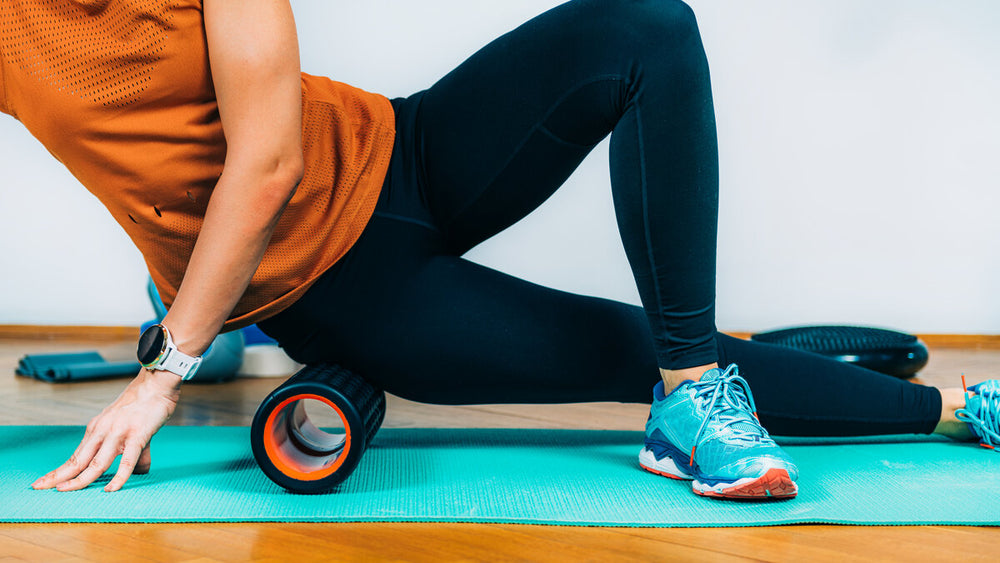
Foam Rollers: Choosing Density, Texture, and Size
Self-myofascial release is a technique I discussed at length in a previous article (Jan 2026 link). In short, SMR is most often practiced with foam rollers and has been shown to effectively enhance range of motion and, to a minor extent, reduce delayed-onset muscle soreness and improve exercise recovery.
The foam rollers used for SMR come in various sizes, textures, and densities. What is best for you? In general, larger, less-dense foam rollers are well-suited for pre-workout rolling, providing a gentler fascial loosening effect to prepare the body for exercise. For example, practicing SMR on your quadriceps and hamstrings during your warm-up before leg day at the gym.
As one gains more experience with SMR, smaller, denser foam rollers, including those with jagged surfaces, can help target specific tender points more effectively. These are good tools for hitting specific tight spots, perhaps your IT band or your lower back – wherever your trigger points happen to reside.
Massage Balls and Lacrosse Balls: Targeting Specific Tight Spots (e.g., Glutes, Pecs)
Even the densest foam roller will provide less pressure than other tools. For pinpoint targeting of trigger points with SMR, a smaller implement – such as a massage therapy ball or a lacrosse ball can up the intensity of your SMR session. I recommend reserving these for use at the end of a workout to enhance recovery.
Percussion Massagers (Massage Guns): The Technology and When to Use Them
Massage guns apply a potentially aggressive SMR, pulsing trigger spots with higher pressure than one can typically achieve manually. Research has shown that massage guns can effectively improve flexibility, especially around the muscles of the hips and calves. However, using massage guns can potentially (slightly and transiently) impair the performance of activities requiring strength, power, balance, or agility. This potential for massage guns to reduce performance is similar to the documented effects of static stretching prior to these activities. It is nothing to be alarmed by, as the detrimental effects are short-lived. It just means massage guns are best reserved for post-workout cooldown.
FAQs
What is the difference between mobility and flexibility?
Flexibility refers to a muscle's ability to lengthen passively, while mobility is your ability to actively move a joint through its full range of motion with control. Think of flexibility as having the available range, while mobility is being able to use that range effectively during movement.
Why are mobility and stability both important for joint health?
Mobility and stability work together to support healthy movement. Good mobility allows joints to move freely, while stability helps control those movements and protects joints from excessive stress. Too much mobility without stability can increase injury risk, while too little mobility can contribute to stiffness, discomfort, and movement limitations.
What are the most common areas of mobility restriction?
Many people experience mobility limitations in the hips, lower back, ankles, shoulders, and knees. Prolonged sitting, repetitive movements, exercise volume, previous injuries, and inactivity can all contribute to reduced mobility in these areas.
Do foam rollers and massage guns actually improve mobility?
Research suggests that tools such as foam rollers, massage balls, and percussion massagers can temporarily improve range of motion and help reduce muscle tightness. These tools may be useful additions to a mobility routine, especially when combined with regular stretching and strength training, but they are not a substitute for consistent movement and exercise.
When should I use a foam roller or massage gun?
Foam rolling is often used before exercise as part of a warm-up or after exercise to support recovery. Massage guns may also help reduce muscle tightness and improve flexibility, but because they can temporarily affect strength, power, or balance, they are generally best used after workouts rather than immediately before activities that require peak performance.
References
1Simic, L., Sarabon, N., & Markovic, G. (2013). Does pre-exercise static stretching inhibit maximal muscular performance? A meta-analytical review. Scandinavian journal of medicine & science in sports, 23(2), 131–148. https://doi.org/10.1111/j.1600-0838.2012.01444.x
2Ferreira, R. M., Silva, R., Vigário, P., Martins, P. N., Casanova, F., Fernandes, R. J., & Sampaio, A. R. (2023). The Effects of Massage Guns on Performance and Recovery: A Systematic Review. Journal of functional morphology and kinesiology, 8(3), 138. https://doi.org/10.3390/jfmk8030138
3Konrad, A., Močnik, R., Titze, S., Nakamura, M., & Tilp, M. (2021). The Influence of Stretching the Hip Flexor Muscles on Performance Parameters. A Systematic Review with Meta-Analysis. International journal of environmental research and public health, 18(4), 1936. https://doi.org/10.3390/ijerph18041936
4Terada, M., Pietrosimone, B. G., & Gribble, P. A. (2013). Therapeutic interventions for increasing ankle dorsiflexion after ankle sprain: a systematic review. Journal of athletic training, 48(5), 696–709. https://doi.org/10.4085/1062-6050-48.4.11
5Satpute, K., Reid, S., Mitchell, T., Mackay, G., & Hall, T. (2022). Efficacy of mobilization with movement (MWM) for shoulder conditions: a systematic review and meta-analysis. The Journal of manual & manipulative therapy, 30(1), 13–32. https://doi.org/10.1080/10669817.2021.1955181
6Campbell, T. M., Westby, M., Ghogomu, E. T., Fournier, J., Ghaedi, B. B., & Welch, V. (2023). Stretching, Bracing, and Devices for the Treatment of Osteoarthritis-Associated Joint Contractures in Nonoperated Joints: A Systematic Review and Meta-Analysis. Sports health, 15(6), 867–877. https://doi.org/10.1177/19417381221147281










 Recipes
 Products

Comments
Join The Conversation...