


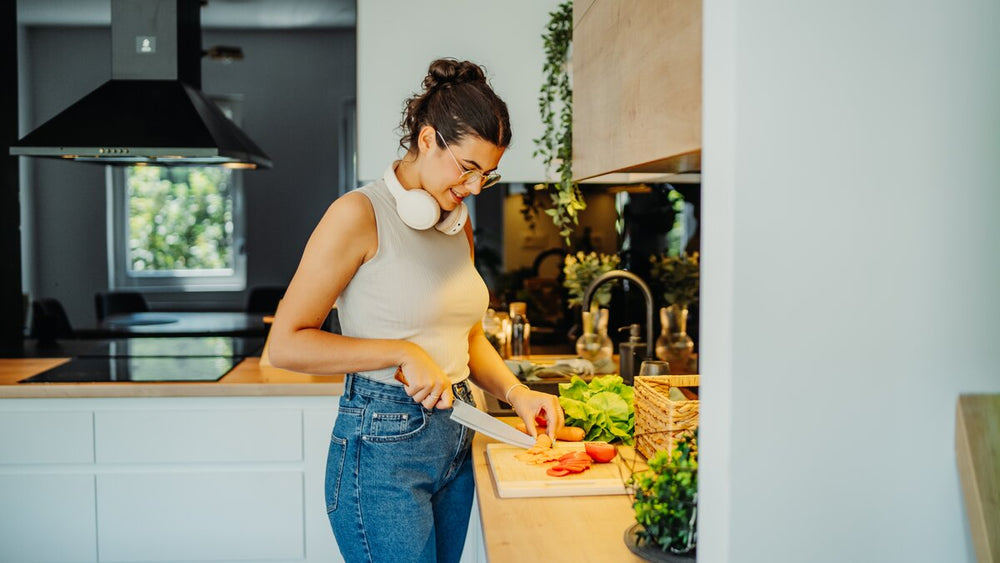
Cooking for One: How to Eat Well, Stay Motivated, and Skip the Takeout
In a world of busy schedules, cooking for one can quickly feel like a chore. Convenient options like fast food, take-out, and frozen entrees can be all too tempting. But solo cooking also has its perks. A fresh perspective can help us to embrace fresh foods once more.
The Benefits of Cooking for One
There are several upsides to cooking for one. For starters, you only have one palette to cater to, and it’s your own! You don’t have to worry about picky eaters or various dietary restrictions. Your preferences will always be a priority in the kitchen, giving you the flexibility to experiment with new recipes as you wish. Your health goals can also take priority. Whether you’re avoiding high FODMAP foods for gut health, following a plant-based diet, or are focused on weight management, you can plan your meals according to your needs. Portion sizes, meal timing, and flavors are all in your control.
The Challenges of Cooking for One: How to Beat Them
These pros don’t outweigh the cons if you’re not sure how to overcome the challenges of solo cooking. That’s why we’ve collected recipes for success.
Challenge #1: Motivation Drain: Cooking for Yourself Can Feel Like a Chore
When you’re not sharing the food-prep burden, it’s easy to burn out on cooking and default to convenient options. Unfortunately, those convenient options tend to be less healthy and typically more expensive than making food yourself.
The solutions:Romanticize mealtimes. Set your table to create a stress-free atmosphere. Light a candle, use your fancy glassware, and savor your meal. Alternatively, if you prefer to be more productive than relaxed, try stacking habits. Cook your meal while listening to a podcast, catching up with a loved one over the phone, or doing some light cleaning.
Challenge #2: Waste and Spoilage: Dealing with Large Recipe Yields
A common complaint about solo cooking is food waste. Having only one mouth to feed may mean you don’t get through the contents of your fridge fast enough.
The solutions: The best tip is to utilize your freezer. Buy some produce, like frozen berries or spinach, so you have more time to enjoy it before it spoils. Freeze perishable foods yourself before they go bad. Full loaves of bread and most meats work great. When you do cook a large portion of a recipe, freeze half of it so you can revisit it during busier weeknights. Soups, stews, and casseroles tend to freeze exceptionally well.
Make sure you shop smart, too. Stick to a list to avoid impulse buys and search for single-serve items. When planning your recipes for the week, use the same ingredients across multiple meals. For example, a full head of cabbage can star in shrimp tacos, a Buddha bowl, and a vegetable stir-fry all in one week.
Challenge #3: The Time Barrier
These days, a busy lifestyle is nearly unescapable and can make cooking seem impossible.
The solutions: Streamline your meal planning. Create a rotating list of simple, go-to meals to limit decision-making fatigue. Save time with grocery pickup or delivery. In a world of multitasking, learn how to do this efficiently in the kitchen. Try prepping multiple meals at one time. Another time-saving tip is to prioritize one-pot or pan meals. This can reduce both preparation and cleanup time. Some convenience foods can be both useful and healthy. Save time by buying pre-cut and washed produce or using 90-second microwaveable grains instead of cooking them yourself.
You don’t have to choose between a simple PBJ and creating a 5-course meal. A little practice can make solo cooking efficient and even enjoyable. Whether you live alone or prepare meals separately from your household, cooking for one is a meal method worth mastering.
FAQs
How can I eat healthy when cooking for one feels like too much work?
Start by simplifying your expectations. Healthy meals don't need to be elaborate to be nutritious. Focus on a few easy staples, such as sheet-pan meals, grain bowls, soups, salads, or slow-cooker recipes. Keeping a rotation of simple, go-to meals can reduce decision fatigue and make cooking feel much more manageable.
What are the best foods to keep on hand when cooking for one?
Foods with a longer shelf life can help reduce waste and make meal preparation easier. Consider stocking frozen vegetables, frozen fruit, canned beans, whole grains, eggs, yogurt, nuts, seeds, and individually portioned proteins. These ingredients can be mixed and matched to create a variety of balanced meals throughout the week.
How can I avoid food waste when recipes make too many servings?
One of the easiest strategies is to intentionally cook extra and freeze individual portions for future meals. Soups, stews, casseroles, chili, and cooked grains freeze especially well. Planning multiple meals around the same ingredients can also help you use fresh produce before it spoils.
Is it more affordable to cook for one than to order takeout?
In most cases, yes. While buying ingredients upfront may seem expensive, preparing meals at home is often significantly less costly than regularly ordering takeout or dining out. Batch cooking, using frozen foods strategically, and repurposing leftovers can further reduce food costs and stretch your grocery budget.
How can I make solo meals feel more enjoyable?
Try treating meals as an act of self-care rather than another task on your to-do list. Create a pleasant dining environment, use dishes you enjoy, sit down without distractions when possible, or pair your meal with a favorite podcast, audiobook, or relaxing music. Making mealtimes intentional can improve both enjoyment and satisfaction.











 Recipes
 Products
Comments
Join The Conversation...