


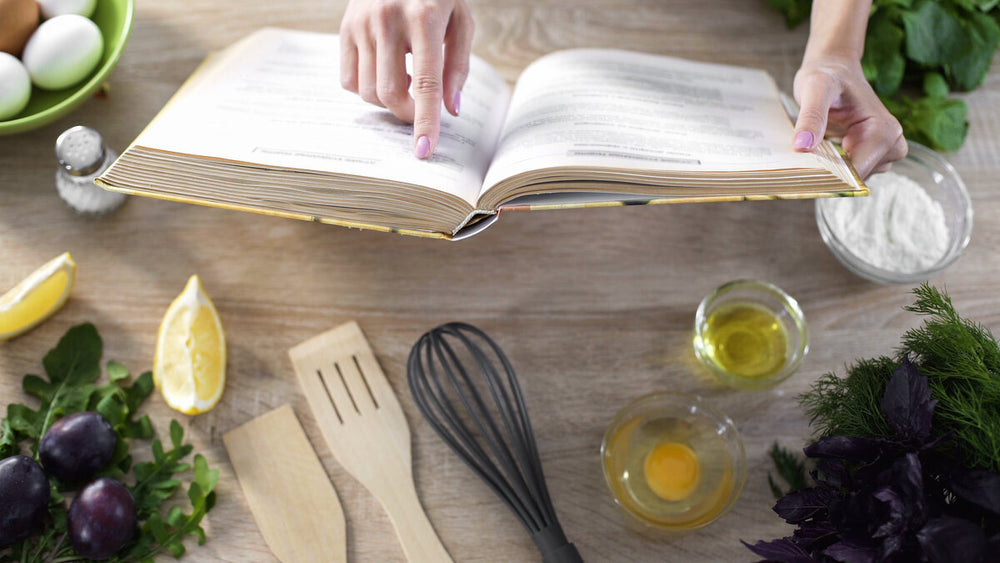
Cooking Shows, Culinary Jargon, and That One Word You Definitely Googled
If you’ve ever had the opportunity to channel-surf (a rarity nowadays thanks to streaming services), you’ve probably stumbled across culinary TV shows like The Kitchen, Worst Cooks in America, 30-Minute Meals, Top Chef, or Paula’s Home Kitchen. Once you find one that looks interesting, you grab a cup of coffee, hunt down a cozy blanket, settle in… and suddenly feel like everyone on screen is speaking another language.
If that sounds familiar, you’re not alone.
(Fun fact: I was 26 years old when I realized aioli is just a fancy mayonnaise.)
So today, we’re becoming masters of the kitchen — not with food, but with words.
Why Culinary Vocabulary Actually Matters
Every new skill comes with a learning curve, and cooking is no exception. Understanding basic culinary terms makes recipes easier to follow, reduces the urge to pause mid-chop to Google something, and — most importantly — builds confidence.
When you understand what a recipe is asking you to do, cooking becomes less stressful and more enjoyable. And confidence in the kitchen often leads to better habits overall, including cooking more at home and using fresh ingredients more often.
The Culinary Terms You’ll Actually See (and Need)
Instead of overwhelming you with dictionary-style definitions, let’s focus on what these words mean in real life.
Knife Cuts You’ll Run Into
You don’t need to cut like a professional chef — you just need to know what the recipe is asking for.
Julienne: Thin, matchstick-style strips. Think fries, but skinnier.
Dice: Small cubes. The size matters less than keeping them similar, so everything cooks evenly.
Mince: Very finely chopped. Garlic’s favorite form.
Oblique (roll cut): Diagonal pieces that cook evenly and look fancy with minimal effort.
Lyonnaise: Thin slices, usually for onions or potatoes.
If your pieces are close enough, you’re doing great.
Common Cooking Methods
These show up constantly in recipes, and once you know them, instructions feel much clearer.
Blanch: A quick dip in boiling water, then straight into cold water — usually to prep veggies.
Braise: Sear first, then cook slowly with some liquid. Great for tougher foods.
Roast: Cook slowly in the oven until everything is evenly cooked and delicious.
Words That Describe Flavor and Texture
These don’t change how you cook — they help you know when food is done.
Umami: Savory and rich (think mushrooms, cheese, or brothy flavors).
Al dente: Tender but still firm — especially for pasta.
Velvety: Smooth, creamy, and comforting.
A Few Fancy Terms You’ll See (and Can Now Pretend You’ve Always Known)
French words pop up a lot in cooking, but you don’t need to speak French to cook well.
Mise en place: Everything prepped before you start cooking.
Roux: Flour + fat = thick soups and sauces.
Bisque: A thick, blended soup (often seafood-based).
Flambé: Alcohol + flame = dramatic flair.
Ganache: Chocolate and cream doing their thing.
Kitchen Tools With Surprisingly Serious Names
Some kitchen tools sound intimidating but are very simple:
Spurtle: A flat stirring tool (especially good for soups and grains).
Liquidizer: A blender or food processor.
Olla: A traditional pot.
Tandoor: A clay oven used in many global cuisines.
Dessertspoon: Bigger than a teaspoon, smaller than a tablespoon (confusing, we agree).
The Best Way to Learn Culinary Vocabulary? Use It.
The fastest way to feel comfortable with cooking terms is to see them in action. These Foodguides recipes are great places to start:
Culinary word to watch: al dente
Culinary word to watch: sauté
Culinary word to watch: julienne
Final Thought
You don’t need to memorize culinary vocabulary to cook well. You just need enough familiarity to feel confident and curious instead of intimidated.
What new words did you learn today? Are there others you’d like us to break down next? Let us know in the comments or on social media — we’re always happy to translate “chef speak” into real-life cooking.
FAQs
What is the most important cooking term to learn as a beginner?
There isn't one single term that's most important, but understanding common techniques such as sautéing, roasting, and dicing can make recipes much easier to follow and help build confidence in the kitchen.
Why do recipes use culinary terms instead of plain language?
Many culinary terms provide specific instructions about how ingredients should be prepared or cooked. These standardized terms help ensure recipes produce consistent results.
How does learning cooking terminology help me cook healthier meals?
Understanding cooking techniques can make it easier to prepare meals at home, experiment with new ingredients, and follow recipes more confidently. Home cooking may also give you greater control over ingredients and portion sizes.
What does "mise en place" mean?
Mise en place is a French culinary term meaning "everything in its place." It refers to gathering, measuring, and preparing ingredients before you begin cooking.
Do I need professional culinary training to understand these terms?
Not at all. Most culinary vocabulary can be learned gradually through cooking, reading recipes, and watching cooking demonstrations. Over time, many of these terms become second nature.
References
1Food Network Kitchen. (2023). What is blanching?, Cooking School, https://www.foodnetwork.com/how-to/packages/food-network-essentials/what-is-blanching
2Le Creuset. (2025). What is sauteing?, Le Creuset, https://www.lecreuset.ca/en_CA/glossary/Saut%C3%A9ing.html
3Mattison, L. (2024). What does al dente mean?, Taste of Home, https://www.tasteofhome.com/article/what-is-al-dente/
4Rees, J. et al. (2022). How a 7-week food literacy cooking program affects cooking confidence and mental health: Findings of a quasi-experimental controlled intervention trial, Frontiers in Nutrition, https://pmc.ncbi.nlm.nih.gov/articles/PMC8970183
5Fraizer, A. (2024). Knife skills: 10 knife cuts every professional cook should know, Auguste Escoffier School of Culinary Arts, https://www.escoffier.edu/blog/culinary-arts/8-knife-cuts-every-professional-cook-should-know
6Mushroom Council. (2026). What is umami?, Mushroom Council, https://www.mushroomcouncil.com/articles/what-is-umami/
7The Reluctant Gourmet. (2026). French cooking terms, The Reluctant Gourmet, https://www.reluctantgourmet.com/french-culinary-professional-terms/
8Mandy, A. (2023). What exactly is braising? Here is everything you need to know, The Kitchn, https://www.thekitchn.com/what-is-braising-23614335















 Recipes
 Products
Comments
Join The Conversation...