


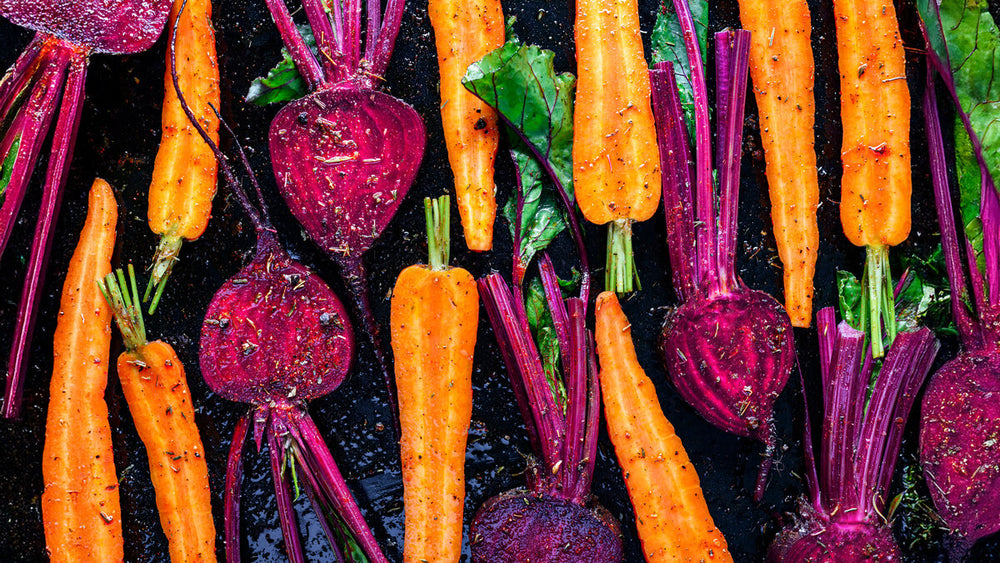
Root Vegetables: Long-Lasting Fiber on a Budget
Before you sigh and think about all of the reasons you don’t want to eat vegetables, instead, I want you to think about a wonderfully diverse microbiome - tiny little bugs all throughout your colon with smiles on their faces, happy to be there. This can be accomplished with root vegetables, and it doesn’t have to be boring (unless you want plain carrots, which is also fine).
On top of being fiber and vitamin-rich, root vegetables (primarily carrots and beets, but also including a few others) are advantageous for a host of reasons: they are shelf-stable, very affordable, satiating, incredibly multifaceted (carrot cake, I’m looking at you), and nutrient-dense. Root vegetables support the gut microbiome by providing high amounts of fiber, among other things, which can be used as microbial ‘food’ and encourages healthy bacterial proliferation and diversity. Check out this extensive series on fermentable carbohydrates and fibers for a more detailed overview.
Researchers from Poland have also noted potential health-promoting effects of root vegetables, including regulating blood sugar, lowering blood pressure, offering antioxidant potential, and potentially anti-cancer properties. This all sounds great, right? Well, I am here to sweeten the deal, because root vegetables are also incredibly affordable. A substantial bunch of carrots, even organic, will likely run under $5-10. Similarly, beets (organic or not) go for about $1-2.50 per loose beet. Given their health benefits and recipe options, both beets and carrots should be staples at your weekly grocery run.
Affordable and Gut-Nourishing Ways to Use Roots
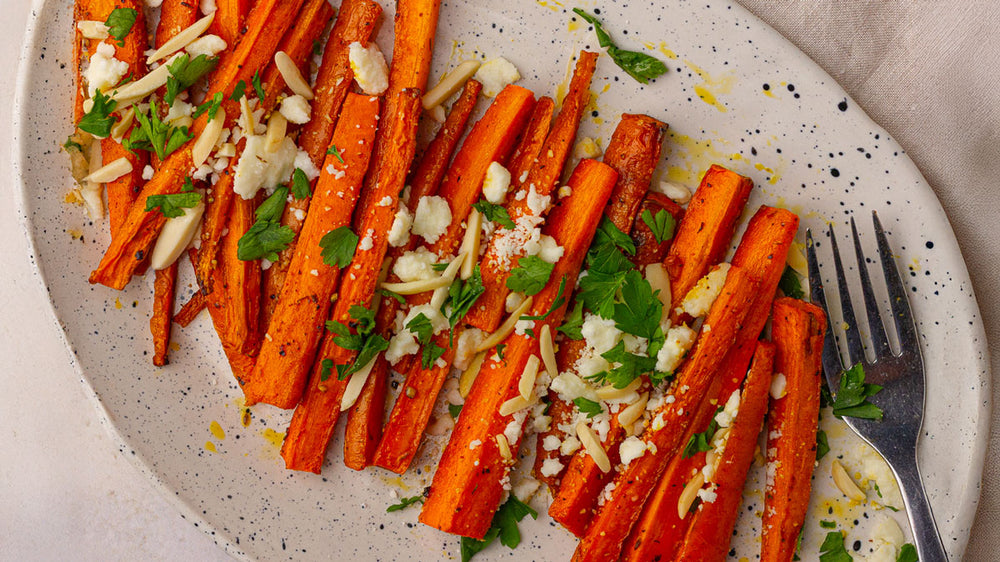
While you will get the maximum nutrient benefit from raw carrots and beets, we are not here to make our lives harder. Roasting and/or steaming are typically easy, quick cooking methods that work well for root vegetables. Aside from a fork-tender outcome (because have you ever tried to eat a raw beet? Might as well be a jawbreaker), a majority of the nutrients are preserved with this technique. Consider trying simple roasted carrots, steamed beets (with a tahini sauce, yes please), or combine them both and roast with honey.
Not interested in heating up your whole house by using the oven? Carrots make for great soup-bulk (new term being coined, you heard it here first). The heating process slightly breaks down the fiber, but there should still be a decent amount remaining. The remaining fiber provides a pleasant feeling of fullness and later serves as fuel for the gut microbiota. Go rogue with your soups, or consider a recipe from Two Kooks that combines several root vegetables. There is also always classic chicken noodle soup. May I suggest extra carrots?
Interested in something a tad more adventurous? Carrots are particularly diverse and can be used across the food spectrum. Carrot cake is a fan favorite around here (my house). You can also incorporate them into breads, muffins, juices, or even pickle them for some extra zing on your snack plates.
Optimizing the Gut Benefits of Root Vegetables
As discussed above, the cooking process may degrade some of the beneficial fibers in root vegetables (though not all). Some ways to reduce nutrient losses include cooking root vegetables with the skins on (e.g., sweet potatoes), which, when consumed, provide both insoluble and soluble fiber. And yes, you need both types of fibers (eat a balanced diet and you’ll be fine). If you’re curious about the differences between insoluble and soluble fiber, reference the Cleveland Clinic for more information.
There are also some tasty recipes out in the void that combine steamed/roasted/baked root vegetables with raw counterparts, such as dipping raw carrots in a beet hummus (may I suggest whipped ricotta on top of the hummus, you're welcome). Yes, beet hummus is very real, it’s very pink, and it’s very tasty! This is a great way to maximize fiber while still enjoying a tasty, filling, and nutritious meal. Beets can be a bit intimidating to work with. Check out Love and Lemons for a recipe cache and remember to wear an apron when working with beets (unless you want to dye your clothes, but it’ll be natural dye, so there’s that).
There are also some tasty recipes out in the void that combine steamed/roasted/baked root vegetables with raw counterparts, such as dipping raw carrots in a beet hummus (may I suggest whipped ricotta on top of the hummus, you're welcome). Yes, beet hummus is very real, it’s very pink, and it’s very tasty! This is a great way to maximize fiber while still enjoying a tasty, filling, and nutritious meal. Beets can be a bit intimidating to work with. Check out Love and Lemons for a recipe cache and remember to wear an apron when working with beets (unless you want to dye your clothes, but it’ll be natural dye, so there’s that).
FAQs
Why are root vegetables good for gut health?
Root vegetables like carrots and beets contain dietary fiber that helps nourish beneficial gut bacteria. When these bacteria ferment fiber in the colon, they produce compounds called short-chain fatty acids, which help support the gut lining, digestive health, and overall microbiome balance.
Which root vegetable is better for gut health: carrots or beets?
Both offer unique benefits. Carrots provide soluble and insoluble fiber that supports digestion and regularity, while beets contain fiber along with naturally occurring compounds called nitrates and antioxidants that may support circulation and overall health. Including a variety of root vegetables can help promote a more diverse gut microbiome.
Can root vegetables help with constipation?
Yes. Root vegetables are a good source of fiber, which can help add bulk to stool and support regular bowel movements. To maximize the benefits of fiber, be sure to drink adequate fluids throughout the day.
Are canned or frozen root vegetables as healthy as fresh?
Absolutely. Fresh, frozen, and canned root vegetables can all provide valuable nutrients and fiber. Frozen vegetables are often picked and processed at peak ripeness, while canned options can be convenient and budget-friendly. When choosing canned vegetables, look for varieties with little or no added sodium when possible.
What are some easy ways to add more root vegetables to my diet?
Root vegetables are incredibly versatile. Try roasting carrots and beets, adding them to soups and stews, blending cooked carrots into sauces, tossing roasted beets into salads, or incorporating them into grain bowls. These simple additions can help boost fiber intake while adding color, flavor, and nutrients to meals.
References
1Knez, E., Kadac-Czapska, K., Dmochowska-Ślęzak, K., & Grembecka, M. (2022). Root Vegetables-Composition, Health Effects, and Contaminants. International journal of environmental research and public health, 19(23), 15531. https://doi.org/10.3390/ijerph192315531
2Roasted Carrots. (2025). The Modern Proper; TMP. https://themodernproper.com/roasted-carrots
3Shulman, M. R. (2025). Steamed or Roasted Beets and Beet Greens With Tahini Sauce. NYT Cooking. https://cooking.nytimes.com/recipes/1016819-steamed-or-roasted-beets-and-beet-greens-with-tahini-sauce
4Green, D. (2020, November 17). Honey Roasted Beets & Carrots. The Creative Bite. https://www.thecreativebite.com/honey-roasted-beets-carrots/
5Avrich, C. (2019, November 8). Root Vegetable Soup. Two Kooks in the Kitchen&. https://twokooksinthekitchen.com/root-vegetable-soup-with-barley/
6Ultimate Chicken Soup. (2023, October 22). Downshiftology. https://downshiftology.com/recipes/chicken-soup/
7Nilsson, H. (2020, November 16). Homemade Carrot Bread (Freezer Friendly!) - Spend With Pennies. Spend with Pennies. https://www.spendwithpennies.com/homemade-carrot-bread/
8Donofrio, J. (2025, March 20). Carrot Muffins - Love and Lemons. Love and Lemons. https://www.loveandlemons.com/carrot-muffins/
9Murphy, D. (2023, January 16). Carrot Ginger Juice (Blender). Dietitian Debbie Dishes. https://dietitiandebbie.com/carrot-ginger-juice/
10Donofrio, J. (2023, May 9). Quick Pickled Carrots - Love and Lemons. Love and Lemons. https://www.loveandlemons.com/pickled-carrots/
11Clinic, C. (2021, February). What’s the Difference Between Soluble and Insoluble Fiber? Cleveland Clinic; Cleveland Clinic. https://health.clevelandclinic.org/whats-the-difference-between-soluble-and-insoluble-fiber
12Gerson, D. (2019, January 20). Beet Hummus. Waves in the Kitchen. https://wavesinthekitchen.com/beet-hummus/
13Moore, P. (2020, October 22). 15 Fresh Beet Recipes - Love and Lemons. Love and Lemons. https://www.loveandlemons.com/beet-recipes/












 Recipes
 Products
Comments
Join The Conversation...