


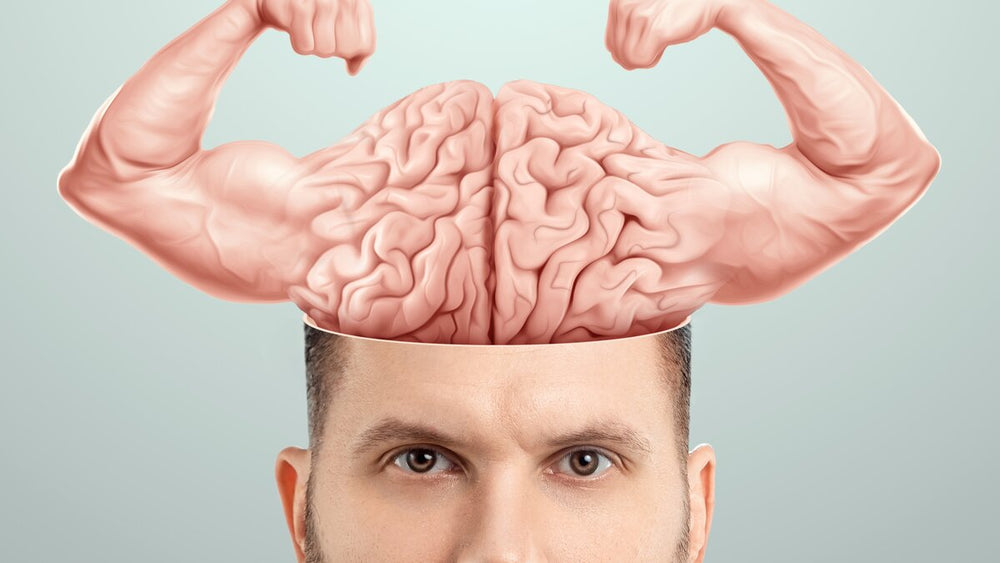
What is Muscle Memory? Defining the Biological Phenomenon
Beyond the Brain: Understanding Muscle Memory at the Cellular Level
The term “memory” usually connotes a recollection of something (names, faces, places, etc.) housed in our brain. Even physical skills, such as riding a bicycle, are stored as motor patterns in the motor cortex of our cerebrum. However, advances in molecular biology have identified a distinct subset of memory housed in skeletal muscle cells rather than in our brain. The existence of this muscle memory has huge connotations for how we can balance training and recovery for the best long-term outcomes.
The Role of Myonuclei and Epigenetics in "Remembering" Prior Training
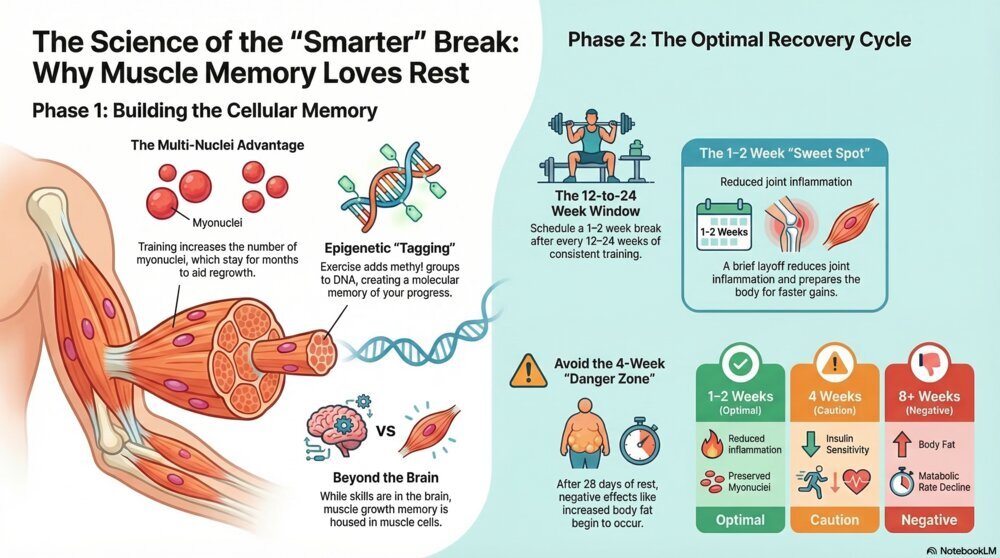
Skeletal muscle is our body’s most abundant and adaptable tissue. One reason skeletal muscle cells have a strong ability to adapt to stimuli is that they have multiple nuclei (myonuclei), unlike many other cell types, which have a single nucleus. Cell nuclei contain the cell’s DNA, which is the blueprint for cells to synthesize all the proteins they need to rebuild. Having multiple nuclei, as skeletal muscle cells do, enhances their ability to adapt to and respond to stimuli (e.g., training or injury). Cool thing: animal studies clearly indicate that training (and taking steroids) can increase the number of myonuclei. And even better, this increase in myonuclei is maintained for at least several months after the initial stimulus, leading to improved muscle building following the reintroduction of training.
In addition to enhancing the number of myonuclei, training promotes epigenetic alterations in the DNA in those myonuclei. The specific mechanism by which exercise changes myonuclear DNA is through DNA methylation, which adds carbon (methyl) groups to DNA without altering its structure. This methylation of DNA can increase the production of skeletal muscle hypertrophy, even without increases in the number of myonuclei.
The Science of Taking Breaks: Why Rest Can Lead to Faster Resumption
The fact that muscle cells have memory and can respond more effectively to training stimuli after a break has profound implications for training. In my coaching experience, training too hard too often is the second most common mistake trainees make (the most common mistake being not exercising at all, which I have no power to affect as a coach). Athletes who train too hard & too often break my heart, as they work harder than anyone else for no measurable benefit. The existence of muscle memory makes it likely that exercisers will not only preserve but actually enhance their progress with some planned time off.
Taking breaks from your exercise routine has tangible health benefits. Planned rest can reduce inflammation in any muscle or joints that have been heavily stressed by your routine, possibly preventing overuse injuries that may otherwise crop up under heavy training regimens. The strong likelihood that planned breaks from exercise will also enhance gains over time should help sell the concept to dedicated trainees.
Optimizing the Break-Resumption Cycle for Growth
So we can confidently state that muscle cells have their own memory. And that this memory can allow for enhanced responses to training after one has taken a break. So the big question is: what is the optimal duration for these breaks? Sadly, research isn’t that clear (yet).
Further complicating matters, optimal detraining times are likely highly individualized. Tapering lengths, which are when athletes reduce training volume and intensity for a period before high-stakes competitions in order to maximize performance, vary widely in their optimal length. Best performances following a taper occur between 4 and 28 (!) days, depending on the individual athlete’s response.
So where does that leave us? Absent clear recommendations, I will go out on a limb and offer my best guess (take it for what it is worth): planned layoffs lasting 1-2 weeks, taken after every 12-24 weeks of training, would probably be beneficial to most. By four weeks of detraining, negative health effects (decreased aerobic power, increased body fat, reduced insulin sensitivity) have been documented in athletes, so keeping the downtime to no more than two weeks at a time is probably best for most folks. Research in the field of muscle memory continues, so hopefully we will have more solid guidelines in the future.
FAQs
What is muscle memory?
Muscle memory refers to the body's ability to regain muscle size, strength, and movement skills more quickly after a period of detraining. Research suggests that previous training may lead to long-lasting changes in muscle cells and neural pathways, allowing individuals to recover lost fitness faster than someone starting from scratch.
How long can I stop exercising before I lose muscle?
The rate of muscle loss varies based on factors such as age, training history, nutrition, and overall health. While some declines in strength and endurance can occur within a few weeks of inactivity, most people do not lose all of their progress during a short break. Regular physical activity before a layoff often makes it easier to regain lost fitness once training resumes.
Can muscle memory help after an injury or surgery?
Yes. Many individuals regain strength and muscle mass more quickly after recovering from an injury or surgery than they did when first building those adaptations. However, recovery timelines vary significantly, and it is important to follow guidance from healthcare providers and rehabilitation professionals to avoid reinjury.
Does muscle memory last forever?
Researchers are still studying the long-term effects of muscle memory, but evidence suggests that some muscle and neurological adaptations may persist for years. While extended periods of inactivity can lead to declines in strength and muscle mass, previously trained individuals often regain their fitness faster than those with no prior training experience.
What can I do to maintain muscle during a training break?
Staying physically active when possible, consuming adequate protein, getting sufficient sleep, and following your healthcare provider's recommendations can help preserve muscle mass during periods of reduced activity. Even light movement or modified exercise routines may help minimize losses and support a smoother return to training.
References
1Sharples, A. P., & Turner, D. C. (2023). Skeletal muscle memory. *American Journal of Physiology-Cell Physiology*. https://doi.org/10.1152/ajpcell.00099.2023
2Egner, I. M., Bruusgaard, J. C., Eftestøl, E., & Gundersen, K. (2013). A cellular memory mechanism aids overload hypertrophy in muscle long after an episodic exposure to anabolic steroids. *The Journal of Physiology*. https://doi.org/10.1113/jphysiol.2013.264457
3Wen, Y., Dungan, C. M., Mobley, C. B., Valentino, T., von Walden, F., & Murach, K. A. (2021). Nucleus Type-Specific DNA Methylomics Reveals Epigenetic “Memory” of Prior Adaptation in Skeletal Muscle. Function. https://doi.org/10.1093/function/zqab038
5MUJIKA, I., & PADILLA, S. (2003). Scientific Bases for Precompetition Tapering Strategies. Medicine & Science in Sports & Exercise. https://doi.org/10.1249/01.MSS.0000074448.73931.11
6Ormsbee, M. J., & Arciero, P. J. (2012). Detraining Increases Body Fat and Weight and Decreases V[Combining Dot Above]O2peak and Metabolic Rate. Journal of Strength and Conditioning Research. https://doi.org/10.1519/JSC.0b013e31823b874c
7Liao, Y. H., Sung, Y. C., Chou, C. C., & Chen, C. Y. (2016). Eight-Week Training Cessation Suppresses Physiological Stress but Rapidly Impairs Health Metabolic Profiles and Aerobic Capacity in Elite Taekwondo Athletes. *PLOS ONE*. https://doi.org/10.1371/journal.pone.0160167

















 Recipes
 Products

Comments
Join The Conversation...