


Understanding the Science: Why Altitude Affects Cooking
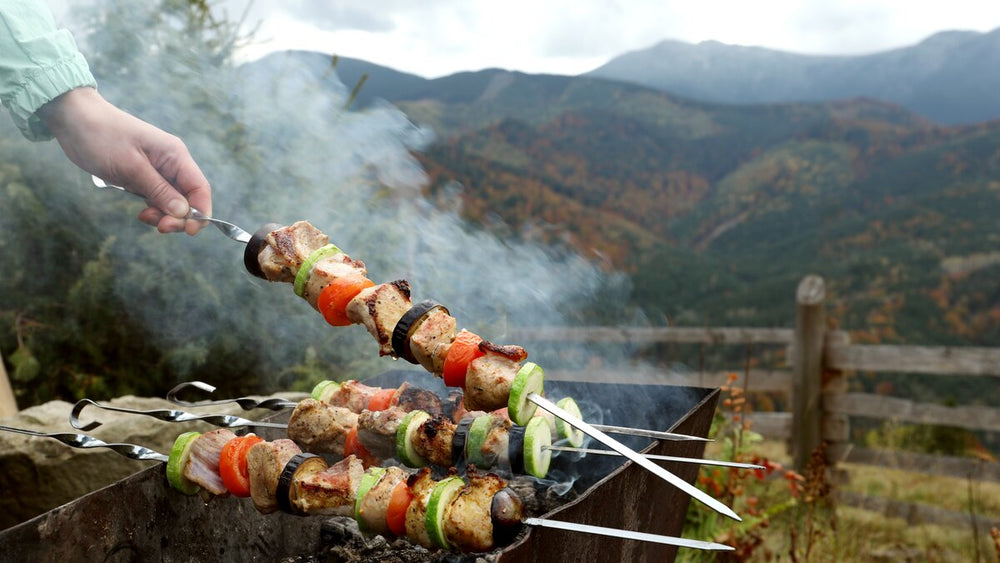
You might notice your food tasting a bit off at higher elevations. And no, it’s not you, but it is food science. The culprit here is air pressure - as altitude increases, air pressure decreases. Pressure then controls the boiling point and the expansion of gas. As a result, water will boil at a lower temperature, foods that rely on moist heat (e.g., rice) will cook much more slowly, foods can dry out quickly, and baked goods can rise too fast (and then collapse). Cooking problems may vary depending on the altitude, but below are some general fixes:
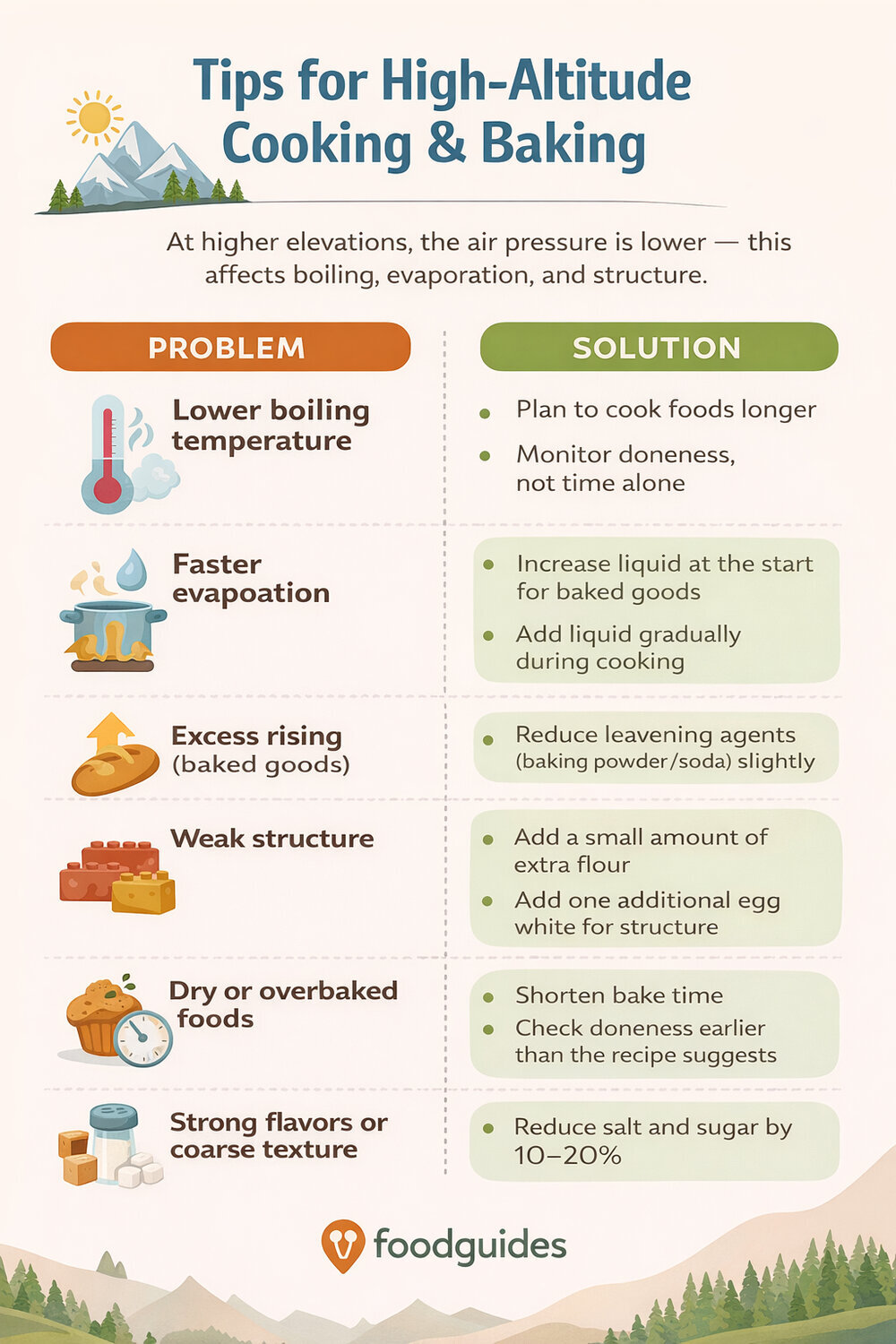
As long as you know how to accommodate these shifts, your food should come out just fine.
As long as you know how to accommodate these shifts, your food should come out just fine.
Key Adjustments for High-Altitude Baking
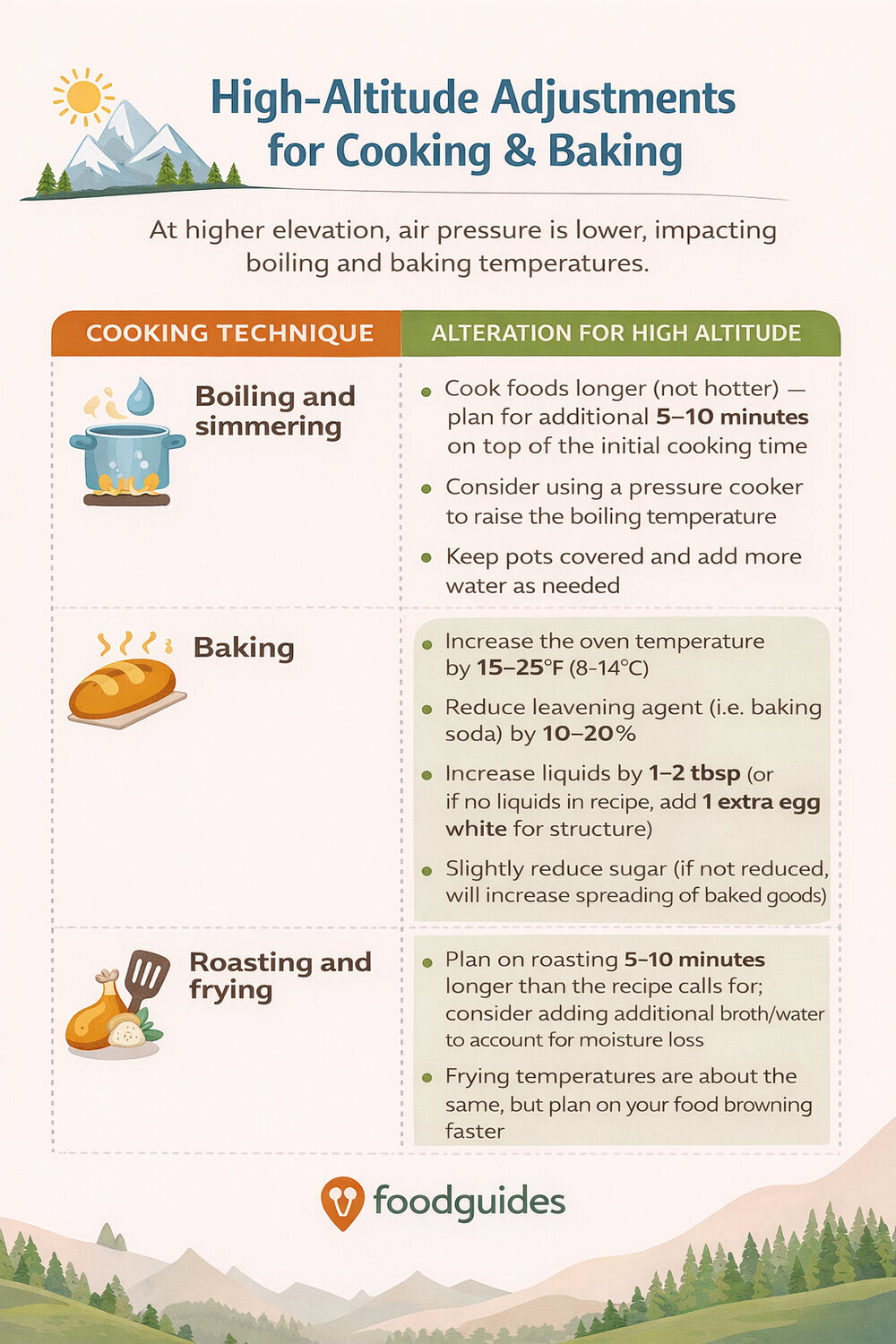
Step number one is to know your altitude. Adjustments will typically start around 3,000 ft (900 m) above sea level. Consider specifically searching for recipes tailored to specific altitudes. Kelley, a personal chef and resident of Park City, Utah, has a wide variety of recipes tailored to higher altitudes on her website. Nicole, a food blogger coming to us from Denver, also has dozens of high-altitude recipes to choose from. If you have a family recipe that you want to cook up in the mountains, see the table below for adjustments needed:
FAQs
Why does baking at high altitude require recipe adjustments?
At higher elevations, air pressure is lower, which causes liquids to evaporate more quickly and gases in doughs and batters to expand faster. As a result, baked goods may rise too rapidly, dry out, collapse, or develop an uneven texture if recipes are not adjusted appropriately.
What are the most common changes needed for high-altitude baking?
Common adjustments may include increasing liquids, slightly reducing sugar, decreasing leavening agents such as baking powder or baking soda, and slightly increasing the oven temperature while shortening the baking time. The exact changes depend on the recipe and the elevation at which you are cooking.
Does altitude affect cooking methods other than baking?
Yes. High altitude can affect boiling, steaming, and other cooking methods because water boils at a lower temperature with increasing elevation. This often means foods may require longer cooking times to achieve the desired texture and doneness.
At what elevation should I start adjusting recipes?
Many cooking experts recommend considering recipe adjustments at elevations above 3,000 feet (914 meters). The higher the altitude, the more noticeable the effects become, and recipes may require additional modifications for optimal results.
Can I use sea-level recipes at high altitude?
You can often start with a standard recipe, but some experimentation may be necessary. Following high-altitude cooking guidelines and making small adjustments to ingredients, baking times, and temperatures can help improve consistency and prevent common issues such as dry cakes, sunken breads, or over-risen baked goods.
References
1Hampton, N. (2022). Cozy Winter High-Altitude Baking Recipes | Dough-Eyed. Dough-Eyed. https://www.dougheyed.com/cozy-winter-high-altitude-baking-recipes/
2High altitude recipe Archives - Mountain Mama Cooks. (2025). Mountain Mama Cooks. https://mountainmamacooks.com/tag/high-altitude-recipe/










 Recipes
 Products
Comments
Join The Conversation...