


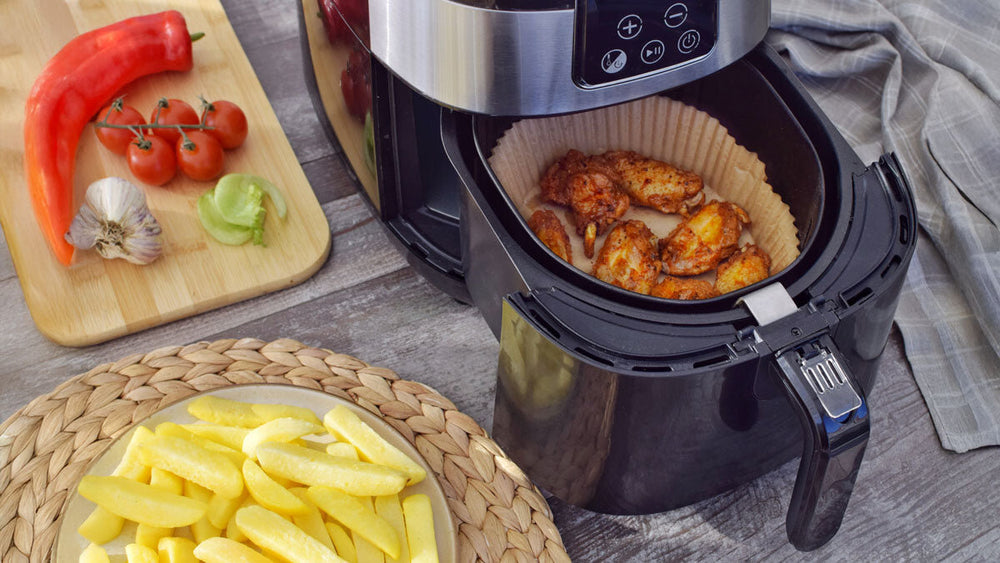
Air Fryer Safety 101: How to Use, Clean, and Cook with Your Air Fryer the Right Way
The first time I heard of an air fryer, I’ll admit I was a little confused. Growing up, we used an old-fashioned FryDaddy to deep-fry our food. How could a product use air to fry my beloved chicken tenders? Was that even possible?
Thankfully, now that I’m older and slightly wiser, I’ve learned that there are tons of benefits tied to the use of air fryers. Plus, my chicken tenders taste just as good when cooked in an air fryer!
If you have any questions or concerns about introducing an air fryer to your kitchen, keep reading! (Your FryDaddy is probably ready to retire!)
Protecting Your Home and Food
Air fryers are a great addition to your culinary collection, but they require a safe operating space, proper food placement, and regular cleaning and maintenance.
Placement and Ventilation: Preventing Overheating and Fires
Air fryers cook your food by drawing in air from the surrounding area, heating it, and then circulating it around the food inside. The warm air creates a crispy, savory product without the use of cooking oil.
To prevent fires and overheating, be sure to place your air fryer on a heat-safe surface. Most countertops are already designed with this feature, but you’ll want to make sure the air fryer isn't resting on or near any plastic products. You’ll also want to maintain a 5-inch space between the back of the air fryer and the wall and any other object.
Since air fryers can reach very high temperatures, it’s a good idea to use proper safety measures when cooking. Keep potholders/towels handy to prevent burns and keep air fryers out of reach of your curious kiddos.
Air Fryer Fact 1: Did you know that air fryer temperatures can reach almost 500 degrees Fahrenheit? Keep that in mind when you reach into the air fryer basket!
Food Safety in the Air Fryer: Don't Overcrowd and Cook to Temperature
One of the perks of using an air fryer is its speed compared to using a conventional oven. Unfortunately, it's easy to overcrowd the air fryer in an attempt to get dinner on the table quickly. Overfilling air fryer baskets can lead to undercooked food because the hot air cannot properly circulate around the food. If you are unsure whether your food is fully cooked, use a food thermometer to check the internal temperature. Here is a list of proper internal cooking temperatures per the FDA:
- Fish - 145 degrees Fahrenheit
- Ground meat (beef, turkey, etc.) - 160 degrees Fahrenheit
- Whole cuts of meat (pork, veal, lamb, beef, etc.) - 145 degrees Fahrenheit (with 3-minute rest time)
- Poultry - 165 degrees Fahrenheit
Air Fryer Fact 2: Did you know that there are different types of air fryers? There are standalone air fryers that fit perfectly on your countertop, as well as ovens with air fryer capabilities.
Cleaning and Maintenance: Avoiding Grease Buildup and Malfunctions
While air fryers do not use cooking oil, they can create a buildup of grease. This accumulation is a serious fire hazard. It can also prevent the air fryer from working properly. Make sure to clean your air fryer frequently and check for common grease buildup areas (in and around the baskets).
Air Fryer Fact 3: There are numerous ways to clean your air fryer. One of the best methods is combining Dawn dish soap with baking soda and white vinegar.
Ensuring Safe, Delicious Meals
Air fryers are not only convenient, but they are also a conduit for tasty (and healthy) meals! To create safe and delicious meals, you will need to use proper food preparation methods, use the air fryer correctly, and avoid leaving it unattended.
Food Preparation: Thawing, Temperature, and Filling Guidelines
As mentioned above, you’ll want to make sure your food items reach the proper internal temperature before eating. One method to help with this is to thaw your food before placing it in the air fryer. The absence of ice around your food ensures it is cooked on all sides and hot enough to kill any bacteria before consumption.
You’ll also need to avoid overfilling the fryer baskets to ensure each item is cooked entirely. If you are worried about your food, don’t be afraid to open the basket and check on its cooking progress. Just make sure you’ve paused the air fryer cooking cycle!
Air Fryer Fact 4: If you are cooking smaller food items (such as chicken nuggets, fries, and onion rings), pause the cooking cycle and gently shake the basket. This will ensure the food cooks evenly.
Proper Usage: Keeping the Lid On and Avoiding Reheating
Using an air fryer properly is essential. As mentioned in the previous section, keeping the air fryer at a safe distance from other objects (walls, plastic kitchenware, etc.) will help prevent fires. It is also important to avoid unassembling the air fryer when cooking. Keeping the air fryer lid on while heating food will ensure the hot air needed will circulate properly.
You’ll also want to make sure you don't reheat foods that aren't air fryer-safe. Avoid placing items such as cheese, creamy foods, and leafy greens in an air fryer. This can lead to burnt food items and potential fire hazards. You should also avoid reheating liquids, such as soups and stews, and drier items, such as pasta and rice. If you’d like to reheat your favorite soup or pasta, use a stovetop instead.
Air Fryer Fact 5: Air fryers are perfect for late-night snacks! Try using an air fryer to reheat your favorite pizza, chicken tenders, or fish fingers!
Unattended Cooking and Power Outages: What You Need to Know
An air fryer should be observed like any other major kitchen appliance. If you plan to multitask while cooking, be sure to keep a close eye on the air fryer. Leaving an air fryer unattended can lead to disastrous consequences, such as unintentional burns and grease fires.
After using an air fryer (and it has cooled down), you’ll want to unplug it immediately. Unplugging small countertop appliances when not in use may reduce the risk of electrical and fire hazards. Be sure to unplug the air fryer and any other small appliance that can generate heat as soon as you’re finished using them.
Air Fryer Fact 6: Air fryers are subject to recalls like any other appliance. Be sure to stay up to date on recall notices to ensure your air fryer is not affected!
General Appliance Safety Best Practices
Air fryers are an amazing asset to any kitchen. Here are some tips on how to use them safely:
Tip 1: Read the Manual: Your Appliance's Specific Instructions
After purchasing your air fryer, take a moment to read the instruction manual. Educate yourself on proper usage.
Tip 2: Use Dedicated Outlets and Avoid Extension Cords
When choosing the best location for your air fryer, be sure to use an outlet that can support the required wattage. Do not use an extension cord.
Tip 3: Regular Inspection and Knowing When to Replace
Check your air fryer regularly for buildup and any issues with the electrical cord. Your air fryer filter should be replaced every 3 to 6 months. Some air fryers have a light indicating when it is time to replace the filter.
Air Fryer Fact 7: Air fryers are energy-efficient! An average air fryer uses 800-2,000 watts of power compared to a conventional oven, which uses 2,000 to 5,000 watts.
Did you learn anything new about air fryers? Do you have any other questions about using an air fryer? Let us know, and be sure to tag us on Facebook, Bluesky, and Instagram!
References
1High Speed Training. (n.d.). Air Fryer Safety. Retrieved from https://www.highspeedtraining.co.uk/hub/air-fryer-safety/
2Food Safety and Inspection Service. (n.d.). Air Fryers and Food Safety. https://www.fsis.usda.gov/food-safety/safe-food-handling-and-preparation/food-safety-basics/air-fryers-and-food-safety
3Consumer Reports. (n.d.). Air Fryer Heat Hazard How To Avoid Getting Burned A7629741439. Retrieved from https://www.consumerreports.org/appliances/air-fryers/air-fryer-heat-hazard-how-to-avoid-getting-burned-a7629741439/
4University of Arkansas System Division of Agriculture. (n.d.). Ten Cooking Tips for Your Air Fryer. https://www.uaex.uada.edu/counties/miller/news/fcs/meats-proteins/Ten-Cooking-Tips-for-Your-Air-Fryer.aspx


















 Recipes
 Products

Comments
Join The Conversation...