



IBS on The Road: Strategies for Truckers Living With Irritable Bowel Syndrome
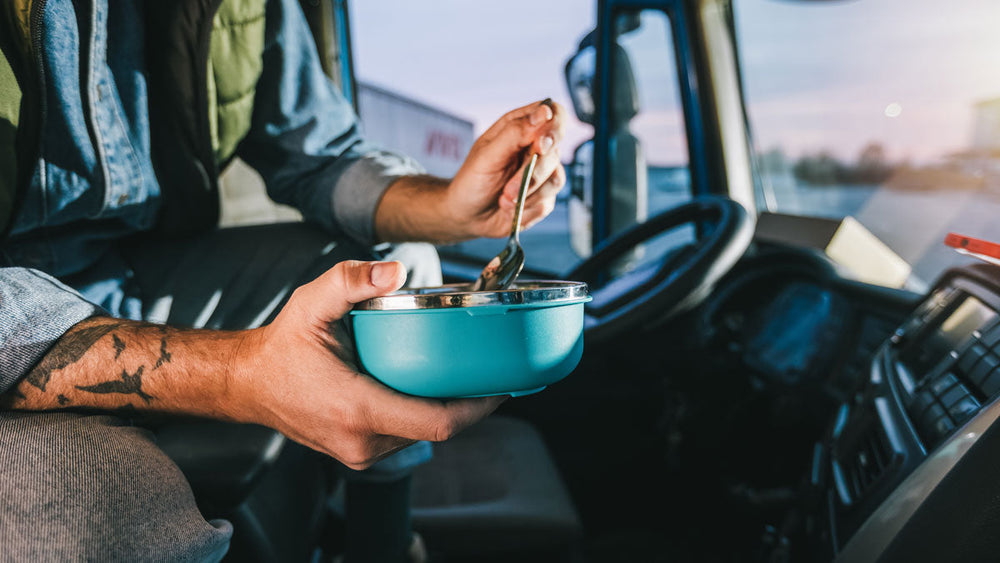
Irregular schedules and limited food choices are part of the long-haul lifestyle, but they can signal trouble down the road if you’re a trucker with Irritable Bowel Syndrome. Follow our roadmap to help keep your IBS symptoms to a minimum.
If Irritable Bowel Syndrome (IBS) is a new diagnosis for you, or you’re early in your journey of managing the condition, thinking about all the dietary changes you’re learning about can feel overwhelming. Managing your IBS on the job does require some specific strategies, since on-the-road life is unique. But you’re not going it alone. Foodguides’ articles (and recipes!) are just a click away and can help ease you into this new way of thinking about food and your eating habits.
Do I Have IBS?
Do you suspect that you have irritable bowel syndrome? Outside of a physician's positive diagnosis, it can be hard to know. The symptoms of IBS are similar to those of a “sour stomach” or just a generic “upset stomach.” The range of symptoms included in IBS includes abdominal pain, bloating, diarrhea, and constipation. There are four subtypes of IBS, identified by their main symptom: either diarrhea (IBS-D), constipation (IBS-C), mixed—both diarrhea and constipation (IBS-M), and unsubtyped (IBS-U), meaning the pattern of symptoms doesn’t fit neatly into any of the other three categories.
IBS impacts millions of people around the world, and is more common in women than it is in men. That doesn’t let guys off the hook, though, since it’s estimated that 1 in 3 cases of IBS occur in men. If you’re a male truck driver (and the vast majority of truck drivers are) and you regularly experience gastrointestinal issues, it’s a good idea to get it checked out. Males are more commonly diagnosed with the IBS-D subtype, while females tend to fall into the IBS-C subtype. Ongoing research is examining why the sexes present with different symptom profiles.
Why Trucking Can Aggravate IBS
There are several reasons IBS occurs among truckers. Primary among them are diet-related issues, stress, and erratic schedules. (Interestingly, some truckers also complain that hours spent bouncing around in the truck cab contribute to their unpleasant gastrointestinal symptoms.) Do you recognize your situation in any of the following?
Irregular sleep schedule: Our bodies like predictability, and when that doesn’t happen, the results can show up in our health. Sleep is one of those things that’s essential for good health, and it’s linked with IBS. Studies show an association between lack of optimal sleep and IBS. Granted, it can be a chicken-and-egg situation: it could be that your symptoms are worse at night, interrupting your already precious sleep. Or, the overnight driving and trying to catch some zzzs during the daylight hours, or on breaks, is contributing to your IBS symptoms. But no matter the situation, short-changing your sleep shows up in your body and brain with mental fatigue, physical exhaustion, and an overall feeling that you’re not at your best. And those feelings can lead you to “self-medicate” with things that may also not help your IBS symptoms.
A caffeine habit: Staying awake while driving is crucial, so caffeinating yourself frequently might be a major habit. Coffee is well-known to stimulate gut motility, and if you have IBS-D, anything that makes you have bowel movements more quickly is the last thing you want when you’re on the road. In addition to that, research shows a significant positive relationship between caffeine intake and both the likelihood and severity of IBS in people who are overweight or have obesity.
Erratic eating: Limited food options on the road, combined with working long and sometimes irregular hours, can lead to eating habits that are all over the place. Eating at odd times or consuming certain foods can increase the chance of an IBS flare-up. In fact, the majority of people with IBS likely associate their symptoms with specific meals or foods. There are a few reasons why erratic eating is problematic:
-
You get overly hungry between meals and then eat bigger-than-usual meals to compensate.
-
You end up choosing high-carb or high-fat meals because you have limited choices or are overly hungry, and those foods seem especially enticing.
-
Whatever sounds good at the moment is what you eat, and that leads to unbalanced meals that can also be full of trigger foods.
Stress: A long-haul lifestyle is not low-stress: it’s packed with stressful situations like traffic, breakdowns, and delivery deadlines. Unfortunately, there’s a distinct connection between stress and IBS symptoms. Whenever we feel stress or anxiety, certain parts of our bodies automatically react in a “fight or flight” response. The result can be diarrhea or nausea, and over time, chronic stress can lead to an unbalanced gut microbiome, which can circle back and impact your food choices, nutrient absorption, mood, and more.
Which Foods Trigger Your IBS Symptoms?
You’ve probably memorized the restaurant and quickie-mart options on your usual routes. But eating to minimize IBS symptoms may require some adjustments to your food choices. Although IBS triggers vary from person to person, some of the common ones are:
-
High-fat foods, fried foods
-
Dairy products
-
Sugar-alcohol sweeteners (maltitol, xylitol, sorbitol, mannitol)
-
Caffeinated coffee, energy drinks, and caffeinated tea
-
FODMAPS (fermentable carbohydrates) in certain fruits and vegetables
-
Spicy foods
-
Alcohol
-
Too much/too little fiber (certain types and amounts of fiber can make some categories of IBS either worse or better)
And even if you think you already know exactly which foods trigger your symptoms, if you’re new to navigating the IBS journey, it’s useful to keep track of what you’re eating and how you feel afterward. A food and symptom log can be kept on an app (like the mySymptoms app) or with paper and pencil. Either way, it’s especially helpful to have on hand for when you first meet with your physician, and for periods when you’re experiencing more than your usual amount of flare-ups.
Strategies for Managing IBS on The Road
Much of the work of keeping IBS symptoms in check involves your diet and eating habits. Choosing the right foods for you, avoiding triggers, and learning how to put together healthy meals and snacks that feel good to you (after eating) are important skills to learn and master. If you’re newly diagnosed with IBS, or simply want a refresher or have some questions about your diet, consulting with a Registered Dietitian is highly recommended. In fact, I don’t recommend trying to navigate a Low FODMAP diet without first seeing an RD. An RD can help tailor an IBS eating plan just for you, addressing your unique symptoms, food preferences, allergies, and other considerations. Your success with whatever dietary modifications are necessary to manage your symptoms will increase if you get professional assistance from a dietitian specializing in gastrointestinal disorders.
Of course, managing your IBS symptoms on the road isn’t just about choosing the right foods and drinks. There are other lifestyle strategies you can use to reduce symptom flare-ups.
Lifestyle Modifications
-
Long-haul truckers are significantly more likely to be overweight than the rest of the population. If you’re overweight, aim to lose weight (consult with your doctor or registered dietitian)
-
Wear comfortable clothing that doesn’t constrict around the waist
-
Eat smaller meals, chew your food thoroughly, and try to find a relaxed eating environment
-
Take exercise “snacks” on days you’re driving. A 10-minute walk after eating helps with digestion
-
Stay hydrated, no matter what type of IBS you have—plain water works great
-
Learn and practice some stress-management techniques (like breathing exercises and mindfulness), since the gut-brain connection with IBS is strong
Over-the-Counter and Prescription Medications
-
Make sure you have the medicine prescribed by your doctor with you
-
Ask your physician about whether a probiotic is right for your IBS; studies are showing some success with certain strains
-
Follow the directions for taking your medication, and always inform your doctor of other medications, vitamins, or supplements you are taking
“IBS Emergency” Needs
The nature of your job as a trucker can make pit-stops a challenge, so it pays to make sure you’re prepared for IBS emergencies.
-
Keep your own supply of toilet paper handy in case the nearest bathroom or porta-potty is out. Also consider stocking a small pack of bathroom wipes for a more comfortable bathroom trip.
-
Some truckers with gut issues hit the road with their own portable toilets. There are many types available for a moderate cost.
-
Over-the-counter medicines, just in case.
-
Extra underwear and clothing (enough said).
-
Bathroom spray.
-
Bachmann, L. H., Lichtenstein, B., St Lawrence, J. S., Murray, M., Russell, G. B., & Hook, E. W., 3rd (2018). Health Risks of American Long-Distance Truckers: Results From a Multisite Assessment. Journal of occupational and environmental medicine, 60(7), e349–e355. https://doi.org/10.1097/JOM.0000000000001319
-
Ho, F. F., Sun, H., Zheng, H., Wong, D. C. N., Gao, Y. Y., Mao, C., Cheung, Y. T., Lam, C. S., Wang, M. H., Wu, I. X., Wu, J. C. Y., & Chung, V. C. H. (2024). Association of healthy lifestyle behaviours with incident irritable bowel syndrome: a large population-based prospective cohort study. Gut, gutjnl-2023-331254. https://doi.org/10.1136/gutjnl-2023-331254
-
Koochakpoor, G., Salari-Moghaddam, A., Keshteli, A. H., Esmaillzadeh, A., & Adibi, P. (2021). Association of Coffee and Caffeine Intake With Irritable Bowel Syndrome in Adults. Frontiers in nutrition, 8, 632469. https://doi.org/10.3389/fnut.2021.632469
-
Patel, A., Hasak, S., Cassell, B., Ciorba, M. A., Vivio, E. E., Kumar, M., Gyawali, C. P., & Sayuk, G. S. (2016). Effects of disturbed sleep on gastrointestinal and somatic pain symptoms in irritable bowel syndrome. Alimentary pharmacology & therapeutics, 44(3), 246–258. https://doi.org/10.1111/apt.13677
-
Simrén, M., Månsson, A., Langkilde, A. M., Svedlund, J., Abrahamsson, H., Bengtsson, U., & Björnsson, E. S. (2001). Food-related gastrointestinal symptoms in the irritable bowel syndrome. Digestion, 63(2), 108–115. https://doi.org/10.1159/000051878
-
Truck Driver Demographics and Statistics in the U.S. (n.d.) Zippie Careers. https://www.zippia.com/truck-driver-jobs/demographics/
-
U.S. Centers for Disease Control. (July 2024). Motor-Vehicle Safety at Work: Long-haul Truck Drivers. National Institute for Occupational Safety and Health. https://www.cdc.gov/niosh/motor-vehicle/long-haul-truck-drivers/index.html
-
U.S. Department of Health and Human Services. (November 2017). Symptoms and Causes of Irritable Bowel Syndrome. National Institute of Diabetes and Digestive and Kidney Diseases. https://www.niddk.nih.gov/health-information/digestive-diseases/irritable-bowel-syndrome/symptoms-causes














 Recipes
 Products

Comments
Join The Conversation...