


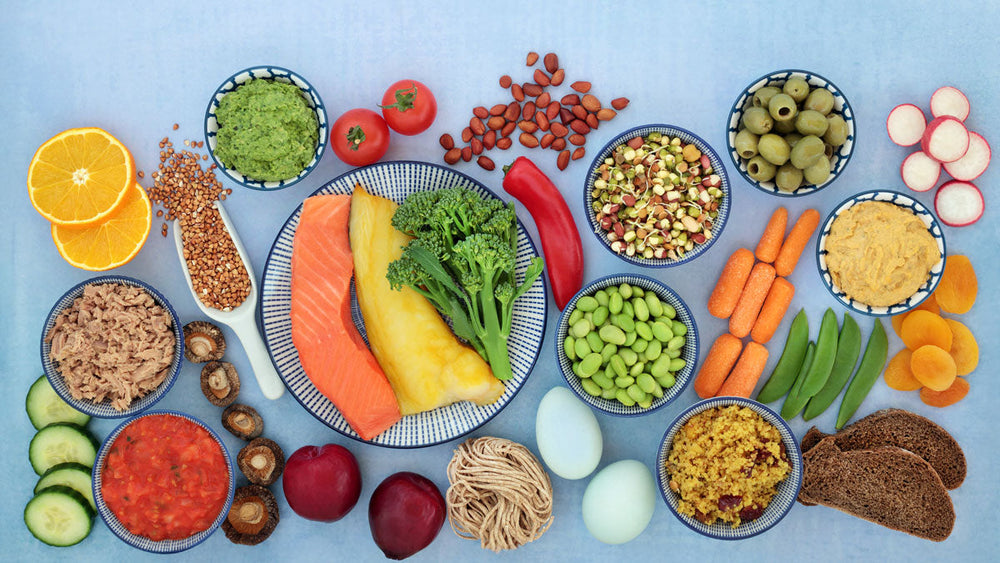
Defining the Glycemic Index (GI): How Foods Impact Blood Sugar
The glycemic index (GI) is a super fancy (but not as complicated as it sounds) numerical system ranging from 0 - 100 that ranks carbohydrate-containing foods based on their effect on blood sugar levels after a meal. Foods can either be classified as high GI (≥70), medium GI (55–69), or low GI (<55). The GI of a food is determined by measuring the rise in blood glucose after consuming 50 g of available carbohydrate from that food, compared to the same amount from a reference food (usually glucose, pure sugar molecules).
Foods with a high GI are rapidly digested and absorbed (think donuts, cake), causing a quick and pronounced increase in blood glucose and a corresponding insulin surge. In contrast, low GI foods are digested and absorbed more slowly (oatmeal anyone?), resulting in a gradual and lower rise in blood glucose and a more modest insulin response. This is what we want! The slow and steady rise in blood sugar, accompanied by a plateau in a not-too-high area, and a gradual decrease back down, is the ultimate goal.
Unfortunately for us all, sweets and simple sugars will not help us accomplish this. This is where we look at complex carbs, which are typically bundled in with fiber (hello again, oats). The fiber component physically slows the digestion process, resulting in a gradual breakdown of the sugars and a seamless transition from digestion to absorption without breaking the bank (the bank, of course, being our blood sugar).
Factors Affecting a Food's Glycemic Index
To make matters more complicated, the American Diabetes Association notes that the glycemic index is influenced not only by the type of carbohydrate but also by food processing, preparation, and the presence of other macronutrients such as fat and protein, which can attenuate the glycemic response. As we discussed above, fiber also plays a big role in determining (and lowering) the GI of foods.
The extent to which food processing affects the GI of foods depends entirely on the specific type of food and the processing method used. For example, processing techniques such as milling, extrusion, baking, and high-heat treatments can disrupt the physical structure of foods, especially those rich in fiber, making carbohydrates more rapidly digestible and often increasing the GI. The breakdown of fiber via heat directly impacts the GI in this case. Even processes such as grinding and refining grains can alter the GI by changing the physical structure of carbohydrates (i.e., grinding wheat berries to make bread flour).
Interestingly, a recent study of 1,995 foods found that mean GI values did not differ significantly between processing levels, suggesting that ultra-processed foods are not directly linked to increased blood sugar levels. Because the correlation is not always direct, we can take this information with a grain of salt. While we want to preserve nutrients (such as fiber), the processing method of the food is likely to have a minimal impact on the GI, compared to the actual sugar content. Overall, the American Diabetes Association emphasizes that high-fiber, minimally processed foods are associated with lower GI and improved metabolic outcomes.
Glycemic Index vs. Glycemic Load: A More Complete Picture
Would you like to be even more confused? Well, let me introduce you to the glycemic load (GL). While the GI measures how quickly a carb-containing food will cause your blood sugar to rise, the GL instead accounts for both the GI and the serving size of the carbohydrate. The result? A more practical estimate of a food’s overall impact on blood sugar.
Glycemic index (GI) measures how quickly a carbohydrate-containing food raises blood glucose compared to a reference (usually glucose or white bread), while glycemic load (GL) accounts for both the GI and the amount of carbohydrate in a serving, providing a more practical estimate of a food’s overall impact on blood glucose. The math is simple, but not necessary to calculate ourselves (thank you, internet). Let’s run through a few examples; these will likely not come as a surprise.

Can you spot the difference between the two groups? FIBER! Among other nutrients, such as healthy fats and proteins, fiber plays a significant role in slowing the digestion of these foods and helping to control blood sugar levels.
Practical Applications: Using GI and GL for Health
The American Diabetes Association incorporates both glycemic index (GI) and glycemic load (GL) into diabetes management primarily through dietary recommendations that emphasize high-fiber, low-GI, and low-GL eating patterns. These recommendations are directly associated with a lower risk of type 2 diabetes, cardiovascular disease, diabetes-related cancer, and overall mortality.
Building on these recommendations, recent clinical trials have consistently demonstrated that low-GI and low-GL dietary patterns can modestly but significantly improve blood sugar control, help reduce hemoglobin A1c, improve cholesterol levels, aid in body weight reduction, and reduce overall inflammation in the body. These effects are most pronounced when the reduction in dietary GI or GL is substantial and sustained over time.
This all sounds great, right? However, it is important to note that the benefits of low-GI/GL diets are most robust when these patterns are integrated into an overall healthy eating plan (i.e., reducing processed foods and eating more fiber). While both GI and GL are incredibly useful tools, they should not be the sole determinants of a food’s value. Other nutritional qualities are still incredibly important, such as fat, protein, vitamins, and mineral content.
-
American Diabetes Association Professional Practice Committee; 5. Facilitating Positive Health Behaviors and Well-being to Improve Health Outcomes: Standards of Care in Diabetes—2025. Diabetes Care 1 January 2025; 48 (Supplement_1): S86–S127.
-
Atkinson, F. S., Brand-Miller, J. C., Foster-Powell, K., Buyken, A. E., & Goletzke, J. (2021). International tables of glycemic index and glycemic load values 2021: a systematic review. The American journal of clinical nutrition, 114(5), 1625–1632. https://doi.org/10.1093/ajcn/nqab233
-
Basile, A. J., Ruiz-Tejada, A., Mohr, A. E., Morales, A. C., Hjelm, E., Brand-Miller, J. C., Atkinson, F. S., & Sweazea, K. L. (2024). Food processing according to the NOVA classification is not associated with glycemic index and glycemic load: results from an analysis of 1995 food items. The American journal of clinical nutrition, 120(5), 1037–1042. https://doi.org/10.1016/j.ajcnut.2024.08.024
-
Chiavaroli, L., Lee, D., Ahmed, A., Cheung, A., Khan, T. A., Blanco, S., Mejia, Mirrahimi, A., Jenkins, D. J. A., Livesey, G., Wolever, T. M. S., Rahelić, D., Kahleová, H., Salas-Salvadó, J., Kendall, C. W. C., & Sievenpiper, J. L. (2021). Effect of low glycaemic index or load dietary patterns on glycaemic control and cardiometabolic risk factors in diabetes: systematic review and meta-analysis of randomised controlled trials. BMJ (Clinical research ed.), 374, n1651. https://doi.org/10.1136/bmj.n1651
-
Johnson, R. K., Appel, L. J., Brands, M., Howard, B. V., Lefevre, M., Lustig, R. H., Sacks, F., Steffen, L. M., Wylie-Rosett, J., & American Heart Association Nutrition Committee of the Council on Nutrition, Physical Activity, and Metabolism and the Council on Epidemiology and Prevention (2009). Dietary sugars intake and cardiovascular health: a scientific statement from the American Heart Association. Circulation, 120(11), 1011–1020. https://doi.org/10.1161/CIRCULATIONAHA.109.192627

















 Recipes
 Products

Comments
Join The Conversation...