


Trick or Treat! - Give Me Something Good to Eat!
Hello Foodguides family, and happy autumn! It’s almost that sweet time of the year…Halloween! I’m sure you and your kiddos are giddy with the prospect of coming home with buckets overflowing with candy.
When you have food allergies, trick-or-treating can look a lot different; it can sometimes even be spooky! Candies may contain allergens, and unwrapped candies can be cross-contamination hazards that might scare you. Don’t be frightened, friends; we have some ghoulie goals to support your witchy wanderings.
Here are some tips to keep your trick-or-treating (allergy) scare-free!
Beware of Allergens: Reading Labels for Safe Candy Choices
First and foremost, read the food labels!
Halloween candies often contain various allergens, including peanuts, tree nuts, wheat, soy, eggs, and milk. To avoid cross-contamination, check where the candy is made. This information is usually found on the candy label directly underneath the nutritional information. Candy factories often produce many different types of candies with various allergens. Sometimes, candies labeled “allergy-free” are actually made in facilities that produce other candies with allergens. Now that’s a cross-contamination nightmare!
Fun fact: the miniature-sized candies (the ones often found in candy bowls on Halloween night) may be produced on different equipment than their larger allergy-free counterparts, which means trick-or-treaters with food allergies should be especially careful.
Allergy-Friendly Candy Options for a Sweet Halloween
Luckily, plenty of candy options may work for children with food allergies! However, no candy brand is automatically safe for every child. Ingredients and manufacturing practices can vary, even between different sizes or seasonal versions of the same candy. Before adding treats to your Halloween stash, check the individual package labels and confirm that each option meets your child's specific allergy needs.
We can’t forget about our gluten-free and dairy-free friends!
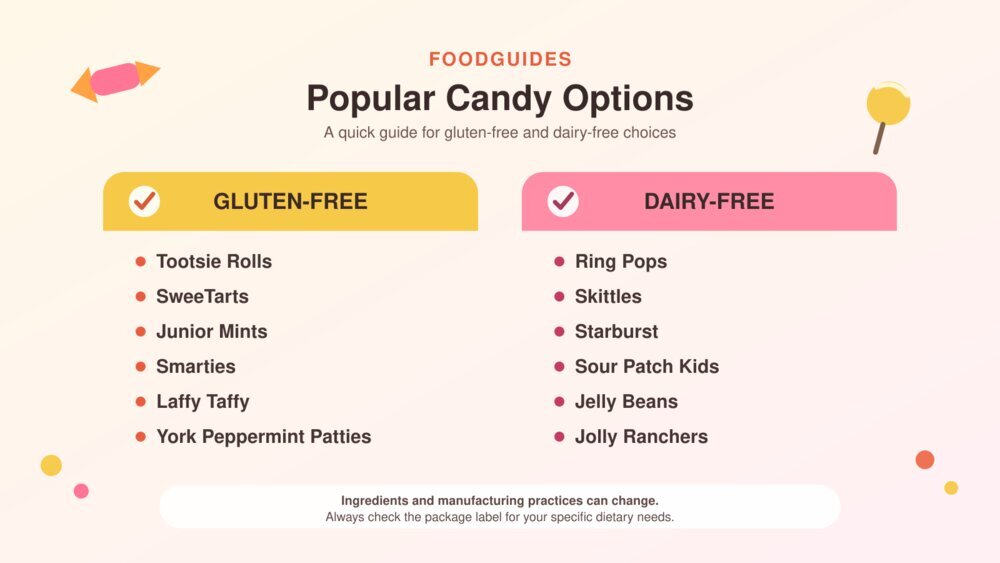
Here is a short list of gluten-free candies and dairy-free candies you can buy at the store (the complete list can be found at Mercy Health):
Home Sweet Home: A Safe Space for Candy Enjoyment
To avoid an allergy attack while walking the block, wait to eat your treats until you get home!
This is an excellent opportunity for parents to teach their children to read food labels so they can avoid their allergens. It is also a great opportunity to educate your friends and neighbors about food allergies so they can do the same for their family members.
Before heading out, make sure your child has access to their prescribed epinephrine auto-injector and that supervising adults know how and when to use it. If anaphylaxis occurs, administer epinephrine promptly and call 911. An emergency action plan can help everyone feel more prepared while enjoying Halloween festivities.
Halloween Fun Without the Food Allergy Fright
Offer an alternative: try non-edible treats!
Trick-or-treating does not have to be limited to candy. Consider joining the Teal Pumpkin Project - a Food Allergy Research and Education program promoting healthy, allergy-free Halloween activities.
By placing a teal-colored pumpkin on your porch, you can signal to families that you offer non-edible treat options such as spider rings, vampire fangs, stickers, glow sticks, bookmarks, and pencils. You can find these prizes in bulk at your local dollar store, so you can provide treats for all your neighbors!
Trick-or-treating is one of the best fall activities. While the costumes may be scary, your candy collecting does not have to be! By reading food labels, avoiding allergens, and searching for non-edible alternatives, every superhero, Jedi, butterfly, ghost, witch, vampire, and werewolf can enjoy a safe and happy Halloween.
FAQs
How can I tell if Halloween candy is safe for my child with food allergies?
Always check the ingredient label on each piece of candy before allowing your child to eat it. Look for their specific allergens, and remember that miniature or seasonal versions may have different ingredients than regular-sized products. If a candy doesn't have a readable ingredient label or you can't confirm its safety, it's best to choose another treat.
Are candies labeled “nut-free” or “allergy-friendly” safe for everyone with food allergies?
Not necessarily! A candy marketed as nut-free or allergy-friendly may still contain other allergens, such as milk, soy, or wheat. Precautionary statements about shared equipment or facilities are voluntary and aren't used consistently. Always review the complete ingredient information and contact the manufacturer when clarification is needed.
What should I do if my child accidentally eats a Halloween candy containing an allergen?
Follow your child's individualized food allergy emergency action plan. If symptoms of anaphylaxis occur, administer epinephrine immediately as prescribed and call 911. Antihistamines are not a substitute for epinephrine when treating anaphylaxis. Children with prescribed epinephrine should have it readily available while trick-or-treating.
What non-food Halloween treats are safe for children with allergies?
Stickers, pencils, temporary tattoos, glow sticks, and small toys can make exciting alternatives to candy! Participating in the Teal Pumpkin Project is another way to make Halloween more inclusive. Displaying a teal pumpkin lets families know you offer non-food treats, helping children with food allergies participate in the fun.
References
1Food Allergy Research & Education. (n.d.-b). Tips for trick-or-treating with food allergy. https://www.foodallergy.org/resources/tips-trick-or-treating-food-allergy
2Mercy Health. (2022, October 17). Don’t let food allergens scare you: A list of safe Halloween treats. https://blog.mercy.com/halloween-treats-food-allergen-safe/
3Food Allergy Research & Education. (n.d.-a). Teal Pumpkin Project. https://www.foodallergy.org/our-initiatives/awareness-campaigns/teal-pumpkin-project
4American Academy of Pediatrics. (2026, October 15). Avoid a food allergy scare on Halloween. HealthyChildren.org. https://www.healthychildren.org/English/health-issues/injuries-emergencies/Pages/Avoid-Food-Allergy-Scare-on-Halloween.aspx












 Recipes
 Products
Comments
Join The Conversation...