



Following a Low FODMAP diet can feel overwhelming, especially when grocery shopping. Even foods that appear healthy or "gut-friendly" can contain hidden FODMAPs that trigger digestive symptoms. Learning how to read Low FODMAP food labels is one of the most valuable skills you can develop.
By understanding ingredient lists, recognizing common aliases, and using trusted resources, you'll be able to shop with confidence and fill your cart with truly safe Low FODMAP products.
The Low FODMAP Shopper's Challenge: Hidden Ingredients
One of the biggest challenges with grocery shopping for Low FODMAP is that many high-FODMAP ingredients aren't immediately obvious. Manufacturers often use alternative names for ingredients that contain fructans, galacto-oligosaccharides (GOS), lactose, or polyols.
A product may seem perfectly safe until you read the fine print. Protein bars, salad dressings, sauces, cereals, dairy alternatives, and even seasoning blends frequently include ingredients that can cause digestive discomfort. Before purchasing any packaged food, take a moment to scan the entire FODMAP ingredient list rather than relying solely on front-of-package claims like "natural," "healthy," or "high fiber."
Beyond the Ingredient List: Understanding Common Aliases
Food manufacturers often use technical or alternative names that disguise high-FODMAP ingredients. Recognizing these aliases makes label reading much easier.
Some common examples include:
- Chicory root fiber (also called inulin)
- Inulin
- Jerusalem artichoke
- Fructooligosaccharides (FOS)
- Oligofructose
- Wheat fiber (when added as an ingredient)
- Garlic powder
- Onion powder
- Honey
- Agave syrup
Chicory root fiber is particularly common in protein bars, granola, yogurt, and "high-fiber" snacks. Although marketed as beneficial for digestive health, it is rich in fructans and may not be suitable during the elimination phase of the Low FODMAP diet. Whenever you encounter unfamiliar ingredients, it's worth verifying whether they are known sources of hidden FODMAPs before adding the product to your cart.
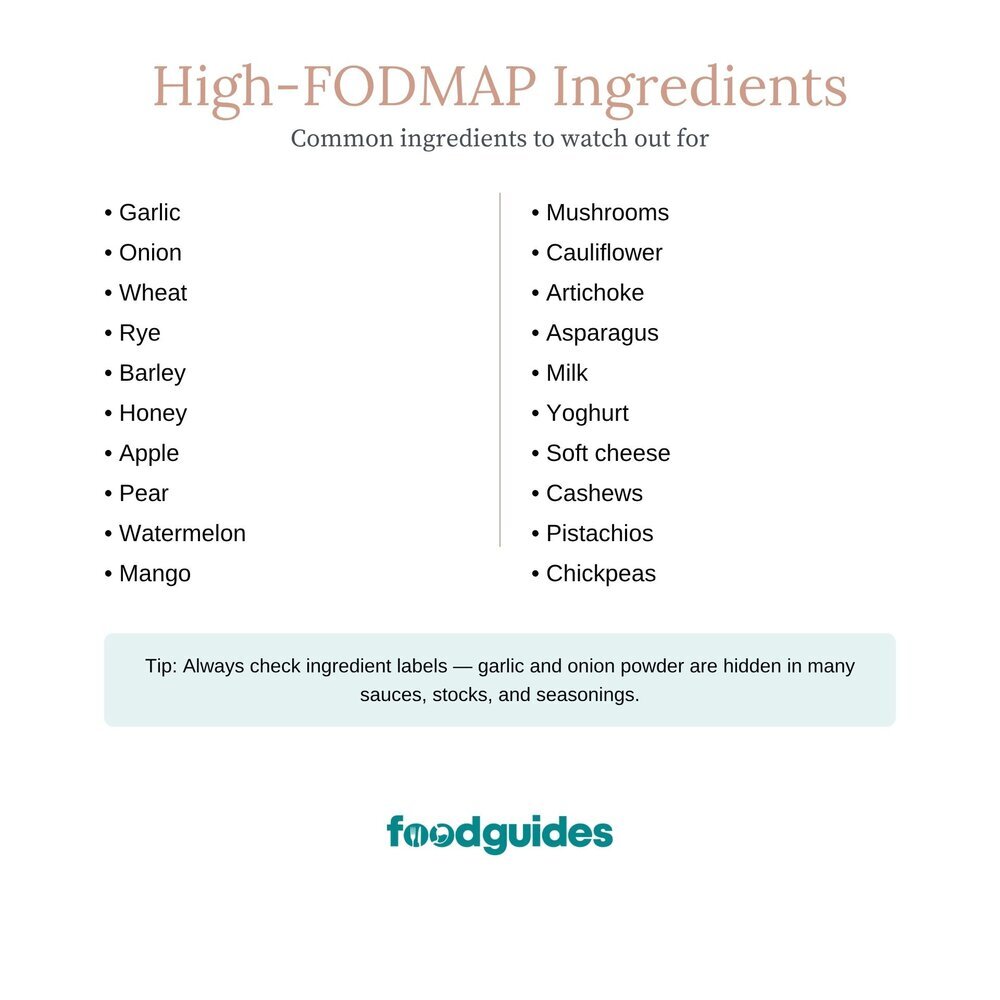
Key High-FODMAP Ingredients to Watch For
Keeping a mental checklist can make shopping faster and less stressful.
Ingredients commonly associated with high FODMAP content include:
- Rice flour
- Oat flour
- Corn flour
- Potato starch
- Tapioca starch
- Maple syrup
- Cane sugar
- Rice syrup
- Garlic-infused oil (without garlic pieces)
- Lactose-free dairy products
Reading ingredient lists becomes much easier once you recognize these common substitutions.
Navigating "Natural Flavors" and "Spices"
Many shoppers worry when they see "natural flavors" or "spices" listed on packaged foods. Fortunately, these terms are not automatically a reason to avoid a product. In most cases, natural flavors are present in very small amounts. While they can occasionally include garlic or onion derivatives, they typically contribute only trace quantities. The overall serving size and the product's intended use also matter.
Similarly, "spices" usually refers to dried seasonings and generally does not include onion or garlic, which are normally declared separately in ingredient lists. However, seasoning mixes, soup bases, marinades, and spice blends are more likely to contain garlic powder or onion powder, so these deserve extra attention. When in doubt, choose products that are specifically labeled as Low FODMAP or verify them using trusted resources.
Decoding Sweeteners: High-FODMAP vs. Low-FODMAP
Sweeteners can be one of the trickiest parts of label reading.
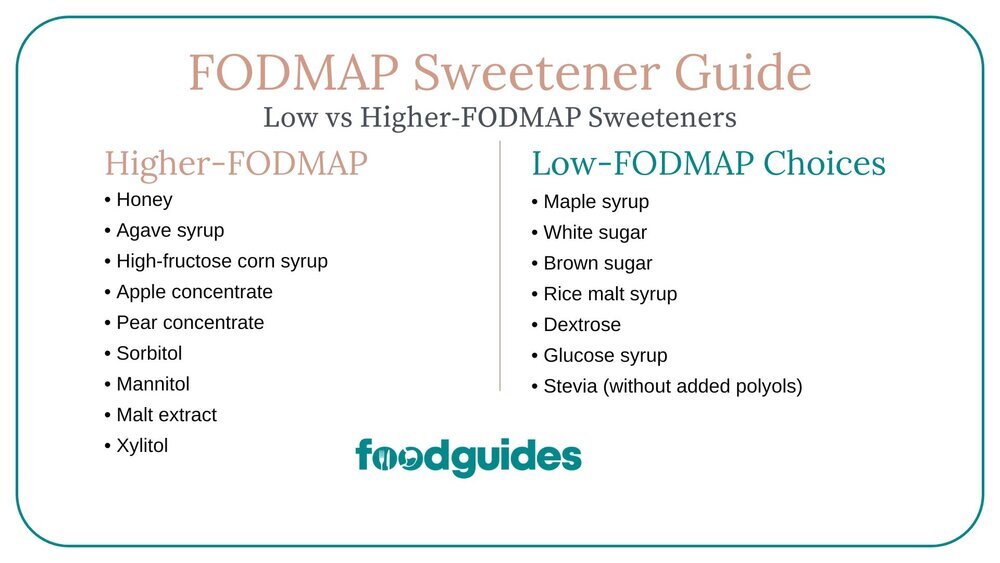
Sugar alcohols ending in "-ol" deserve particular attention, as they frequently appear in sugar-free gum, candy, protein bars, and beverages.
Certification & Apps: Tools for Smarter Shopping
You don't have to rely on memory alone. Several tools can make Low FODMAP grocery shopping much simpler, reducing guesswork and helping you identify safe Low FODMAP products more efficiently.
Helpful strategies include:
- Look for products that carry reputable Low FODMAP certification.
- Use trusted mobile apps to verify ingredient safety while shopping. Several good options are the Monash University Low FODMAP Diet App, the FODMAP Friendly App, and Spoonful.
- Save a personal list of your favorite brands and products.
- Compare ingredient lists between similar products before purchasing.
Building Your Low FODMAP Pantry: Essential Staples
A well-stocked pantry makes meal preparation easier and reduces the temptation to purchase foods with questionable ingredients.
Consider keeping these staples on hand:
- Plain rice
- Quinoa
- Certified gluten-free oats
- Rice cakes
- Canned tomatoes without onion or garlic
- Garlic-infused olive oil
- Lactose-free milk
- Firm tofu
- Peanut butter without added inulin
- Maple syrup
- Herbs and single-ingredient spices
- Canned tuna or salmon
- Plain nuts and seeds in appropriate serving sizes
As your confidence grows, reading Low FODMAP food labels will become second nature. Understanding ingredient aliases, recognizing hidden FODMAPs, and carefully reviewing every FODMAP ingredient list empowers you to make informed choices every time you shop. With practice, grocery shopping for Low FODMAP becomes less stressful, allowing you to confidently select safe Low FODMAP products that support both your digestive health and your everyday lifestyle.
FAQs
How do I know if a packaged food is Low FODMAP?
Start by reading the ingredient list rather than relying on marketing claims. Look for common high-FODMAP ingredients such as garlic, onion, inulin, chicory root fiber, honey, or certain sugar alcohols. When possible, choose products that are certified Low FODMAP or verified using trusted resources like Monash University or FODMAP Friendly apps.
Are "natural flavors" or "spices" high in FODMAPs?
Not necessarily. In most products, natural flavors and spices are used in very small amounts and are not automatically considered high in FODMAPs. However, seasoning blends, marinades, soups, and sauces are more likely to contain garlic or onion powder, so it's still important to review the full ingredient list.
What are the most common hidden FODMAP ingredients?
Some of the most common hidden FODMAPs include inulin, chicory root fiber, fructooligosaccharides (FOS), garlic powder, onion powder, wheat fiber, honey, agave syrup, and sugar alcohols ending in "-ol" (such as sorbitol and mannitol). These ingredients frequently appear in protein bars, cereals, sauces, dairy alternatives, and processed snack foods.
What pantry staples are good for a Low FODMAP diet?
A well-stocked Low FODMAP pantry may include plain rice, quinoa, certified gluten-free oats, garlic-infused olive oil, canned tuna or salmon, firm tofu, lactose-free dairy products, maple syrup, peanut butter without added inulin, herbs, spices, and canned tomatoes that do not contain onion or garlic. Keeping these staples on hand makes preparing Low FODMAP meals much easier.
References
1Low-FODMAP diet: What it is, uses & how to follow. Cleveland Clinic. (2026a, August 4). https://my.clevelandclinic.org/health/treatments/22466-low-fodmap-diet















 Recipes
 Products


Comments
Join The Conversation...