


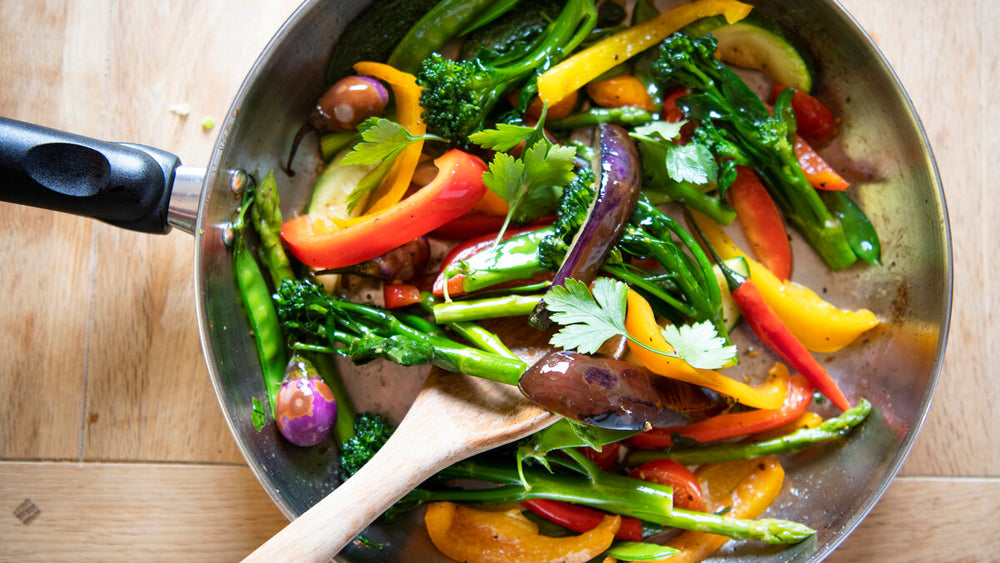
Simple Cooking Tricks That Can Make Your Food Easier on Your Gut
Have you ever eaten a meal that just “didn’t sit right”? You feel bloated, lethargic, and slightly nauseous. Looks like an afternoon on the couch is in your future.
If you’d like to prevent these not-so-fun moments, look no further, Foodguides fam! We’ve got some tried-and-true methods to take your meals from “yuck” to “yum”—while also supporting your gut health along the way.
How Food Preparation Influences Digestion
Digestion actually begins before food even reaches your stomach—with the way it’s prepared.
Your chosen cooking technique can influence:
- Nutrient availability
- Carbohydrate structure
- Enzyme activity
- Fiber digestibility
Nutrient Availability
Every food you consume contains nutrients—carbohydrates, protein, fiber, fats, vitamins, minerals, and phytonutrients.
Preparation methods can influence how available those nutrients are to your body. For example:
- Deep frying can increase fat and calorie density
- Grilling or roasting can preserve protein while enhancing antioxidants
These shifts don’t just affect nutrition—they can also influence how well your body tolerates a meal.
Carbohydrate Structure
Carbohydrates provide energy in the form of starches, sugars, and fiber—but their structure can change depending on how they’re prepared.
- Heating and cooling can alter starch digestion
- Adding vinegar may slow digestion and reduce rapid blood sugar spikes
- Fermentation can reduce certain sugars by allowing microbes to “pre-digest” them
Enzyme Activity
Enzymes act as biological “helpers” that support digestion.
However, enzymes are sensitive to:
- Temperature
- pH (acidity/alkalinity)
If conditions aren’t ideal—too hot, too cold, too acidic—enzyme activity can decrease, which may impact how efficiently food is broken down.
Fiber Digestibility
Fiber plays a major role in gut health, supporting bowel regularity and feeding beneficial gut bacteria.
Cooking plant foods helps break down tough cell walls, making fiber:
- Easier to digest
- Less likely to cause discomfort in some individuals
This can be especially helpful for people with sensitive digestive systems.
Digestive Datum #1
If you’d like to look up the nutritional value of a food, try the USDA FoodData Central Search Tool.
If you’d like to look up the nutritional value of a food, try the USDA FoodData Central Search Tool.
Why Soaking Foods Can Improve Digestibility
Soaking foods—especially grains and legumes—can make a meaningful difference for digestion.
When soaked:
- Enzymes like phytase and amylase are activated
- Complex starches begin to break down
- Mineral absorption may improve
Beans, in particular, may become easier to digest because soaking can reduce certain sugars that contribute to gas and bloating.
Digestive Datum #2
Warm water is best for soaking—cold water may encourage resistant starch formation too early.
Warm water is best for soaking—cold water may encourage resistant starch formation too early.
How Heating Changes Food (and Your Gut Response)
Heating food affects taste, texture, and safety—and it also influences digestibility.
- The Maillard reaction enhances flavor and palatability
- Starches gelatinize, making them easier to digest
- Proteins denature, improving absorption
- Harmful bacteria are eliminated
These changes can make meals both safer and easier on the digestive system.
Digestive Datum #3
Always cook meats to safe internal temperatures to reduce the risk of foodborne illness.
Why Cooling Foods Can Benefit Gut Health
Here’s where things get especially interesting for gut health.
When certain starchy foods (like rice, potatoes, or pasta) are cooked and then cooled, they form resistant starch.
Resistant starch:
- Bypasses digestion in the small intestine
- Ferments in the large intestine
- Feeds beneficial gut bacteria
Digestive Datum #4
Because resistant starch isn’t fully digested, it may have a smaller impact on blood sugar levels compared to regular starch.
Because resistant starch isn’t fully digested, it may have a smaller impact on blood sugar levels compared to regular starch.
Final Thoughts
Sometimes it’s not just what you eat—it’s how you prepare it.
Simple techniques like:
- Soaking
- Heating
- Cooling
can significantly influence digestion, gut health, and your body's response to food.
Making small adjustments in the kitchen can go a long way in helping meals feel better in your body—while still tasting great.
FAQs
Does cooking food make it easier to digest?
It can. Cooking softens plant cell walls, gelatinizes starches, and changes protein structures, which can make certain foods easier for the body to break down. People with sensitive digestive systems may also find some cooked foods more comfortable than their raw counterparts.
Does soaking beans really help reduce gas and bloating?
Soaking beans before cooking can reduce some of the fermentable carbohydrates associated with gas and bloating. Draining the soaking water and cooking the beans thoroughly may further improve their digestibility for some people.
Why are cooked and cooled potatoes, rice, and pasta good for gut health?
Cooking and then cooling certain starchy foods can increase their resistant starch content. Resistant starch travels to the large intestine, where gut microbes can ferment it and produce beneficial compounds such as short-chain fatty acids.
What cooking methods may be gentler on digestion?
No single cooking method works for everyone, but steaming, simmering, baking, roasting, and thoroughly cooking tougher plant foods may improve tolerance for some people. Individual digestive responses vary, so experimenting with preparation methods can help you identify what feels best for your gut.
References
1Spritzler, F., & Meacham, J. (2025). Cooking and nutrient content. Healthline. https://www.healthline.com/nutrition/cooking-nutrient-content
2Olamiti, G., & Ramashia, S. (2024). Processing effects on carbohydrate structure. Current Nutrition and Food Science. https://www.sciencedirect.com/org/science/article/pii/S1573401325000374
3Robinson P. K. (2015). Enzymes: principles and biotechnological applications. Essays in biochemistry, 59, 1–41. https://doi.org/10.1042/bse0590001
4Mayo Clinic Staff. (2025). Dietary fiber: Essential for a healthy diet. https://www.mayoclinic.org/healthy-lifestyle/nutrition-and-healthy-eating/in-depth/fiber/art-20043983
5Fooddata Central Frontpage. USDA FoodData Central. (n.d.). https://fdc.nal.usda.gov/
6Barampama, Z., & Simard, R. E. (1995). Effects of soaking, cooking and fermentation on composition, in-vitro starch digestibility and nutritive value of common beans. Plant foods for human nutrition (Dordrecht, Netherlands), 48(4), 349–365. https://doi.org/10.1007/BF01088494
7Cosmo. (2024). The science of cooking: How heat transforms your ingredients. https://cosmoappliances.com/the-science-of-cooking-how-heat-transforms-your-ingredients/
8Jones, J., & Tinsley, G. (2024). Cooling foods increases resistant starch. Healthline. https://www.healthline.com/nutrition/cooling-resistant-starch
9Johns Hopkins. (2026). What is resistant starch? https://hopkinsdiabetesinfo.org/what-is-resistant-starch/












 Recipes
 Products
Comments
Join The Conversation...