



Have you ever heard the phrase “work smarter, not harder”? If you like working smart, this article is for you! When you enter your local grocery store, you’re bombarded by food labels, each hoping to entice you to pick the best product. Did you know you should be looking beyond the label?
If you’d like to learn how to work/shop smarter, keep reading! We’re taking a deep dive into food labels. As always, keep an eye out for some fun facts (“label lore”) along the way.
What Are Functional Foods?
Before we immerse ourselves in the food label world, we need to define the terms that can be found on food labels. One such term is “functional food”.
Definition of Functional Foods
Functional foods are defined as “novel foods that have been formulated so that they contain substances or live microorganisms that have possible health-enhancing or disease-preventing value, and at a concentration that is both safe and sufficiently high to achieve the intended benefit. The added ingredients may include nutrients, dietary fiber, phytochemicals, other substances, or probiotics.”
Label Lore #1 - This updated definition greatly improves upon the previous definition of functional foods: “foods that contain substances that have positive effects on health beyond basic nutrition”.
Examples Beyond Prebiotics and Probiotics
Thanks to the new definition, functional foods can include more than just prebiotics and probiotics. Nutrients found in functional foods may include omega-3 fatty acids, dietary fiber, potassium, protein, and folate. Phytochemicals may include catechins, beta-carotene, and resveratrol.
Label Lore #2 - Functional foods were not officially classified until the 1980s, when the Japanese government declared these foods to have additional health benefits beyond basic nutrition.
Growth of the Functional Food Industry
As you can imagine, there is considerable profit to be gained in functional foods. The global functional food market in 2023 was valued at $329.7 billion and is expected to grow to $586.1 billion by 2030. Reasons for this exponential growth include increased health awareness due to the aftermath of the COVID-19 pandemic, the growing geriatric population, the need for quick-and-easy meals due to hectic lifestyles, and rising medical costs.
Label Lore #3 - Believe it or not, the U.S. is not dominating the functional food market. The rapid growth is mainly attributed to Asian-Pacific countries.
Why Are Prebiotics and Probiotics Showing Up in Processed Foods?
Have you noticed the increased amount of prebiotics and probiotics in your food? Here’s why:
Consumer Interest in Gut Health
Health has always been a hot topic in the media. It can be argued that the focus on health has increased since the COVID-19 pandemic. Gut health, in particular, has been at the forefront of Western medicine since the early 2000s, as genetic sequencing uncovered gut health’s relevance to a person’s overall health.
Label Lore #4 - Gut health may be a relatively new trend in Western medicine, but it was widely accepted as a vital part of health in Traditional Chinese Medicine for thousands of years.
Market Demand and Industry Response
The popularity of good health has increased demand for better products, and manufacturers have answered the call. Functional foods’ compound annual growth rate (CAGR) from 2024 to 2030 is estimated to be 8.6%. As a result, companies such as Coca-Cola have introduced new products featuring added nutrients, such as their Vitamin Water drink flavors: “Gutsy” and “Look”.
Label Lore #5 - Several companies have joined the functional foods trend, including GFR Pharma, General Mills Inc., Nutri-Nation, Cargill, and Amway Corp.
The Appeal of Health Halos
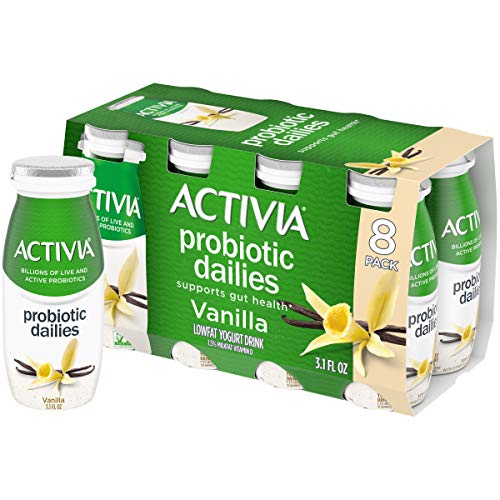
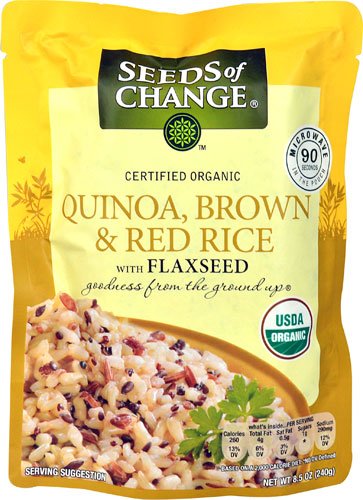
Functional food products use “health halos” as their main form of marketing. These “health halos” are phrases designed to draw your focus to one specific health claim, which makes you ignore the other unhealthy aspects of the food item. Examples include the terms “gluten-free”, “natural”, and “organic”.
Label Lore #6 - Did you know packaging can be considered a “health halo”? The next time you peruse the produce aisle, keep an eye out for packaging with earthy tones - browns, greens, and blues. Compare their packaging to the other foods available. Do they look healthier and more appealing?
Understanding Food Labels and Health Claims
Let’s get down to the ‘meat and potatoes’ of this article: understanding food labels and health claims found on functional foods.
Types of Health Claims Allowed on Food Packaging
Two types of health claims are allowed on food packaging: authorized health claims and qualified health claims. An authorized FDA-approved health claim must be supported by scientific evidence and by the totality of information publicly available to provide scientific evidence of a relationship between a substance and disease. Qualified health claims are supported by some scientific evidence, but do not meet the Significant Scientific Agreement (SSA) required to earn the “authorized” health claim moniker. Additionally, qualified health claims must include a disclaimer or other qualifying language to make it clear that the available scientific evidence does not fully support the claim.
Label Lore #7 - Since 1990, the FDA has only authorized 12 health claims.
Questions to Ask When Evaluating Products
When evaluating products with health claims, ask yourself: Is this an authorized or a qualified health claim? Is food appealing simply due to the health halo effect?
Label Lore #8 - Here is a list of all authorized health claims approved by the FDA.
Challenges and Opportunities for Improving Health Claims
Health claims can adapt and improve as scientists learn more about optimal human health.
Challenges in Regulating Functional Food Claims
Current regulatory standards are quite strict. Without extensive scientific backing, many health claims remain in the “qualified” category instead of being promoted to “authorized”. In 2003, a study by the FDA’s Task Force on Consumer Health Information for Better Nutrition reviewed the FDA’s process in determining which category a health claim may fall into and how this process may be improved.
The process for categorizing health claims eliminates the public’s perspective entirely. When the FDA wishes to confirm a health claim, it does so by reaching out to the petitioner directly. The Task Force proposed a longer process, one that involves both the petitioner and the public. By involving both groups, the Task Force claimed this would not only facilitate the creation of more “authorized” claims, but also allow these health claims to evolve with emerging science provided by the public.
Another option for improvement of health claim regulation proposed by the Task Force was to reinterpret the SSA standard to reflect the health claim itself, not the substance-disease relationship. This change would require qualified health claims to be investigated for substantiation prior to being added to a food label.
Another option for improvement of health claim regulation proposed by the Task Force was to reinterpret the SSA standard to reflect the health claim itself, not the substance-disease relationship. This change would require qualified health claims to be investigated for substantiation prior to being added to a food label.
Label Lore #9 - Currently, health claims are not allowed on foods that do not meet the minimal nutrient levels or on foods that have excessive levels of fat, sodium, cholesterol, or saturated fat.
Opportunities for Improving Nutrition Education
Living in the age of the Internet has its perks. Nutrition information is readily available at the tap of your screen. You can also seek nutrition counseling via nutrition apps such as Noom, Nourish, and PlateJoy. As more information about health claims becomes available, take the time to do your own research. You’ll be surprised what you’ll learn about your favorite foods.
Label Lore #10 - Health claims are not limited to functional foods. A current legal case, Alliance for Natural Health USA et al. vs. FDA, is seeking to expand health claims to include dietary supplements.
Becoming a More Informed Consumer
Here are five ways to become a more informed consumer:
Tip #1 - Look at the WHOLE Food Label
When you examine a label, make sure you read it in its entirety. Everything that is in that product should be listed on the label (not just the “good” stuff).
Tip #2 - Evaluate Ingredient Quality
Is the food item you’re looking at considered “in season”? If not, there may be additives and preservatives included to keep it looking fresh.
Tip #3 - Focus on Overall Dietary Patterns
Most foods are not considered inherently “good” or ”bad”. Try to focus on a well-rounded diet, balanced with protein, grains, fruits, and vegetables. (You should add in a sweet treat too - you deserve it!)
Tip #4 - When Functional Foods May Be Beneficial
Keep an eye on your health! If you experience unsettling gut health, try adjusting to the low-FODMAP diet or look for low-acid foods to consume. Always talk to your healthcare provider about your concerns and seek their guidance when adding or discontinuing certain foods in your diet.
Tip #5 - Read more Foodguides articles!
New Foodguides articles are posted constantly, each with more information on health conditions, trends, and tips on how to live your best life.
Have any food-based questions you’d like answered? Let us know in the comments below or on any of our social media pages! Talk soon, Foodguides fam!
FAQs
What is a functional food?
A functional food is generally considered a food that provides potential health benefits beyond basic nutrition because it contains nutrients, fiber, phytochemicals, probiotics, or other beneficial components. Examples may include foods fortified with certain nutrients or products containing added prebiotics or probiotics.
Does a “gut healthy” label mean a food is actually good for gut health?
Not necessarily. Terms and claims on the front of a package can create a “health halo” that makes a product seem healthier overall. Look beyond the marketing by reviewing the Nutrition Facts panel, ingredient list, serving size, added sugars, fiber, and other components of the product.
What is the difference between an authorized and qualified health claim?
Authorized health claims meet the FDA's Significant Scientific Agreement standard and are supported by a substantial body of scientific evidence. Qualified health claims have some scientific support but do not meet that same standard, so they must include qualifying language that communicates the limitations of the evidence.
Are foods with added prebiotics and probiotics always better for gut health?
No. Added prebiotics or probiotics don't automatically make a product the best choice for everyone. The type and amount of the ingredient, the rest of the food's nutritional profile, and your individual digestive tolerance all matter. Looking at your overall dietary pattern is more useful than choosing foods based on a single gut-health ingredient or claim.
References
1U.S. Food and Drug Administration. (2024). Authorized health claims that meet the significant scientific agreement (SSA) standard, Nutrition, Food Labeling, and Critical Foods, https://www.fda.gov/food/nutrition-food-labeling-and-critical-foods/authorized-health-claims-meet-significant-scientific-agreement-ssa-standard
2Temple N. J. (2022). A rational definition for functional foods: A perspective. Frontiers in nutrition, 9, 957516. https://doi.org/10.3389/fnut.2022.957516
3Ellis, E. (2022). Functional foods, Academy of Nutrition and Dietetics, https://www.eatright.org/health/wellness/healthful-habits/functional-foods
4Virginia Tech. (2026). Phytochemicals and functional foods for health, Food Science and Technology, https://www.fst.vt.edu/research/phytochemicals-and-functional-foods-for-health.html
5Grand View Research. (2026). Functional foods market (2024-2030), Market Analysis Report, https://www.grandviewresearch.com/industry-analysis/functional-food-market
6Bischoff S. C. (2011). 'Gut health': a new objective in medicine?. BMC medicine, 9, 24. https://doi.org/10.1186/1741-7015-9-24
7Zhang, Y. J., Li, S., Gan, R. Y., Zhou, T., Xu, D. P., & Li, H. B. (2015). Impacts of gut bacteria on human health and diseases. International journal of molecular sciences, 16(4), 7493–7519. https://doi.org/10.3390/ijms16047493
8Zhang, R., Gao, X., Bai, H., & Ning, K. (2020). Traditional Chinese Medicine and Gut Microbiome: Their Respective and Concert Effects on Healthcare. Frontiers in pharmacology, 11, 538. https://doi.org/10.3389/fphar.2020.00538
9Gundersen Health System. (2026). Health halos: What they are and why you need to avoid them, Eat & Move, https://www.gundersenhealth.org/health-wellness/eat-move/health-halos-what-they-are-and-why-you-need-to-avoid-them
10U.S. Food and Drug Administration. (2003). Consumer health information for better nutrition initiative - Attachment A - possible regulatory frameworks for qualified health claims, Nutrition, Food Labeling, and Critical Foods, https://www.fda.gov/food/nutrition-food-labeling-and-critical-foods/consumer-health-information-better-nutrition-initiative-attachment-possible-regulatory-frameworks
11Lewis, C. and Rubel, A. (2026). New complaint challenges FDA’s denial of dietary supplement health claims, Venable LLP, https://www.venable.com/insights/publications/2026/06/new-complaint-challenges-fdas-denial-of-dietary













 Recipes
 Products


Comments
Join The Conversation...