


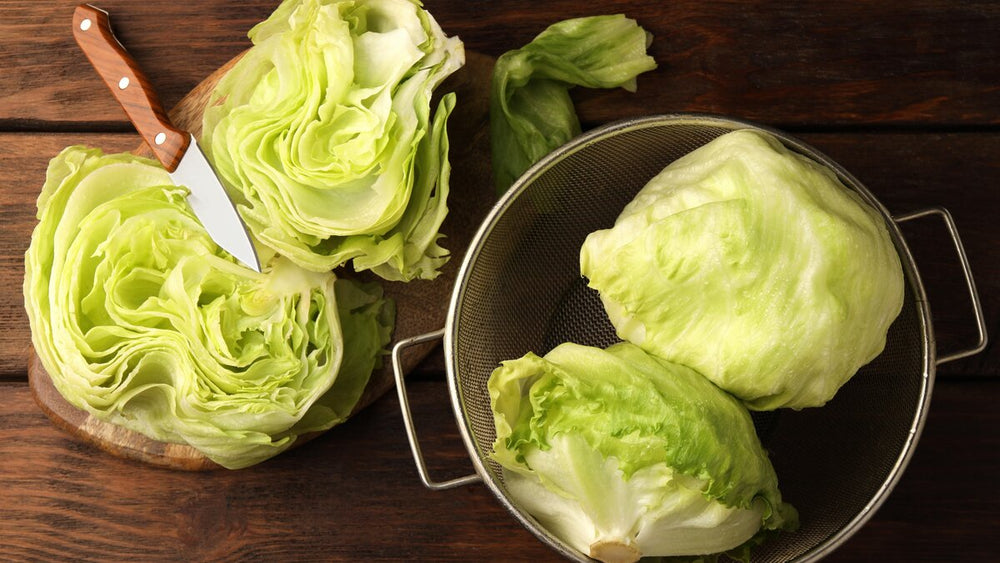
Why Cabbage Is the Ultimate Cheap and Gut-Friendly Vegetable
Cabbage is extremely cheap, lasts a long time, and is a fantastic source of prebiotic fiber and Vitamin K. It's also easy to ferment into sauerkraut for cheap probiotics.
It’s green, it’s leafy, it’s crunchy, it’s….a good source of prebiotics? Allow me to introduce you to cabbage, Foodguides fam. This lettuce imposter has been a humble vegetable for years, and now it’s time for it to come back to the stage for an encore (yes, 80’s kids, we’re referring to the Cabbage Patch Kids phenomenon). Keep reading to learn more about cabbage’s nutritional value and some tasty recipes you can try at home!
Cabbage: The Budget MVP for Gut Health
Unpacking the Prebiotic Fiber and Nutrient Density of Cabbage
Cabbage is an excellent choice for your health and your budget! Cabbage is a natural source of numerous nutrients, including antioxidants (especially Vitamin C), anti-inflammatory compounds (anthocyanins and sulforaphane), and prebiotics. Vitamin C serves as the powerhouse behind a strong immune system. Anthocyanins and sulforaphane are plant compounds with antioxidant and anti-inflammatory properties that may support overall health. Prebiotics serve as a food source for beneficial gut bacteria. In other words, if you’d like to reap some cool health benefits, add cabbage to your cuisine.
Cabbage Cue #1 - Sulforaphane has been studied for its potential role in cancer prevention, although more research is needed to understand its effects in humans.
Cabbage vs. Trendy Greens: Cost and Shelf Life Comparison
While cabbage may not be the trendiest green, it is gaining popularity thanks to its cost-efficiency, shelf life, and versatility.
Cabbage prices vary by store, but all four main varieties range from $0.80 to $1.65 per pound. On average, one medium head of cabbage is equivalent to four servings. That means you can get four side dishes for only $0.80!
The shelf life of cabbage also varies, based on weight, color, and leaf quality. When you peruse the produce aisle, look for a head of cabbage that is heavy (compared to its size), unblemished (no spots or discoloration), and with leaves tightly packed around the middle. The healthier the cabbage, the longer its shelf life.
Cabbage can be prepared in numerous ways. Cabbage can be consumed raw, fermented, roasted, steamed, or sauteed. It is also one of the few greens that can be used nearly in its entirety!
Cabbage Cue #2 - There are over 400 types of cabbage, but only four main varieties are commonly sold in the United States: green, red/purple, Napa, and Savoy.
10 Affordable and Gut-Friendly Cabbage Meals
Here are our top ten ways to add cabbage to your palate:
Side note: Cabbage may increase gas and bloating, which can exacerbate IBS symptoms. If you have IBS, use caution when consuming cabbage**
Fermentation: Making Your Own Probiotic Sauerkraut
Cabbage can be transformed into two probiotic powerhouses: sauerkraut and kimchi. Both involve soaking the cabbage in brine and canning the mixture for a specific time to allow fermentation.
- Sauerkraut - originates in Germany, usually has a mild flavor that showcases the cabbage
- Kimchi - originates in Korea, usually has a bold spicy flavor with multiple seasonings
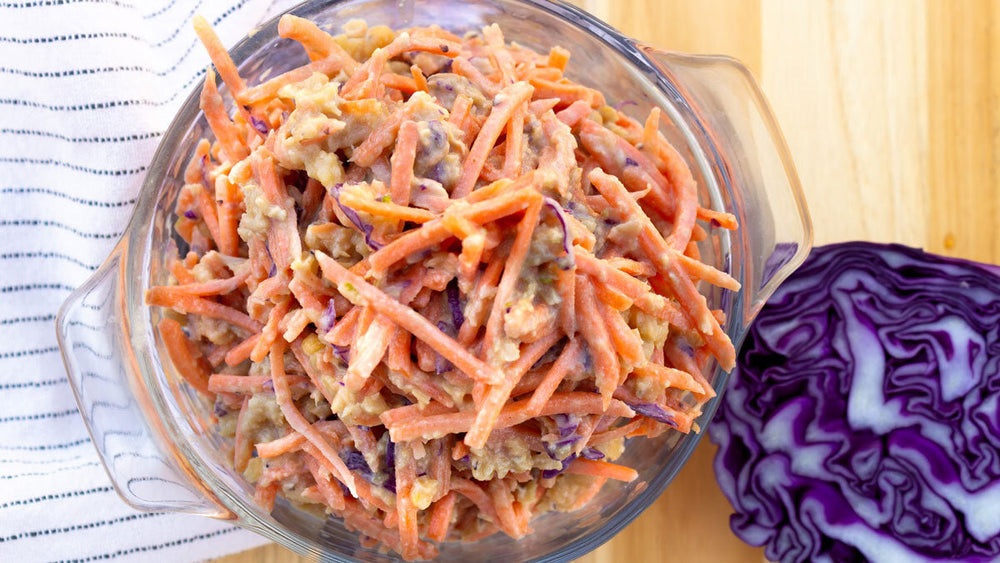
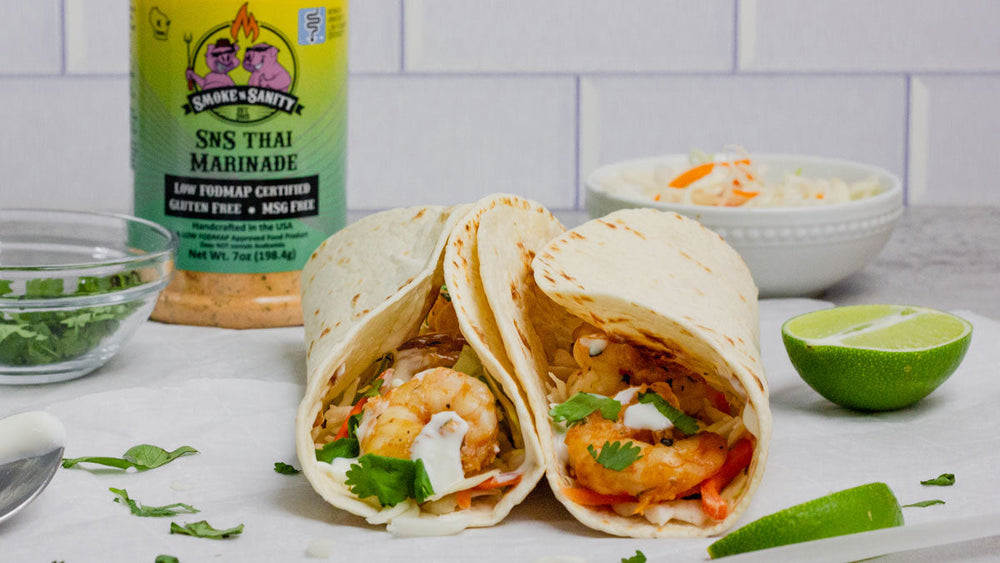
Extending Dishes: Using Shredded Cabbage in Tacos, Slaws, and Bowls
Add cabbage to tacos, slaws, salads, and more for an extra crunch!
- Crispy Fish Tacos by Jessie Hulsey, RD, LD
- Peach Low-Fat Coleslaw by Taylor Janulewicz, RDN
- Mason Jar Salads by Amanda Hernandez, MA, RD
- Shrimp Taco Bowls by Caitlin Riley, RDN, LDN
Simple Cooked Dishes: Cheap Soups, Stews, and Stir-Fries
Keep cabbage cool and simple by cooking soups, stews, stir-fries, and more.
- Cabbage soup with onion, garlic, salt, pepper, and tomatoes. Add chicken for extra protein!
- Irish White Bean and Cabbage Stew
- Chinese Cabbage Stir-Fry
- Creamed cabbage with onion, cloves, butter, heavy cream, black pepper, and ginger
Cabbage Cue #3 - 78% of the United States’ cabbage crop grows in New York, Florida, Texas, Wisconsin, and California.
Waste Not, Want Not: Maximizing Your Cabbage Purchase
Proper Storage for Extended Freshness
If you’re not going to use your head of cabbage immediately, place the entire cabbage (uncut and unrinsed!) into the crisper drawer of your fridge. Under ideal refrigeration conditions, whole cabbage may remain fresh for several weeks and sometimes up to two months. If you have a partial head of cabbage, wrap the leaves tightly around the middle, wrap the cabbage in plastic wrap, and return it to the crisper drawer. This method allows the remaining cabbage to be used for up to three days. As for shredded cabbage varieties, refer to the expiration date on the package.
Cabbage Cue #4 - Cabbage is in the same family of vegetables as broccoli, mustard greens, cauliflower, brussels sprouts, kale, bok choy, and turnip greens.
Using Cabbage Cores and Outer Leaves (Tips and Tricks)
Various recipes use the cabbage core and leaves, but did you know you can use them for other purposes? Cabbage leaves are a perfect liner for steamer baskets. They can also be used as wraps for joint pain. Cabbage cores are excellent additions to compost bins. They can also be broken down into “nata puree”, which is used in 3-D printed foods.
Cabbage Cue #5 - In 2016, an average of 5.8 pounds of fresh cabbage and 1.3 pounds of canned cabbage was consumed per person in the United States.
Did you learn something new about cabbage? How will you add it to your next culinary creation? Be sure to tag us on social media (Facebook, Instagram, and Bluesky)!
FAQs
Is cabbage good for gut health?
Yes. Cabbage contains prebiotic fibers that help feed beneficial gut bacteria, supporting a healthy gut microbiome. Fermented cabbage products such as sauerkraut and kimchi can also provide probiotics, which are live microorganisms that may support digestive health.
Can cabbage cause gas and bloating?
For some people, yes. Cabbage contains fermentable carbohydrates that can increase gas production during digestion. Individuals with irritable bowel syndrome (IBS) or sensitive digestive systems may notice bloating, gas, or discomfort after eating large amounts of cabbage and may benefit from starting with smaller portions.
Which type of cabbage is the most nutritious?
Green, red (purple), Napa, and Savoy cabbage are all nutrient-dense choices. Red cabbage stands out for its high anthocyanin content, which provides antioxidant and anti-inflammatory benefits, while all varieties offer fiber, vitamin C, and vitamin K.
How long does cabbage stay fresh in the refrigerator?
A whole, uncut cabbage can last several weeks and sometimes up to two months when stored properly in the refrigerator's crisper drawer. Once cut, cabbage is best wrapped tightly and used within a few days to maintain freshness and quality.
Is cabbage an affordable way to eat healthier?
Absolutely. Cabbage is one of the most budget-friendly vegetables available, offering fiber, vitamins, antioxidants, and versatility at a relatively low cost per serving. Its long shelf life also helps reduce food waste, making it a smart choice for both health-conscious and budget-conscious shoppers.
References
1Noble, A. (2026). 2026 is the year of the cabbage: Meet the most underrated leafy green, Vogue Wellness, https://www.vogue.com/article/cabbage-health-benefits
2Manaker, L. and Brown, C. (2025). What happens to your body when you eat cabbage regularly, Eating Well, https://www.eatingwell.com/health-benefits-of-cabbage-8557536
3Asif Ali, M., Khan, N., Kaleem, N., Ahmad, W., Alharethi, S. H., Alharbi, B., Alhassan, H. H., Al-Enazi, M. M., Razis, A. F. A., Modu, B., Calina, D., & Sharifi-Rad, J. (2023). Anticancer properties of sulforaphane: current insights at the molecular level. Frontiers in oncology, 13, 1168321. https://doi.org/10.3389/fonc.2023.1168321
4Iowa State University. (2021). Cabbage, Agricultural Marketing Resource Center, https://www.agmrc.org/commodities-products/vegetables/cabbage
5AESC. (2026). Worst foods for IBS sufferers, Advanced Endoscopy and Surgical Center, LLC, https://advancedendoscopy.com/news/worst-foods-for-ibssufferers
6OMP. (2026). Fermented cabbage: sauerkraut, kimchi, & more, Olive My Pickle, https://www.olivemypickle.com/blogs/news/fermented-cabbage
7Fincher, M. (2020). Here’s how to store cabbage so it lasts longer, allrecipes, https://www.allrecipes.com/article/how-long-does-cabbage-last/
8APTEI. (2025). How to make cabbage leaf wraps, Advanced Physical Therapy Education Institute, https://www.aptei.ca/library-article/how-to-make-cabbage-leaf-wraps/
9Tokuyasu, K., Yamagishi, K., Ando, Y., and Shirai, N. (2022). Cabbage core powder as a new food material for paste preparation with “nata puree”, Journal of Applied Glycoscience, https://pmc.ncbi.nlm.nih.gov/articles/PMC9720631/













 Recipes
 Products
Comments
Join The Conversation...