Servings: 2Prep: 10 minsCook: 8 minsTotal: 18 mins
Shrimp Taco Bowls: A Fresh, Flavorful Meal for Sensitive Digestion
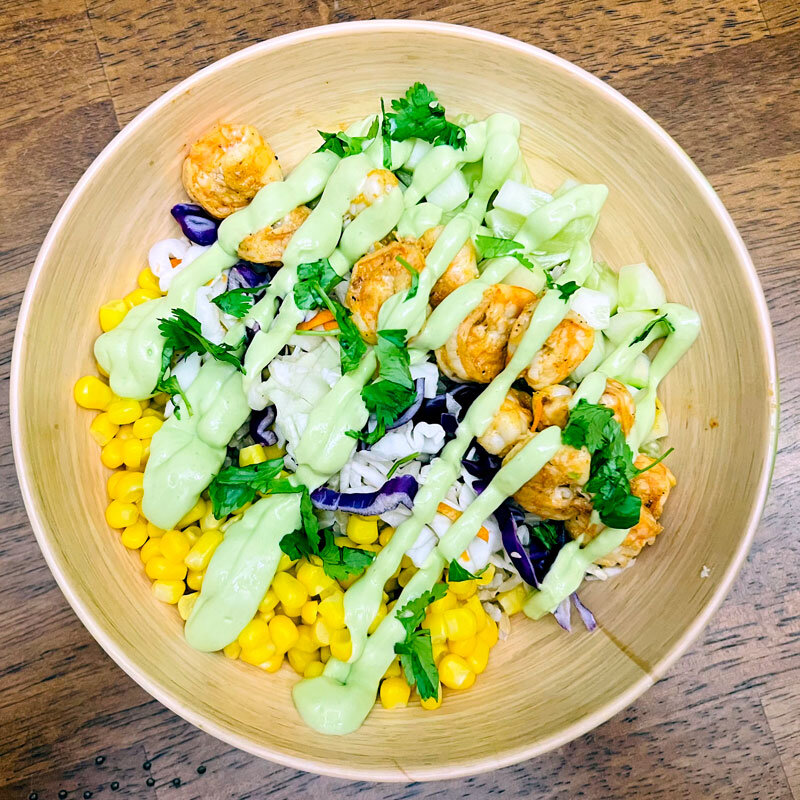
Shrimp tacos are a summer staple, and these colorful shrimp taco bowls have everything you love about tacos in an easy, satisfying bowl.
Instead of fried shrimp, this recipe uses sautéed shrimp paired with brown rice, crisp cabbage, cucumber, sweet corn, and a creamy avocado topping. The result is a meal with plenty of contrasting flavors and textures that you can also customize to your digestive needs.
This recipe is naturally gluten-free as long as all seasonings and packaged ingredients are labeled gluten-free. It can also be adapted for people managing gastroesophageal reflux disease (GERD) or irritable bowel syndrome (IBS), since individual food triggers can vary considerably.
Why Shrimp Works Well in a Grain Bowl
Shrimp is one of my favorite proteins, especially in a grain bowl. It provides high-quality protein while being relatively low in total fat compared with many other animal protein options. You can use USDA food composition resources to compare the protein, fat, vitamin, and mineral content of shrimp and other foods.
Pairing shrimp with a grain and several vegetables also makes it easy to build a balanced bowl with protein, carbohydrates, and fiber. I’ve used brown rice in this recipe, but you could substitute white rice or quinoa depending on your preferences and digestive tolerance. Brown rice has a slightly chewy bite that pairs especially well with crispy cabbage, crunchy cucumber, and sweet corn.
Choosing Your Grain
No single grain is best for everyone with digestive concerns.
Brown rice provides whole-grain fiber, but some people find lower-fiber white rice easier to tolerate when gastrointestinal symptoms are active. Quinoa offers another naturally gluten-free option and adds its own slightly nutty flavor and texture. Choose the grain that works best for your body.
Making Your Taco Bowl GERD-Friendly
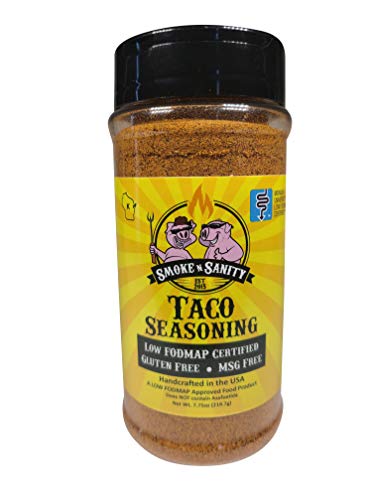
One advantage of making taco seasoning at home is that you control exactly what goes into it.
That's particularly helpful for people with GERD because food triggers aren't universal. Spicy foods, high-fat foods, and acidic ingredients commonly trigger symptoms for some people, but current clinical guidance emphasizes avoiding foods that
personally trigger symptoms rather than unnecessarily restricting every potential trigger.
If chili powder, cayenne, black pepper, or another seasoning aggravates your reflux, reduce it or leave it out. Likewise, you can make the seasoning mild and allow everyone else at the table to add extra heat to their own bowl.
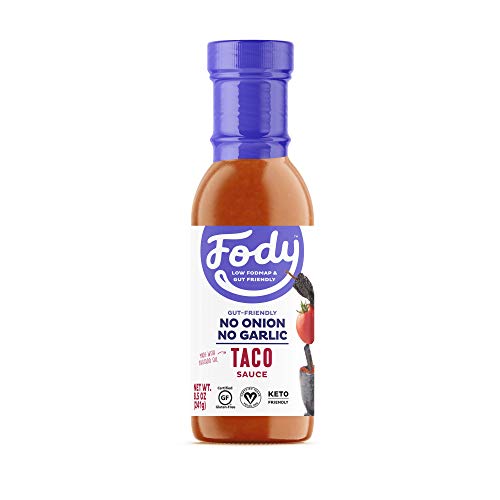
You can also use store-bought taco seasoning. Check the ingredient list if you have specific dietary restrictions, and compare Nutrition Facts labels if you're monitoring sodium.
What About IBS?
People with IBS can have very different food triggers, so it's difficult to classify an entire recipe as universally "IBS-friendly."
If you have IBS, consider the ingredients and portions in this bowl based on foods you already know you tolerate. Seasonings, avocado, and certain vegetables may need adjustment depending on your personal triggers and serving sizes.
Don't Skip the Avocado Cream
The avocado cream ties everything together.
Avocado primarily provides heart-healthy monounsaturated fats along with fiber and several vitamins and minerals. Its creamy texture also creates a cooling contrast with the seasoned shrimp without requiring a heavy sauce. If spicy foods trigger your GERD or other digestive symptoms, keep the shrimp seasoning mild and skip hot sauce or sriracha. If heat doesn't bother you, you can always add a little to your individual bowl.
That's another reason I love meals like this: everyone can customize their bowl. Serve everything separately for a build-your-own taco bowl night, or assemble the bowls ahead of time for a colorful summer meal. If you try this recipe, leave a comment and let us know what ingredients you added to your bowl!
FAQs
Are shrimp taco bowls good for people with GERD?
Can I eat this shrimp taco bowl if I have IBS?
Possibly, depending on your individual triggers and portion sizes. IBS symptoms and food tolerances vary considerably. You may need to modify some ingredients if you follow a Low FODMAP diet or have identified specific dietary triggers. A registered dietitian can help you determine appropriate modifications if you're having difficulty identifying foods that contribute to symptoms.
Is brown rice or white rice better for sensitive digestion?
Both can fit into a balanced diet. Brown rice contains more of the intact grain and provides more fiber, while white rice has less fiber and may be better tolerated by some people with digestive symptoms. Choose whichever variety works best for your nutritional needs and personal tolerance.
Can I make these shrimp taco bowls ahead of time?
Yes. Cook the shrimp and rice ahead of time and store them properly refrigerated in separate airtight containers from the fresh vegetables and avocado cream. Assemble the bowls when you're ready to eat so the vegetables remain crisp and the ingredients maintain their best texture.
References
1Lacy, B. E., Pimentel, M., Brenner, D. M., Chey, W. D., Keefer, L. A., Long, M. D., & Moshiree, B. (2021). ACG Clinical Guideline: Management of Irritable Bowel Syndrome. The American journal of gastroenterology, 116(1), 17–44. https://doi.org/10.14309/ajg.0000000000001036
2Katz, P. O., Dunbar, K. B., Schnoll-Sussman, F. H., Greer, K. B., Yadlapati, R., & Spechler, S. J. (2022). ACG Clinical Guideline for the Diagnosis and Management of Gastroesophageal Reflux Disease. The American journal of gastroenterology, 117(1), 27–56. https://doi.org/10.14309/ajg.0000000000001538














 Articles
 Products
Comments
Join The Conversation...