


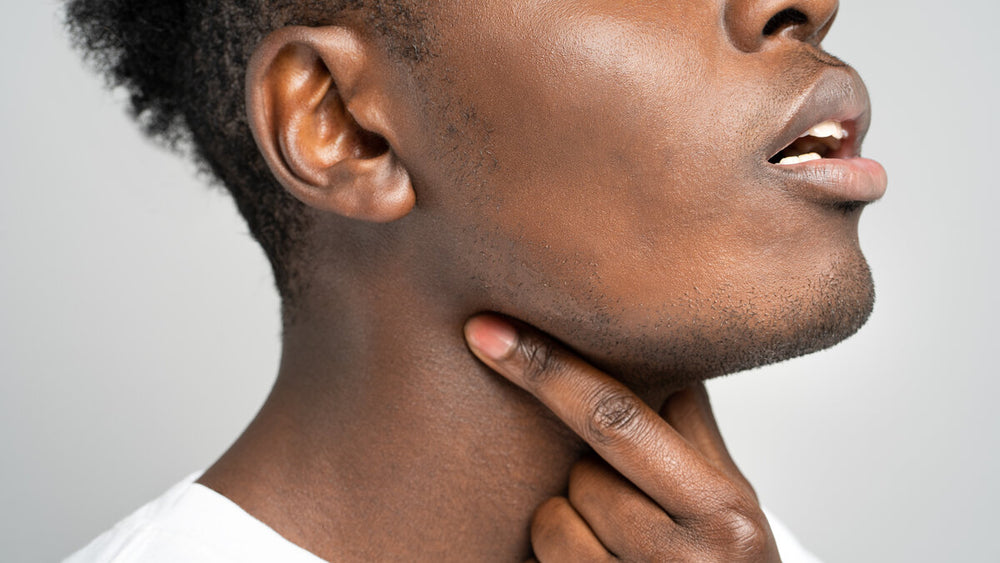
What is Esophagitis?
Typically, words ending in "-itis" refer to inflammation of a body tissue or organ. Esophagitis, then, is inflammation of the esophagus—specifically, the lining of the esophagus. The esophagus is a hollow tube that extends from the throat to the stomach. Its function is to move food from the mouth to the stomach, and it does this via rhythmic muscle contractions called peristalsis that push the food along.
With esophagitis, the lining of the esophagus becomes irritated and inflamed, causing pain. If left untreated, esophagitis may lead to serious conditions including perforation, stricture, or bleeding of the esophagus, and Barrett's esophagus.
With esophagitis, the lining of the esophagus becomes irritated and inflamed, causing pain. If left untreated, esophagitis may lead to serious conditions including perforation, stricture, or bleeding of the esophagus, and Barrett's esophagus.
What Do Esophagitis Symptoms Feel Like?
As with many digestive system issues, it can be hard to tell exactly what you're dealing with because the symptoms are general and common. For instance, some esophagitis symptoms are the same as those of typical heartburn. Esophagitis symptoms usually include:
- trouble swallowing (dysphagia)
- painful swallowing (sore throat)
- pain behind the breastbone
- acid reflux
- the feeling of food being stuck in your throat
If you have had any of these symptoms for several days, have lost weight because of them, or antacids have not helped, make an appointment with your physician. If you have trouble breathing or talking, have generalized chest pain, or are also experiencing flu-like symptoms such as body aches, fever, or headache, seek emergency treatment.
Infants and children can also experience esophagitis, but of course may have trouble expressing their pain. If you're unsure what's causing your child's discomfort, see the pediatrician.
Infants and children can also experience esophagitis, but of course may have trouble expressing their pain. If you're unsure what's causing your child's discomfort, see the pediatrician.
The Most Common Cause of Esophagitis
The most common cause of esophagitis is gastroesophageal reflux disease (GERD), which may be called "reflux esophagitis." If you have GERD, you're likely already familiar with its symptoms and treatments, which include diet and lifestyle modifications and medications. About 30% of GERD cases progress to the more severe "erosive esophagitis" (EE).
A recent study that looked at risk factors around the world found that being 60 years old or older, Caucasian, and having GERD for 5 years or more increased the risk of having erosive esophagitis (EE). Other health conditions that increase the risk of EE include hypertension and obesity, among others. The risk of having EE is also twice as high in males as in females. Proton Pump Inhibitor medications (PPIs) are often the first-line treatment for EE, but in advanced cases their effectiveness decreases substantially, and other medications may be warranted.
A recent study that looked at risk factors around the world found that being 60 years old or older, Caucasian, and having GERD for 5 years or more increased the risk of having erosive esophagitis (EE). Other health conditions that increase the risk of EE include hypertension and obesity, among others. The risk of having EE is also twice as high in males as in females. Proton Pump Inhibitor medications (PPIs) are often the first-line treatment for EE, but in advanced cases their effectiveness decreases substantially, and other medications may be warranted.
Other Types of Esophagitis
Not all esophagitis is caused by GERD. Other potential types of esophagitis and their causes include:
Medication-Induced Esophagitis (also known as "pill esophagitis") results from prolonged use of medicines that come into contact with the esophagus. Pills that dissolve in the esophagus before reaching the stomach can wear away the esophageal lining. This can happen if pills are large or if swallowing pills is difficult. Many medications can cause this type of esophagitis, but antibiotics (especially tetracycline and doxycycline), iron pills, acetaminophen, chemotherapy drugs, bisphosphonates, and non-steroidal anti-inflammatory drugs are common culprits.
Eosiniphilic Esophagitis (EoE) is caused by an overactive immune response to foods or inhaled environmental allergens that causes white blood cells (eosinophils) to collect in the esophagus and cause inflammation. It occurs in both adults and children, is more common in Caucasian males, and is most common in individuals with other allergies. The prevalence of EoE appears to be increasing. In Western countries, about 40-55 people per 100,000 have EoE. One form of EoE responds well to PPI medication, while steroids work better with the other subtype of EoE. Current treatment guidelines recommend elimination diets and including an allergist on the healthcare team.
Infectious Esophagitis may result from bacterial, viral, fungal, or parasitic infections. It is often found in individuals who have depressed immune status or use PPIs or antibiotics long-term. Candida infection is the most common cause of infectious esophagitis, and antifungal medical therapy is usually effective.
Radiation Esophagitis (RE) is caused by radiation therapy for cancers of the head, neck, or chest. Concurrent chemotherapy increases the risk for RE. Although it can be severe, it typically resolves within a few weeks after treatment. Stay hydrated, but avoid caffeine and alcohol. Take small bites and eat soft, non-spicy, non-acidic foods.
Eosiniphilic Esophagitis (EoE) is caused by an overactive immune response to foods or inhaled environmental allergens that causes white blood cells (eosinophils) to collect in the esophagus and cause inflammation. It occurs in both adults and children, is more common in Caucasian males, and is most common in individuals with other allergies. The prevalence of EoE appears to be increasing. In Western countries, about 40-55 people per 100,000 have EoE. One form of EoE responds well to PPI medication, while steroids work better with the other subtype of EoE. Current treatment guidelines recommend elimination diets and including an allergist on the healthcare team.
Infectious Esophagitis may result from bacterial, viral, fungal, or parasitic infections. It is often found in individuals who have depressed immune status or use PPIs or antibiotics long-term. Candida infection is the most common cause of infectious esophagitis, and antifungal medical therapy is usually effective.
Radiation Esophagitis (RE) is caused by radiation therapy for cancers of the head, neck, or chest. Concurrent chemotherapy increases the risk for RE. Although it can be severe, it typically resolves within a few weeks after treatment. Stay hydrated, but avoid caffeine and alcohol. Take small bites and eat soft, non-spicy, non-acidic foods.
FAQs
Is esophagitis the same thing as a sore throat?
No, a sore throat is generally irritation located in the pharynx, not the esophagus. Pain and trouble swallowing can occur with both esophagitis and a sore throat, but the inflammation is located in different parts of the "tube" that runs from your mouth to your stomach.
Is esophagitis a chronic condition?
It may be, depending on the type. Esophagitis caused by GERD (also a chronic condition) is typically considered chronic, as is eosinophilic esophagitis, which is caused by an immune response. If it's not well managed, chronic esophagitis may develop into more severe conditions, such as Barrett's esophagus or esophageal strictures.
How is esophagitis diagnosed?
In addition to a physical exam, several tests help diagnose esophagitis. An endoscopy is often involved. A tiny camera is lowered into the esophagus through the mouth, giving the physician a detailed view of the inflammation and other pertinent information about what's happening in the esophagus. It's also common to take a biopsy of the esophageal tissue during the endoscopy. Another way to evaluate the esophagus is a "barium swallow." The patient drinks a barium-containing solution that coats the esophagus and makes it easy to see via X-ray.
References
1Baishideng Publishing Group. (2017). World Journal of Gastroenterology, 23(17), 3011. https://www.wjgnet.com/1007-9327/full/v23/i17/3011.htm
2MSD Manuals. (n.d.). Overview of swallowing and the esophagus. MSD Manual Consumer Version. https://www.msdmanuals.com/home/digestive-disorders/esophageal-and-swallowing-disorders/overview-of-swallowing-and-the-esophagus
3Chela, H. K., Gandhi, M., Hazique, M., Ertugrul, H., Gangu, K., & Daglilar, E. (2025). Barrett's esophagus: A review. World journal of gastrointestinal pathophysiology, 16(3), 107273. https://doi.org/10.4291/wjgp.v16.i3.107273
4Mayo Clinic. (n.d.). Esophagitis. https://www.mayoclinic.org/diseases-conditions/esophagitis/symptoms-causes/syc-20361224
5National Foundation of Swallowing Disorders. (n.d.). *Swallowing disorder basics*. https://swallowingdisorderfoundation.com/about/swallowing-disorder-basics/
6Witarto, A. P., Witarto, B. S., Pramudito, S. L., Ratri, L. C., Wairooy, N. A. P., Konstantin, T., Putra, A. J. E., Wungu, C. D. K., Mufida, A. Z., & Gusnanto, A. (2023). Risk factors and 26-years worldwide prevalence of endoscopic erosive esophagitis from 1997 to 2022: a meta-analysis. Scientific reports, 13(1), 15249. https://doi.org/10.1038/s41598-023-42636-7
7Shibli, F., Mari, A., & Fass, R. (2025). Drug treatment strategies for erosive esophagitis in adults: a narrative review. Translational gastroenterology and hepatology, 10, 54. https://doi.org/10.21037/tgh-24-168
8Mastracci, L., Grillo, F., Parente, P., Unti, E., Battista, S., Spaggiari, P., Campora, M., Valle, L., Fassan, M., & Fiocca, R. (2020). Non gastro-esophageal reflux disease related esophagitis: an overview with a histologic diagnostic approach. Pathologica, 112(3), 128–137. https://doi.org/10.32074/1591-951X-156
9Park H. (2014). An overview of eosinophilic esophagitis. Gut and liver, 8(6), 590–597. https://doi.org/10.5009/gnl14081
10McGowan, E. C., Wright, B. L., Ruffner, M. A., Pesek, R. D., Rothenberg, M. E., Spergel, J. M., Dellon, E. S., & Aceves, S. S. (2025). Eosinophilic esophagitis: An allergy and immunology perspective on the updated guidelines. The Journal of allergy and clinical immunology, 156(2), 252–258. https://doi.org/10.1016/j.jaci.2025.04.026
11Mohamed, A. A., Lu, X. L., & Mounmin, F. A. (2019). Diagnosis and Treatment of Esophageal Candidiasis: Current Updates. Canadian journal of gastroenterology & hepatology, 2019, 3585136. https://doi.org/10.1155/2019/3585136
12Wu, Q., Li, Q., Zhang, R., Cui, Y., Zou, J., Zhang, J., Ma, C., Han, D., & Peng, Y. (2025). Research progress of radiation esophagitis: A narrative review. Medicine, 104(19), e42273. https://doi.org/10.1097/MD.0000000000042273


















 Recipes
 Products

Comments
Join The Conversation...