Servings: 4Prep: 10 minsCook: 10 minsTotal: 20 mins
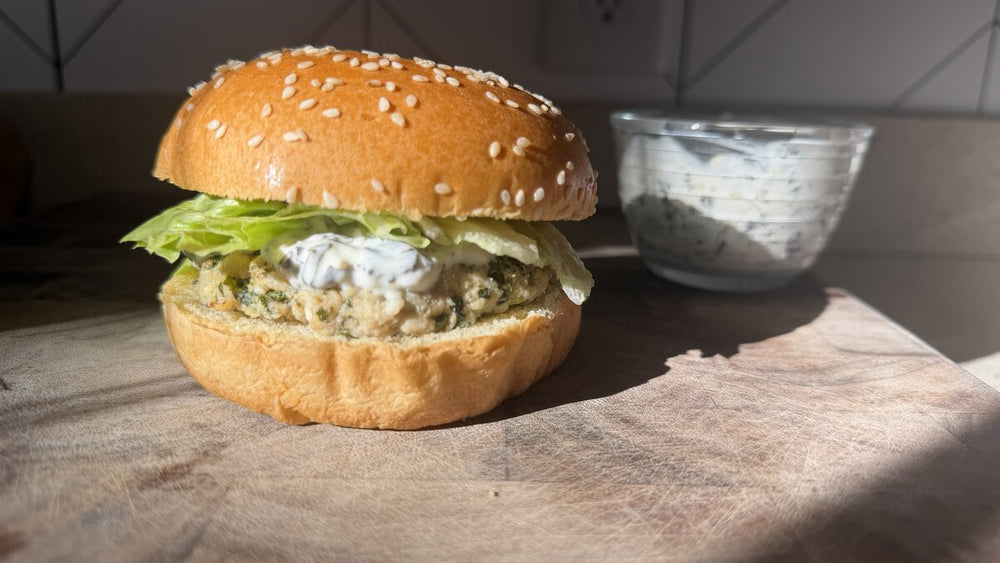
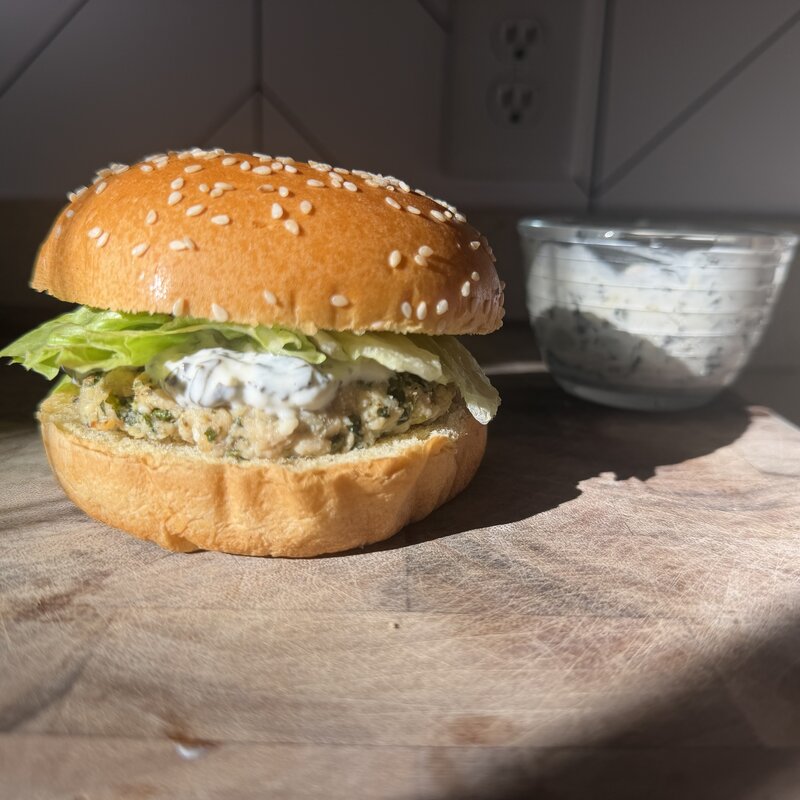
If you're looking for a flavorful burger that doesn't rely on spicy sauces, hot peppers, or heavy toppings, these herby chicken burgers are a great place to start. Made with lean ground chicken, fresh herbs, and a few simple ingredients, they're juicy, flavorful, and easy enough for a weeknight dinner.
This ground chicken burger recipe can be made with or without feta, depending on your preferences and dietary needs. Serve the burgers on a soft bun with lettuce and a creamy, non-spicy sauce, or skip the bun and pair them with roasted potatoes and your favorite vegetables.
Why You'll Love These Herby Chicken Burgers
These herby chicken burgers are a lighter alternative to many traditional beef burgers, but they don't sacrifice flavor.
-
They're packed with fresh herbs. Parsley and dill add plenty of flavor without relying on hot peppers or spicy seasoning blends.
-
They're juicy, not dry. A combination of egg, breadcrumbs, and a little moisture helps keep lean ground chicken tender as it cooks.
-
They're customizable. Add feta for a salty, tangy flavor or leave it out for a dairy-free chicken burger.
-
They're weeknight-friendly. The patties come together in about 10 minutes and can be cooked on the stovetop, grill, or in the oven.
-
You control the toppings. This makes it easy to build a burger around the ingredients you know you tolerate.
What Makes These Chicken Burgers GERD-Conscious?
As a registered dietitian, my goal with a GERD-conscious recipe is not to create a long list of foods you "can't" eat. Instead, I look for simple ways to keep a meal flavorful while leaving room for individual tolerance.
For these burgers, that means:
- Using lean ground chicken as the base
- Choosing fresh herbs instead of spicy seasoning
- Keeping added cooking fat modest
- Making feta optional
- Offering topping options that don't rely on common triggers
- Avoiding the assumption that everyone with GERD needs to eliminate the same foods
Fat is worth considering, too. High-fat foods are commonly associated with GERD symptoms, but the total fat in a burger depends on the ground chicken you purchase, the amount of feta you add, how much oil you use for cooking, and what you put on top.
If tomatoes, onions, garlic, feta, or another ingredient bothers you, simply leave it out. There's no nutritional prize for forcing yourself to eat a food that consistently makes you uncomfortable.
How to Keep Chicken Burgers Moist
Lean ground chicken can make excellent burgers, but it has less room for error than a fattier ground meat. Overmixing or overcooking can quickly turn a juicy burger into a dry one.
Here are the tricks that make the biggest difference:
Don't overwork the meat. Mix the ingredients just until everything is evenly combined. The more you handle ground chicken, the denser the patties can become.
Don't make the patties too thin. I like forming four patties that are roughly 3/4-inch thick. This gives them enough thickness to stay juicy while cooking through.
Use a little moisture in the mixture. The egg and breadcrumbs help hold the patties together, while the olive oil contributes moisture and richness.
Don't press down on the burgers while they cook. It might be tempting to flatten them with your spatula, but that pushes moisture out of the patties.
Use a food thermometer. Chicken needs to reach 165°F in the center for food safety. Color and texture aren't reliable ways to determine whether ground poultry is safely cooked.
How to Make Herby Chicken Burgers
1. Mix the ingredients
Add the ground chicken, egg, breadcrumbs, parsley, dill, basil or oregano, olive oil, salt, and pepper to a large bowl.
If you're using feta, gently fold it in at the end.
Mix with your hands or a fork just until the ingredients are combined. Avoid aggressively kneading the mixture.
2. Shape the patties
Divide the mixture into four equal portions and gently shape each portion into a patty about 3/4-inch thick.
If the mixture feels sticky, lightly wet your hands before shaping the patties rather than adding a lot of extra breadcrumbs.
3. Cook the burgers
-
Stovetop: Heat a large nonstick skillet over medium heat. Add the patties and cook for about 5 to 6 minutes per side, adjusting the heat as needed so the outside doesn't brown too quickly.
-
Grill: Preheat the grill to medium heat and lightly oil the grates. Grill the burgers for approximately 5 to 6 minutes per side, depending on thickness and grill temperature.
-
Oven: Heat the oven to 400°F. Place the patties on a parchment-lined baking sheet and bake for approximately 18 to 22 minutes, or until the centers reach 165°F.
Cooking time will vary depending on the size and thickness of your patties and the cooking method.
4. Check the temperature
Insert a food thermometer into the center of the thickest part of a burger. Ground poultry should reach 165°F.
Once they're cooked, let the burgers rest for a couple of minutes before serving.
Adding Feta—or Making the Burgers Dairy-Free
Feta is completely optional in this recipe.
If you tolerate dairy and enjoy the salty, tangy flavor of feta, adding about 1 tablespoon per burger gives the chicken patties a flavorful boost without requiring a heavy cheese topping.
If feta doesn't agree with you, simply leave it out. The fresh herbs provide plenty of flavor on their own, and you don't need to eliminate dairy just because you have GERD unless you've noticed that it contributes to your symptoms.
For a dairy-free version, omit the feta and use a dairy-free bun and toppings as needed.
The same principle applies to the herbs. Fresh herbs aren't automatically "GERD-safe," but you also don't need to avoid them unless you notice that a particular herb or seasoning bothers you.
GERD-Conscious Toppings and Serving Ideas
Toppings can change the overall fat, acidity, and spice level of a burger, so this is one place where individual tolerance really matters.
For a milder option, try:
- Butter or romaine lettuce
- Sliced cucumber
- Avocado in a modest portion, if tolerated
- Plain Greek yogurt
- A mild yogurt-herb sauce
- Fresh parsley or dill
- A small amount of feta
Some people with GERD find that tomatoes, raw onions, pickles, spicy sauces, citrus-based sauces, or rich dressings worsen their symptoms. These foods don't need to be universally avoided, but if you've identified them as personal triggers, they're easy to skip here. NIDDK specifically lists acidic foods such as tomatoes, spicy foods, and high-fat foods among foods commonly associated with GERD symptoms.
What about ketchup?
If ketchup is one of your usual burger toppings, check how you tolerate it. Because tomatoes are acidic and commonly associated with GERD symptoms, some people may prefer a burger without tomato-based condiments.
There is no need to remove ketchup simply because you have GERD if you know you tolerate it well.
What to Serve With Chicken Burgers
Turn these burgers into an easy acid reflux-friendly dinner with a few simple sides.
Try serving them with:
- Roasted potatoes
- Sweet potato wedges
- Steamed green beans
- Roasted carrots
- A simple cucumber salad
- Lettuce and cucumber with a mild dressing
- Oven-roasted zucchini
- A simple green salad without acidic dressing
If you're sensitive to larger meals or notice symptoms when lying down after dinner, meal timing and portion size may also be worth considering. NIDDK notes that people with nighttime GERD symptoms may benefit from finishing meals at least three hours before lying down or going to bed.
Storage and Reheating Tips
Cooked chicken burgers can be refrigerated in a covered container for 3 to 4 days. Refrigerate leftovers within two hours of cooking.
To reheat, warm the burgers in the microwave, oven, or skillet until they reach 165°F. Covering them while reheating can help retain moisture.
For longer storage, cooked burgers can also be frozen. Wrap them individually and place them in a freezer-safe container or bag. Thaw in the refrigerator before reheating when possible.
Frequently Asked Questions
Can I make these chicken burgers without feta?
Absolutely. Feta is optional. The fresh herbs provide plenty of flavor without it, making the burgers easy to adapt for a dairy-free diet.
Can I use dried herbs instead of fresh?
Yes. Fresh herbs give these burgers their signature flavor, but dried herbs work in a pinch. Because dried herbs are more concentrated, start with smaller amounts and adjust to taste.
Can I use ground chicken breast?
Yes, but very lean ground chicken breast can be especially prone to drying out. If using very lean ground chicken, take extra care not to overmix or overcook the patties. A ground chicken blend with some dark meat can produce a juicier burger.
What temperature should chicken burgers reach?
Ground chicken burgers should reach an internal temperature of 165°F in the center, measured with a food thermometer. This is the USDA-recommended safe minimum temperature for ground poultry.
Can I add garlic?
You can if you tolerate it. Garlic is not something everyone with GERD needs to automatically eliminate. If you notice that garlic worsens your symptoms, leave it out and let the fresh herbs do the work.
What toppings should I avoid with GERD?
There isn't a universal list of toppings that everyone with GERD needs to avoid. If you know that tomatoes, raw onions, pickles, spicy sauces, or rich dressings trigger your symptoms, choose milder alternatives. NIDDK recommends identifying and limiting foods that actually worsen your individual symptoms rather than following a blanket list of restrictions.
Can I grill these chicken burgers?
Yes. Cook them over medium heat and use a food thermometer to verify that the center reaches 165°F. Because ground chicken is relatively lean, avoid pressing the patties with a spatula while they cook.
Medical review note: Dietary triggers for GERD vary from person to person. This recipe is intended as general nutrition information, not medical advice or a treatment for GERD. If you have persistent or worsening reflux symptoms, talk with your physician or a registered dietitian about an individualized approach to symptom management.
















 Articles
 Products


Comments
Join The Conversation...