


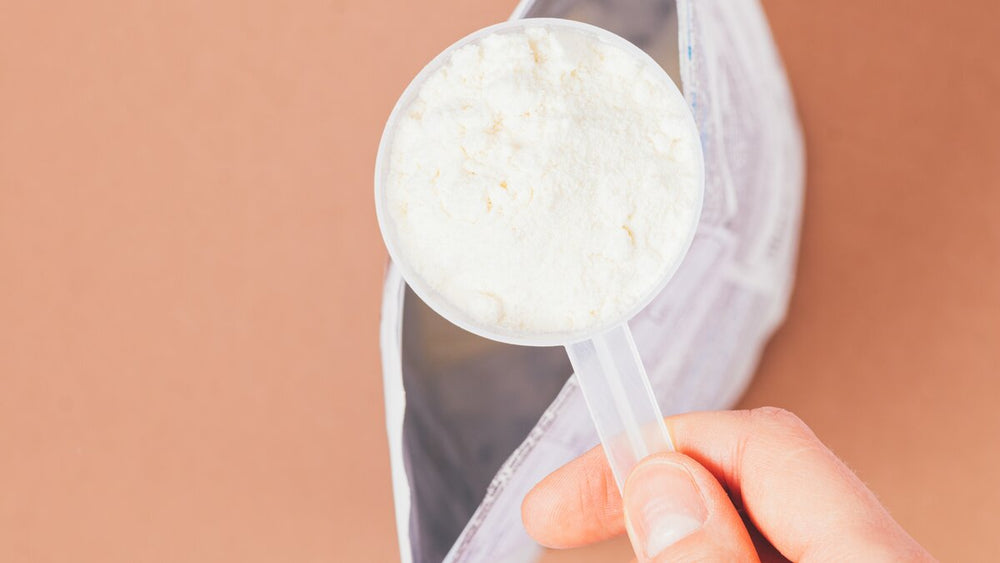
What Is Dry Scooping?
Dry scooping supplements is simply taking a scoop of your chosen powdered dietary supplement and putting it directly in your mouth, rather than mixing it with liquid as the directions for use indicate. Kinda weird, kinda gross – why would anyone do this?
Blame social media! The “challenge culture” of social media can make silly acts spread like wildfire, particularly among adolescents and young adults who are its primary consumers (remember the Tide Pod challenge? At least dry scooping isn’t as bad as that). Influencers garner clicks and views through outrageous behavior. Dry scooping is a small example of that. Sadly, influencers have influence, so people tend to mimic their behaviors.
The main supplements dry scoopers take are pre-workout formulas. Protein powders are the second-most popular. Dry scooping isn’t a good way to ingest either!
Why Some People Dry Scoop Supplements
The (tenuous) reasons people give for dry scooping include the following. None of which hold up to scrutiny, so I present the reasons and my retorts below:
Convenience – I don’t have to carry/use a water bottle or shaker cup!
My retort: Come on! A water bottle weighs so little that if you are really hardcore, you can carry one without complaint.
Belief it will work faster – the thought that dry scooping prevents the supplement from being diluted, so that will make it work faster/stronger
My retort: There is no evidence that this is true, and quite a bit that it is false. In general, ingested nutrients are absorbed more quickly and more effectively when mixed with water. For example, carbohydrates enter the bloodstream fastest when mixed in solutions of <10% concentration. And carbohydrates are the easiest macronutrient to absorb.
Viral fitness challenges – This is probably the most common real motivation.
My retort: Showing my age here, but people on the internet do dumb things for attention. Are you Jonny Knoxville? No? If no one is paying you to do dumb things, don’t do dumb things! And don’t ever eat laundry detergent!
Viral fitness challenges – This is probably the most common real motivation.
My retort: Showing my age here, but people on the internet do dumb things for attention. Are you Jonny Knoxville? No? If no one is paying you to do dumb things, don’t do dumb things! And don’t ever eat laundry detergent!
In sum, there is NO evidence that dry scooping enhances nutrient delivery or a supplement's effectiveness in any way. And further, dry scooping presents some risks.
Potential Risks of Dry Scooping
- Choking or inhaling powder: Powder isn’t easy to swallow (remember the cinnamon challenge? – ugh). Shoving a scoop of powder into your mouth can cause choking. It can also make you cough and, consequently, cause you to aspirate the powder. That means you could end up with some pre-workout powder in your lungs. You don’t want it there! Worst case, you could end up with aspiration pneumonia. Trust me, you don’t want that.
- Digestive discomfort: If you don’t mix your supplement powder with a liquid before swallowing it, your stomach has to take up the job of mixing it with water. That means you push more water into your gut via osmosis, which can cause bloating, gas, and discomfort. Less-than-ideal conditions for a good workout.
- Excessive caffeine intake: Caffeine is the most common and proven ingredient in pre-workout supplements. With dry scooping, you can easily take more than the recommended amount. Caffeine is performance-enhancing at ~3mg/kg body weight, but can cause adverse health effects, such as muscle tremors and irregular heartbeats, at doses> 400 mg.
Safer Ways to Use Pre-Workout and Protein Supplements
I have previously written about pre-workout supplements here. While I am personally not a fan, I will concede that there is some evidence that multi-ingredient pre-workout supplements can enhance exercise performance. The key to using them well is to take them as directed (mix with water!) and not exceed the recommended doses. The same goes for protein supplements – any protein intake > 1.6g/kg body weight is probably not doing much to help you and could be hurting your digestion by displacing other nutrients.
Dietary supplements may be a convenient adjunct to a healthy eating plan if used judiciously. More is not better, and forget about dry-scooping!
FAQs
What does dry scooping mean?
Dry scooping means putting powdered supplements, such as pre-workout or protein powder, directly into your mouth instead of mixing them with liquid as directed. The practice became popular through social media and fitness challenges, but there is no established benefit to taking supplements this way.
Does dry scooping pre-workout make it work faster?
No evidence shows that dry scooping makes a pre-workout supplement more effective. Mixing powdered supplements with the recommended amount of liquid also makes them easier and safer to swallow.
Is dry scooping dangerous?
Dry scooping can pose several risks, including choking, coughing, or accidentally inhaling powder into the lungs. It may also contribute to digestive discomfort, and improperly measuring or consuming highly caffeinated pre-workout products can increase the risk of excessive caffeine intake.
What is the safest way to take pre-workout powder?
Follow the product's directions, including the recommended serving size and amount of liquid used for mixing. Pay attention to how much caffeine the supplement contains—particularly if you also consume coffee, energy drinks, or other sources of caffeine—and avoid exceeding recommended amounts.
References
1Jagim, A. R., Harty, P. S., Tinsley, G. M., Kerksick, C. M., Gonzalez, A. M., Kreider, R. B., Arent, S. M., Jager, R., Smith-Ryan, A. E., Stout, J. R., Campbell, B. I., VanDusseldorp, T., & Antonio, J. (2023). International society of sports nutrition position stand: energy drinks and energy shots. Journal of the International Society of Sports Nutrition, 20(1), 2171314. https://doi.org/10.1080/15502783.2023.2171314
2Niederman, M. S., & Cilloniz, C. (2022). Aspiration pneumonia. Revista espanola de quimioterapia : publicacion oficial de la Sociedad Espanola de Quimioterapia, 35 Suppl 1(Suppl 1), 73–77. https://doi.org/10.37201/req/s01.17.2022
3Murray R. (1987). The effects of consuming carbohydrate-electrolyte beverages on gastric emptying and fluid absorption during and following exercise. Sports medicine (Auckland, N.Z.), 4(5), 322–351. https://doi.org/10.2165/00007256-198704050-00002











 Recipes
 Products

Comments
Join The Conversation...