


If you have been on the fence about radishes in the past, this is the dish to try!
The radish. This spicy root vegetable has more to it than the dash of color in the bag of salad mix from the store. It is inexpensive and versatile, and it’s another super vegetable packed with all sorts of nutrients and phytochemicals. The leaves, which would be perfect in a salad or added to your morning smoothie, are full of phytochemicals, the disease-fighting antioxidants. The radish also contains quite a bit of fiber. This dish as a whole has a surprising amount of potassium (over 500mg!) and over 50% of the recommended daily value of vitamin C per serving.
This dish can be utilized as a salad, an appetizer, or as a vegetable side dish, to any protein. It’s simple and delicious!
The radish, which is a member of the Brassicaceae family, has several different varieties. From black and white all the way to the rainbow. The most common one found in the United States would be the red radish. They grow easily, preferably in sandy soil, and are delicious fresh out of the ground! It’s a great vegetable to grow for beginners. They grow quickly and have multiple harvests throughout the season.
If your dietary preferences allow it, I typically make these with hot honey.
I recommend using local raw honey, ½ jalapeno, or any other hot pepper, and place on the stove for about 5-10 minutes on low-medium heat. Let the pepper steep in ½ cup honey, which this step can be done the day before. Remove the pepper and the seeds, and what is left is hot honey! The hot honey will last by removing all the seeds and any remnants of the pepper for at least 6 months under refrigeration. A fun fact about honey is that it NEVER spoils if stored properly! Meaning if it’s not exposed to moisture or air for an extended amount of time (just check for signs of mold or fermentation before consuming to be safe).
This super easy three-ingredient salad will show off the distinct flavor of the radish. Taking it from the dash of color in the salad to the star on the plate.
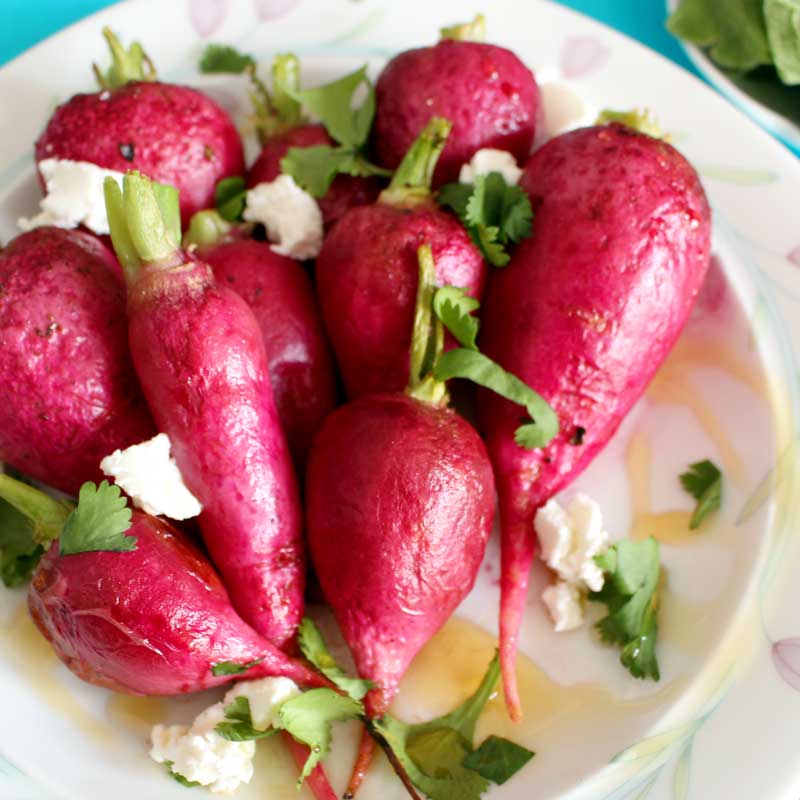
Ingredients
1 lb fresh radishes (preferably with the leaves still intact)
Drizzle of hot honey or honey
1-2 tablespoons goat cheese
Salt and pepper
1 tablespoon olive oil
¼ C. water (can use chicken or vegetable stock (optional))
Fresh cilantro for garnish
Optional Hot Honey Ingredients
½ C. honey
½ jalapeno
Instructions
Preheat the oven to 425°F.
Cut the leaves off of the radishes. I like leaving the little root tail on the radish, mainly for presentation, so it’s unnecessary. Wash the radishes; wash them well since they typically grow in sandy soil. Sand is sneaky, and it gets everywhere.
Put the radishes on a shallow baking sheet, drizzle 1-2 tablespoons of olive oil on the radish, and with your hands, coat them with the olive oil. Salt and pepper the radishes.
Put about 1⁄4 cup of water, chicken, or vegetable stock in the pan with the radishes. Adding the stock to the cooking process will give the radishes another flavor layer—the liquid, whether stock or plain water, will speed up the cooking process. The liquid will start to steam, and the steam will encircle the radishes causing them to soften faster.
The radishes are done cooking when they are just fork-tender. Not too soft, not too hard. Cooking time varies depending on the size of the radish. Anywhere from 20-35 minutes. Set the timer for twenty minutes to start, then check them every 5 minutes. All the liquid will have evaporated, and the radishes will look slightly withered and will be al dente.
To make hot honey (optional): I recommend using local raw honey, ½ jalapeno, or any other hot pepper, and place on the stove for about 5-10 minutes on low-medium heat. Let the pepper steep in ½ cup honey, which this step can be done the day before. Remove the pepper and the seeds, and what is left is hot honey!
Once the radishes are finished in the oven, arrange on a plate, dollop with goat cheese, and drizzle with hot honey or honey. Sit back, relax, and enjoy!
Nutrition Facts
Per serving
155
9.0g
16.8g
3.3g
3.6g
234.4mg
12.8g
2.3g
Notes
Difficulty level: 1
*Difficulty level on a scale of 1-10 with 1 being easy (little to no cooking experience required) and 10 being difficult (having a strong background in cooking and using equipment)
Nutritional Analysis does not include optional ingredients.






 Articles
 Products
Comments
Join The Conversation...