


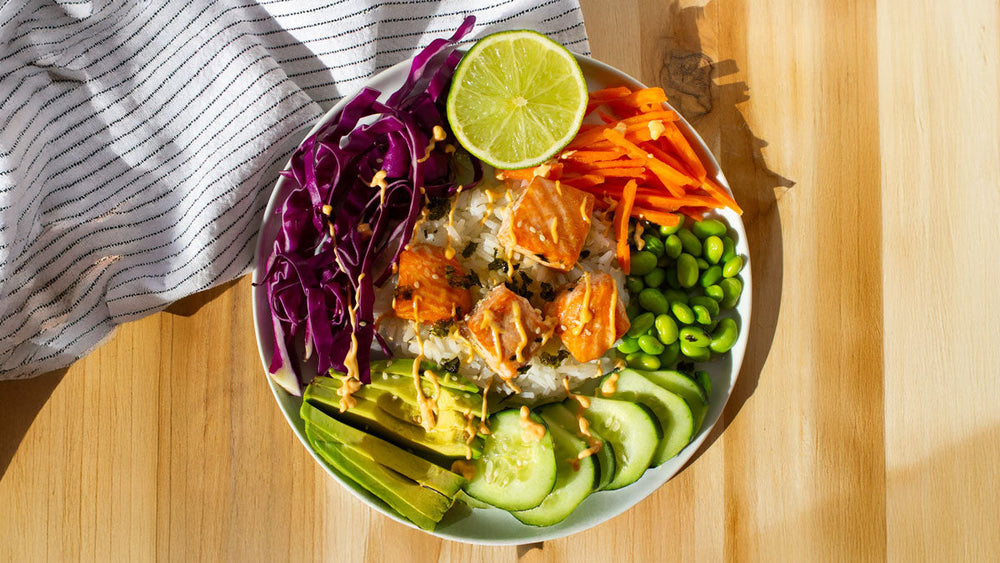
Easy Baked Salmon Sushi Bowl (Gluten-Free & Meal-Prep Friendly)
With warmer weather here, this gluten-free deconstructed sushi bowl will surely be a family favorite. If you're not a fan of raw fish, no worries—this version features juicy, flavorful baked salmon that's rich in protein and great for heart health. Made without soy sauce or other hidden gluten sources, it's a safe and delicious option for those with gluten sensitivities. Not only is it delicious, but it’s also an easy, meal-prep-friendly dish you'll love having on hand!
Nutritional Benefits of Salmon
Salmon is a powerhouse when it comes to both Omega-3 fatty acids and protein. These Omega-3s are crucial for heart health, reducing inflammation, and supporting brain function while also playing a key role in improving skin health and joint mobility. A serving of salmon provides about 17-20 grams of protein, which is essential for muscle repair. With its rich nutrient profile, salmon is a delicious and satisfying way to nourish your body. It's the perfect addition to this recipe, bringing a boost of flavor and nutrients that take the dish to the next level while keeping it healthy and filling.

Ingredients & Substitutions
Building your own sushi bowl is all about customization, and the best part is that you can tailor it to your taste preferences with a variety of ingredients and flavors. Here are some ideas to get creative in the kitchen:
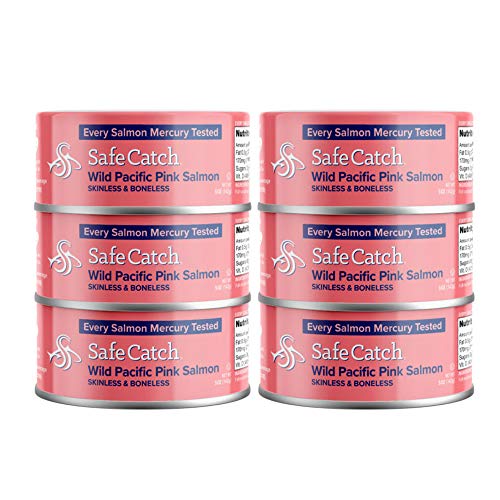
Salmon: Can be canned, fresh, or frozen.
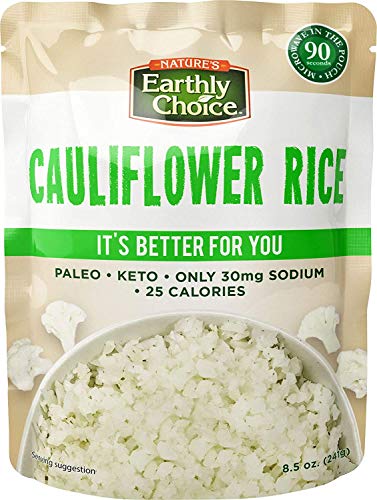
Base Options: Rice, quinoa, cauliflower rice (for a low-carb option).
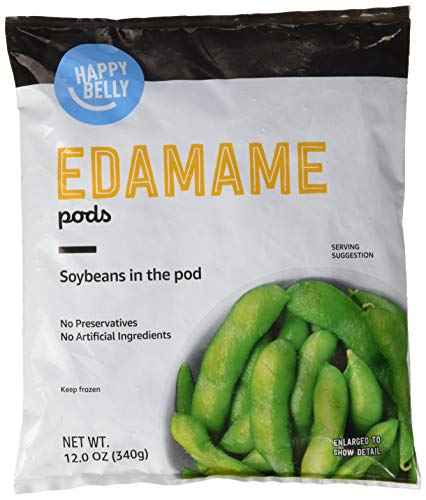
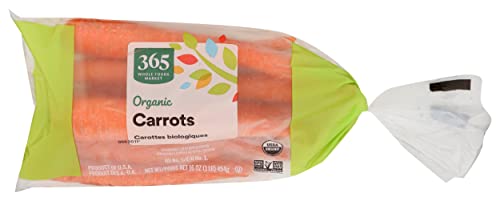
Vegetables: Avocado, cucumber, edamame, carrots, and more.
Fruits: Mango, green apple, pomegranate seeds, pineapple.
Gluten-Free Sauces: Gluten-free teriyaki, tamari, or coconut aminos for a soy-free option.
Toppings: Sesame seeds, green onions, sriracha, nori flakes.
Get creative with these options to build a sushi bowl that’s perfectly suited to your tastes!
Variations & Customizations
This sushi bowl is highly customizable to fit different dietary preferences. For a keto-friendly version, swap the rice for cauliflower rice to keep the carb count low while still providing a light and satisfying base. If you're following alow-carb diet, you can also choose quinoa or zucchini noodles instead of rice for a filling but lighter option. For a vegan twist, replace the salmon with plant-based proteins like tofu, tempeh, or chickpeas, which still provide plenty of protein and texture. With these easy swaps, you can tailor the sushi bowl to fit any diet while still enjoying its vibrant flavors and nutrition.
Conclusion
This customizable sushi bowl is the perfect dish for a variety of tastes and dietary needs, whether you're looking for a heart-healthy option, a low-carb meal, or a plant-based alternative. With endless ingredient options and simple swaps, you can create a bowl that’s delicious and packed with nutrients. Whether you're preparing it for meal prep, a quick dinner, or a special treat, this sushi bowl will satisfy your cravings while supporting your health goals. Get creative and enjoy making this bowl your own!
-
Bali, A., & Naik, R. (2023, February 18). The impact of a vegan diet on many aspects of health: The overlooked side of veganism. Cureus. https://pmc.ncbi.nlm.nih.gov/articles/PMC10027313/
-
Mawer, R. (2023, November 7). The ketogenic diet: A detailed beginner’s guide to keto. Healthline. https://www.healthline.com/nutrition/ketogenic-diet-101#diet-types
-
Omega-3 fatty acids & the important role they play. Cleveland Clinic. (2025, March 19). https://my.clevelandclinic.org/health/articles/17290-omega-3-fatty-acids
-
Protein foods. MyPlate.gov | Protein Foods Group – One of the Five Food Groups. (n.d.). https://www.myplate.gov/eat-healthy/protein-foods
-
Salamon, M. (2023, January 3). Low-carb diet helps cut blood sugar levels in people with Prediabetes. Harvard Health. https://www.health.harvard.edu/blog/low-carb-diet-helps-cut-blood-sugar-levels-in-people-with-prediabetes-202301032869
-
U.S. Department of Agriculture. (2019, April 1). Fish, salmon, Atlantic, farmed, raw. FoodData Central Food Details. https://fdc.nal.usda.gov/food-details/175167/nutrients
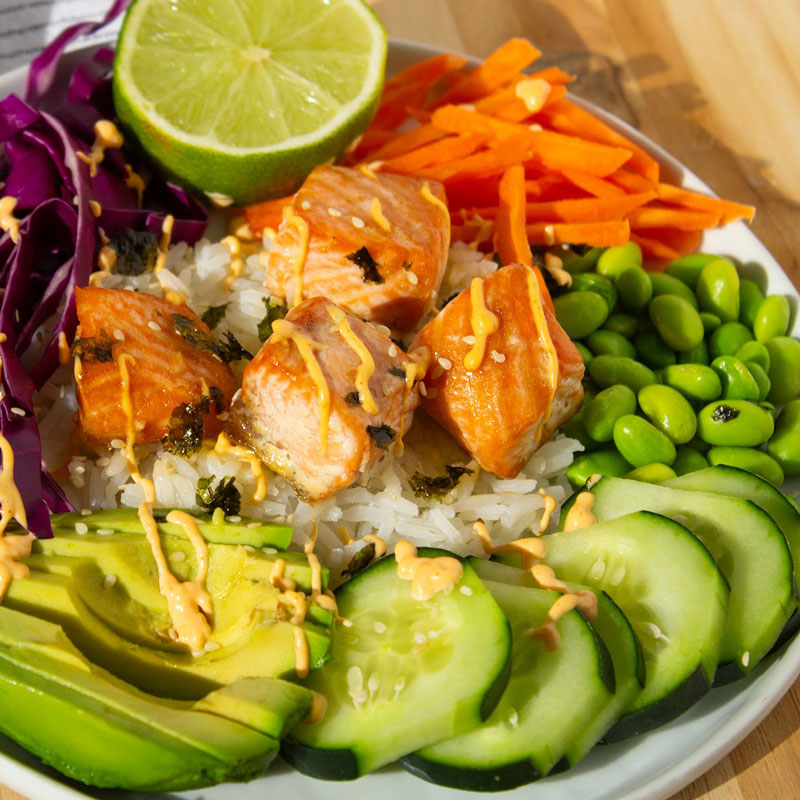
Ingredients
4 three ounce portions of salmon
1 cup rice, cooked
1 cucumber
1 large carrot, julienne sliced
½ cup shelled edamame
2 cups sliced red cabbage
1 avocado sliced
4 tablespoons nori, diced
½ cup mayonnaise
2 tablespoons sriracha
1 tablespoon lime juice
1 cup gluten-free teriyaki sauce
2 tablespoons sesame seed oil
Instructions
In a bowl, combine the gluten-free teriyaki sauce and sesame oil. Add the raw salmon and mix well, ensuring it's coated with the sauce. Refrigerate for 20 minutes to marinate.
While the salmon marinates, wash and chop the vegetables, then set them aside. In a separate bowl, mix together mayonnaise, lime juice, and sriracha; set aside.
Preheat the oven to 350°F (176°C) and line a baking sheet with parchment paper. Arrange the marinated salmon fillets on the baking sheet and bake for 3-4 minutes.
While the salmon is baking, prepare a bowl with ¼ cup rice and top with your choice of vegetables.
Once the salmon is ready, place it on top of the rice and vegetables. Sprinkle with sesame seeds and nori flakes, then drizzle with spicy mayo. Serve and enjoy!
Nutrition Facts
Per serving
712
28.8g
69.1g
42.0g
7.3g
870.0mg
6.1g
4.9g
Notes
Equipment:
Baking sheet
Spatula
Knife
Cutting board
Measuring spoons
Oven
Parchment paper








 Articles
 Products
Comments
Join The Conversation...