


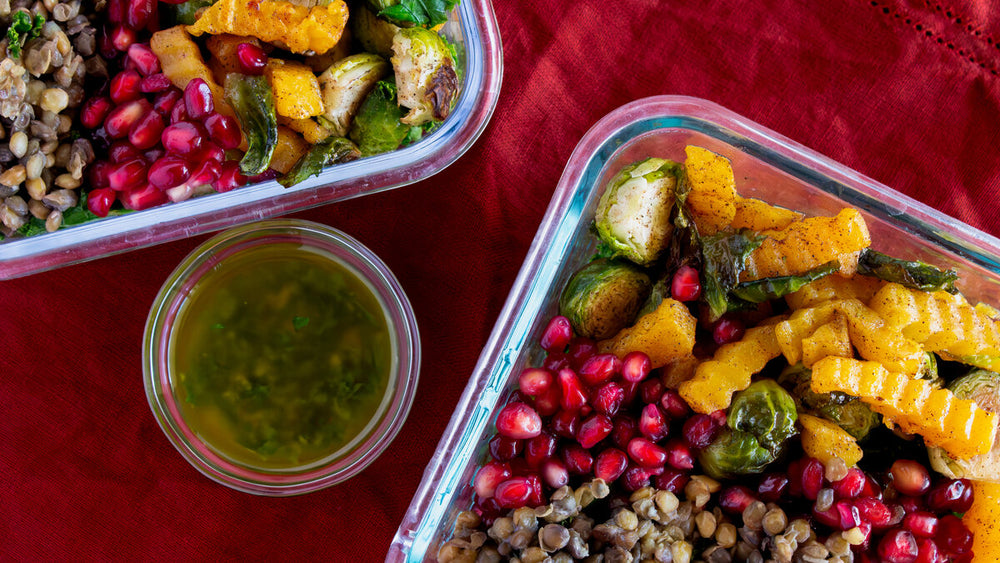
Cozy Fall Lentil Salad for an Easy Meal Prep Lunch
Description of Ingredients and Why They Work
Lentils (base protein)
- Lentils are naturally low in fat, so you don't need to add the extra oils or fats that can trigger reflux in some people, and they also make a great source of plant-based protein.
- If you're not using pre-cooked, packaged lentils, I highly recommend soaking and rinsing dried lentils first, as this helps reduce the compounds that can contribute to bloating or reflux.
- Cooking method matters for digestibility: avoid undercooking. When lentils aren't cooked long enough, their fiber and compounds haven't broken down enough, making them harder to digest.
- Lentils are a common bloat trigger for people with IBS, since they're a high-FODMAP food due to their oligosaccharide content. If you also have IBS, consider reducing your portion size or swapping lentils for another protein source like fish, shrimp, or chicken.
Low-acid vegetables
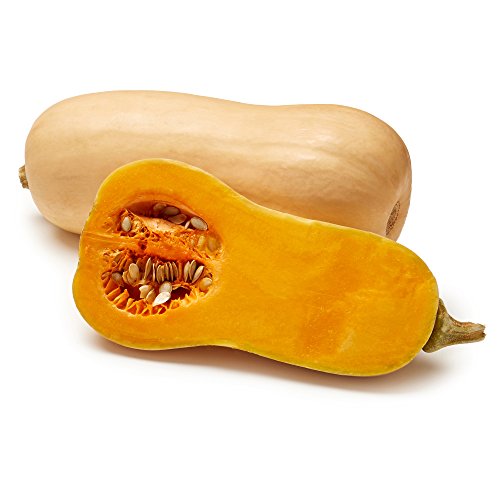
- Butternut squash: A high source of beta-carotene, which the body converts into vitamin A, supporting skin, eye, and immune system health.
- Brussels sprouts: A surprising fact: Brussels sprouts are rich in vitamin C, which helps the body heal and fight infections by supporting immune function. Beyond vitamin C, this vegetable is high in fiber and contains glucosinolates, a compound that may help reduce the risk of certain cancers.
- Kale: Just 1 cup of kale provides well over your daily value of vitamin K, which supports healthy blood clotting. If you're on a blood thinner and need to limit high-vitamin-K foods, I recommend reducing your portion size or swapping in a lettuce option that's lower in vitamin K.
- Vegetables to avoid: tomatoes, raw onion, and hot peppers, as these can trigger higher acid production, leading to that uncomfortable burn no one wants to feel.
Gentle herbs and aromatics
- Parsley, dill, basil instead of high-acid or spicy flavor boosters.
GERD-safe dressing
- Olive oil–based, non-citrus acid alternative (e.g., a splash of coconut aminos or a touch of low-acid vinegar in small quantity)
- Avoiding common triggers: garlic/onion in excess, black pepper, citrus juice
Substitutions and Variations
- Vegetable swaps: For seasonal variety while staying low-acid, try beets, cucumber, snap peas or roasted carrots.
- Dressing variations: Adjust the dressing to suit your taste preferences without reintroducing common triggers. Keep in mind that reflux triggers vary from person to person: some individuals may tolerate small amounts of garlic, lemon, or pepper, just to name a few.
- Protein boosters: Add low-fat cheese options like feta crumbles (if tolerated), chopped roasted walnuts, or baked firm tofu.
- Making it heartier: Turn this into a more filling lunch option by adding a whole grain like quinoa or farro.
Tips and Serving Ideas
- Practical GERD-specific prep tips: Soak the lentils to help reduce the compounds that can lead to bloating, limit any trigger foods specific to you, and chew thoroughly to ease digestion and reduce bloating.
- Best time of day to eat: For those with GERD, eating earlier in the evening and allowing at least two to three hours before bed helps your stomach digest and empty before you lie down.
- Serving suggestions: Enjoy as a standalone lunch, a side dish, or a wrap filling!
- Meal prep salad guidance: Keep the dressing separate to prevent a soggy salad the next day.
- Pairing suggestion: Serve with a cup of chamomile tea or a glass of ice-cold water. Skip peppermint tea and coffee, as both can relax the esophageal sphincter and worsen acid reflux. Ginger tea can also be soothing for some, but it's a common individual trigger, so test your own tolerance before making it a regular pairing.
FAQs
Is lentil salad actually good for acid reflux?
What foods should I avoid adding to keep this GERD-friendly?
Can I meal prep this without it upsetting my stomach later in the week?
What's the best dressing swap if I can't tolerate vinegar or citrus at all?
Are lentils hard to digest, and how does soaking/cooking help?
Can I eat this cold, or is warm better for digestion?
GERD-Friendly Lentil Salad
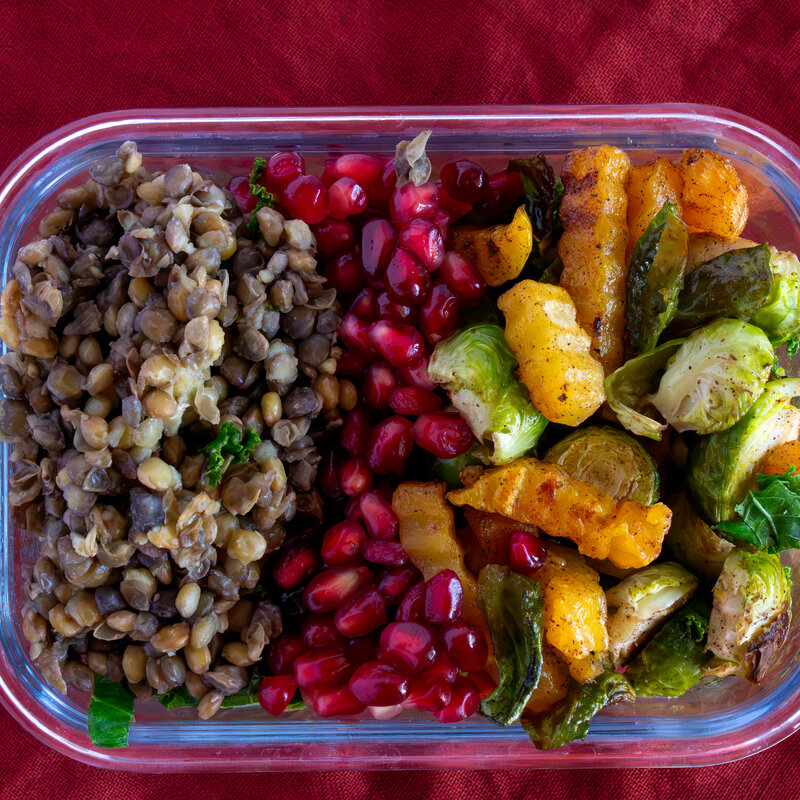
Ingredients
Dressing
1/4 cup extra virgin olive oil
1 1/2 teaspoons Dijon mustard
1 1/2 teaspoons maple syrup
2 tablespoons mint, finally diced
1/4 teaspoon salt
2 tablespoons lemon juice or mild vinegar (as tolerated)
Salad
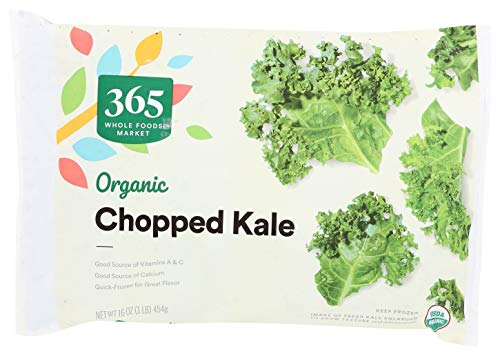
8 cups kale, chopped
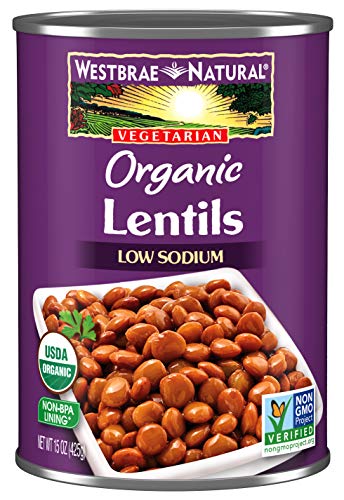
1 1/2 cups lentils, cooked
2 cups Brussel sprouts, halved
2 cups butternut squash, cubbed
6 tablespoons pomegranate arils
1 teaspoon allspice
2 tablespoons avocado oil
1 teaspoon salt
1 tablespoon honey
1 tablespoon olive oil
Instructions
Preheat the oven to 400°F.
Wash and chop butternut squash and Brussels sprouts.
Toss Brussels sprouts and butternut squash with avocado oil, salt, honey, and allspice until evenly coated.
Spread the vegetables in a single layer on a baking sheet. Bake the baking sheet in the oven for 20 minutes.
While the vegetables are roasting, in a small mixing bowl mix all the dressing ingredients together and set aside.
Add water, olive oil, and garlic to a skillet over low heat and bring to a gentle simmer.
Add kale, cover, and cook for 2–3 minutes until lightly wilted. Remove from heat.
Let the vegetables cool, then combine kale, lentils, Brussels sprouts, and butternut squash in a large bowl.
Top with pomegranate arils, add the dressing, and toss gently to combine. Serve and enjoy!
Nutrition Facts
Per serving
732
20.0g
108.0g
25.0g
28.0g
360.0mg
42.0g
3.0g






 Articles
 Products
Comments
Join The Conversation...