


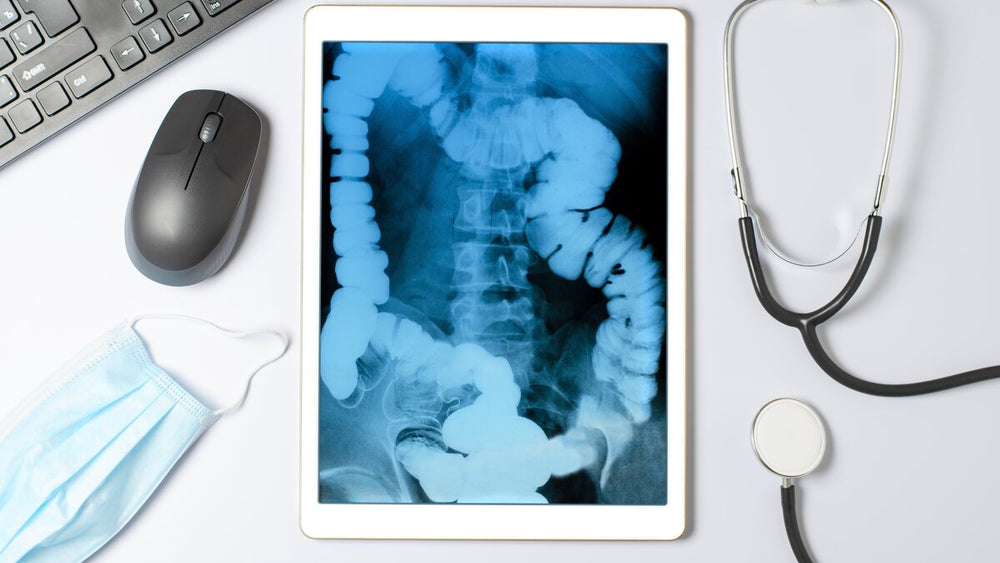
Why Finding the Cause of Constipation Isn't Always Simple
As a physician, I see many patients who struggle with constipation. It is one of the most common digestive problems, affecting about 1 in 6 adults in the United States and nearly 1 in 3 adults over age 60.
One of the biggest frustrations for patients is going through multiple tests and still not getting clear answers. They often tell me, "My tests are normal, so why am I still constipated?"
The answer is that constipation is not always caused by a blockage or a problem that can be seen on a routine test. Sometimes the issue is simply that the colon is moving too slowly. Think of it like traffic on a highway, the road may be perfectly fine, but the cars are not moving at the speed they should.
This is why doctors sometimes recommend a Sitz Marker Test. This test helps us measure how quickly stool moves through the colon, allowing us to identify slow transit and choose the most appropriate treatment.
What Is a Sitz Marker Test?
Doctors use this test to assess colonic motility, the ability of the colon's muscles and nerves to move stool forward efficiently. Unlike a colonoscopy, which looks for structural problems inside the colon, a Sitz marker test evaluates function.
- The test evaluates how quickly material moves through the colon.
- It uses tiny radiopaque markers that appear on X-rays.
- By tracking these markers over several days, doctors can determine whether stool is moving through the colon at a normal speed or is delayed.
When motility slows down, waste can remain in the colon longer than normal, leading to constipation, bloating, discomfort, and a feeling of incomplete bowel movements.
Why Doctors Order a Sitz Marker Study
A Sitz marker study is most commonly ordered when a patient has chronic constipation that has not improved despite dietary changes, increased fiber intake, hydration, exercise, or medications.
The test can help doctors:
- Diagnose slow-transit constipation
- Evaluate unexplained constipation that does not respond to treatment
- Differentiate between various causes of constipation
- Assess overall colon function
- Identify gastrointestinal motility disorders
Symptoms that may prompt a doctor to order a Sitz marker study include:
- Infrequent bowel movements
- Excessive straining
- Abdominal bloating
- Persistent fullness
- Hard stools
- A sensation of incomplete evacuation
The test is especially useful because not all constipation is the same. Some people have a colon that moves too slowly, while others may have difficulty coordinating the muscles needed for bowel movements. Understanding the cause helps physicians recommend the most effective treatment.
What Happens During the Sitz Marker Test?
The test is simple and noninvasive.
Step 1: Swallowing the Marker Capsule
You swallow a capsule containing tiny radiopaque markers that pass naturally through the digestive tract.
Step 2: X-Rays Are Taken
Over the next several days, one or more abdominal X-rays are taken—typically on Day 3, Day 5, or Day 7—to track the markers' location.
Step 3: Tracking Marker Location
The X-rays show how many markers remain in the colon and where they are located. This helps doctors determine whether colon transit is normal or delayed. Most Sitz marker studies are completed within 3 to 7 days.
Understanding Sitz Marker Test Results
In healthy adults, colonic transit time varies considerably, but stool typically moves through the colon within several days. When the colon moves too slowly, waste remains in the digestive tract longer than normal, increasing the likelihood of constipation.
During the test, doctors evaluate how many markers remain in the colon after several days. If a significant number of markers remain after about five days, the findings may suggest slow-transit constipation.
Marker Retention Patterns
The location of the retained markers can provide important clues.
For example:
- Markers scattered throughout the colon may suggest generalized slow colon motility.
- Markers clustered in the lower colon or rectum may indicate an evacuation disorder or pelvic floor dysfunction.
- Certain retention patterns may prompt additional testing to evaluate other motility disorders.
Your doctor will interpret the results along with your symptoms and medical history
How Results Influence Treatment
One of the greatest benefits of the Sitz marker test is that it helps guide personalized treatment decisions. Rather than relying on trial and error, physicians can tailor treatment based on how the colon is functioning. This often leads to more effective management and better long-term outcomes.
What Happens After the Test?
Treatment recommendations depend on the study results and the severity of your symptoms.
Diet and Fiber Strategies
Many patients benefit from lifestyle and dietary changes, including:
- Gradually increasing fiber intake
- Drinking adequate fluids
- Eating more fruits and vegetables
- Maintaining regular meal schedules
- Staying physically active
Medications That Improve Motility
For some patients, dietary changes alone may not be enough. Depending on the results, your doctor may recommend:
- Osmotic laxatives
- Prescription medications for chronic constipation
- Motility-enhancing therapies that help stimulate bowel movement
Additional Testing
If the Sitz marker test suggests a more complex motility disorder, additional testing may be recommended, such as:
- Anorectal manometry
- Balloon expulsion testing
- Defecography
- Colonic manometry
These tests provide more detailed information about how the muscles and nerves involved in bowel movements are functioning.
Conclusion
A Sitz marker test is a valuable tool for measuring how quickly stool moves through the colon. By evaluating colon transit time, doctors can identify slow-transit constipation, assess gastrointestinal motility, and develop more targeted treatment plans.
Many patients assume that constipation simply means they need more fiber or water. While that may be true for some people, others have a problem with the colon's motility—its ability to move stool forward efficiently. The Sitz Marker Test helps us determine whether the colon is operating at a normal speed or whether a "traffic jam" has developed somewhere along the route.
If you experience persistent constipation, bloating, or unexplained digestive symptoms, a Sitz marker study may provide the answers your healthcare team needs to develop the most effective plan for relief.
FAQs
What is a Sitz marker test used for?
A Sitz marker test measures how quickly stool moves through the colon. It helps doctors determine whether constipation may be caused by slow colon transit or another motility disorder.
Is a Sitz marker test painful?
No. The test is noninvasive and typically involves swallowing a capsule containing tiny markers followed by a series of abdominal X-rays over several days.
How long does a Sitz marker study take?
Most Sitz marker studies are completed within 3 to 7 days, depending on the protocol used by your healthcare provider.
What happens if the markers stay in my colon too long?
If many markers remain in the colon after several days, it may indicate slow-transit constipation or another motility disorder. Your doctor will interpret the findings alongside your symptoms and medical history.
How does this test help gut health?
The Sitz marker test helps identify the underlying cause of chronic constipation. Understanding whether constipation is related to slow transit, pelvic floor dysfunction, or another issue allows healthcare providers to recommend more personalized and effective treatment strategies that support digestive health.
Does everyone with constipation need a Sitz marker test?
No. Many cases of constipation improve with dietary changes, hydration, physical activity, or medication. Sitz marker testing is generally reserved for individuals with persistent symptoms that do not respond to standard treatment approaches.
References
1Ford, A. C., & Suares, N. C. (2011). Effect of laxatives and pharmacological therapies in chronic idiopathic constipation: Systematic review and meta-analysis. The American Journal of Gastroenterology, 106(9), 1582–1591. https://doi.org/10.1038/ajg.2011.179
2Camilleri, M. (2011). Chronic constipation: A clinical update. Gastroenterology, 141(1), 9–16. https://doi.org/10.1053/j.gastro.2011.06.075
3Bharucha, A. E., Rao, S. S. C., & Shin, A. (2015). Surgical and radiologic tests of colonic and anorectal function in constipation. Clinical Gastroenterology and Hepatology, 13(6), 1000–1013. https://doi.org/10.1016/j.cgh.2015.02.020
4American Gastroenterological Association. (2013). Technical review on constipation. Gastroenterology, 144(1), 218–238. https://doi.org/10.1053/j.gastro.2012.10.028
5National Institute of Diabetes and Digestive and Kidney Diseases. (2023). Constipation. U.S. Department of Health and Human Services. https://www.niddk.nih.gov/health-information/digestive-diseases/constipation



















 Recipes
 Products

Comments
Join The Conversation...